Waiting for hard tooling to validate a design is a costly gamble. A strategic rapid prototyping service allows engineers and product teams to prove geometry, fit, and function beforecommitting to molds. This guide compares CNC machining, 3D printing, silicone tooling, and low-volume molding, helping you choose the right process to de-risk your launch and accelerate time-to-market.

When a team needs a part in
hand quickly, waiting on production tooling is usually the wrong move. A
professional rapid prototyping service gives engineers, buyers, and product teams a practical way to review
geometry, test assembly, and catch design issues—before money is committed to
molds, dies, or long-lead fixtures.
For most programs, prototyping
is not just a step in the process. It is a decision tool. It helps
answer the questions that matter early:
- Does the enclosure close
correctly?
- Are the mounting bosses
structurally adequate?
- Will the cosmetic surface
satisfy internal and customer reviews?
- Can the intended assembly
process work as designed?
Those answers directly affect
schedule, tooling investment, and downstream quality.
What a Rapid Prototyping Service Is Really Used For
Rapid prototyping covers
several processes, each suited to different validation goals. The most common
include:
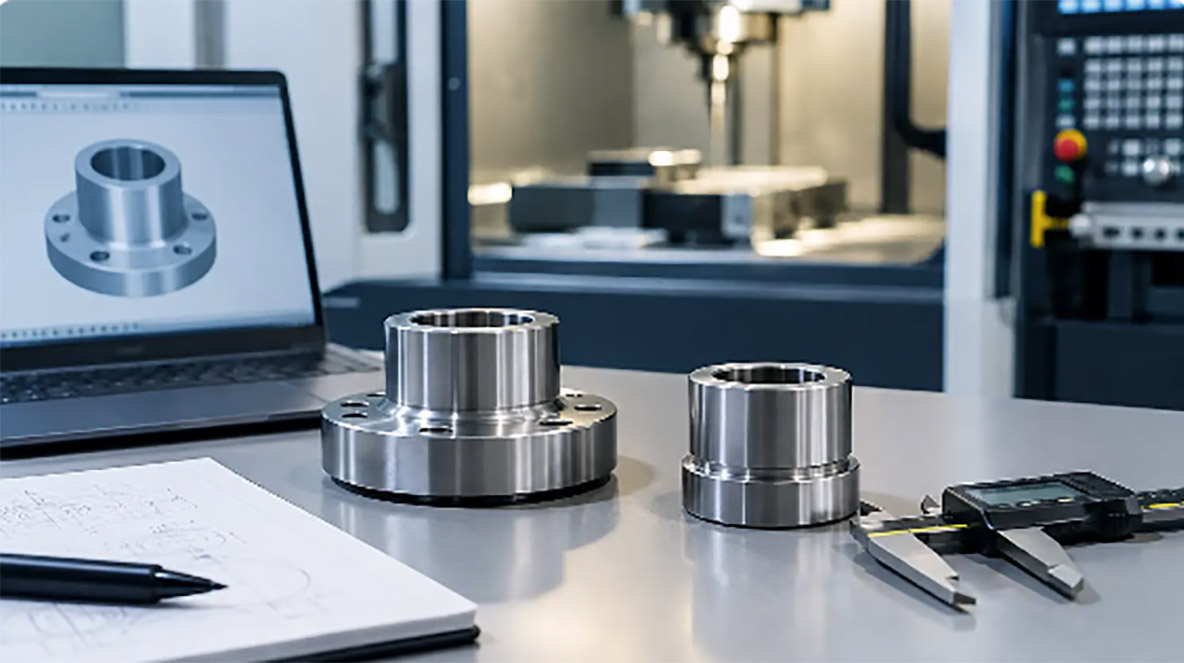
- CNC machining – for functional
prototypes in real engineering materials
- High-resolution 3D
printing (non-SLA) – for complex geometries and quick form studies
- Silicone rubber tooling +
urethane casting – for small-batch parts with production-like
material properties
- Low-volume injection
molding – for pilot runs and pre-production validation
The right choice depends on
what you need to prove:
- Appearance &
Ergonomics: Form, size, and visual impact
- Fit & Assembly: Interfaces between
mating parts
- Functional Performance: Load, thermal behavior,
or material-specific response
- Market Testing: Sellable units before
full-scale tooling
A strong prototyping partner
helps you match the process to the validation goal—rather than forcing every
project into a single technology.
When to Choose Rapid Prototyping Over Tooling
Prototyping is usually the
right move when:
- Design changes are still
likely
- Market or regulatory
feedback is pending
- Assembly interaction
needs physical confirmation
- Investment in hard
tooling is premature
CNC machining is often
preferred when:
- Real material properties
are required (ABS, PC, POM, aluminum, etc.)
- Precision tolerances must
be met
- The part will be used for
functional testing or fixture development
3D printing (non-SLA) is
useful when:
- Geometry is highly
complex
- Speed is critical
- Cosmetic appearance
matters more than material realism
Silicone tooling and urethane
casting are ideal when:
- You need 5–50 parts with
production-like material behavior
- Short-run market testing
or pilot builds are planned
Low-volume injection molding
fits when:
- You need hundreds of
parts with molded consistency
- Tooling cost must remain
controlled before mass production
What to Expect from a Professional Prototyping Service
A capable supplier will begin
by reviewing:
- 3D CAD files
- Intended application
- Quantity required
- Critical dimensions and
tolerances
- Cosmetic and functional
expectations
Early design review is
essential. Wall thickness, draft, rib design, and feature accessibility all
influence manufacturability and lead time. A responsible prototyping partner
will flag potential issues before fabrication begins—not after parts are
delivered.
Post-processing also matters.
Depending on the application, prototypes may require:
- Surface smoothing and
finishing
- Primer and paint for
presentation models
- Thread tapping or insert
installation
- Basic functional testing
For companies moving toward
production, it is especially valuable when the prototyping supplier also
supports DFM feedback, tooling strategy, and assembly planning. That
alignment ensures prototype decisions translate smoothly into production
readiness.
Design Considerations That Affect Prototyping Success
Even in prototyping, good
design practices pay off:
- Feature Size: Very thin walls or
fragile details may not survive handling or machining
- Tolerances: Identify critical
fits—press features, sealing surfaces, and precision holes—early
- Threads & Snap-Fits: Clarify functional
intent so secondary operations can be planned
- Transparent Sections: Specify optical or
cosmetic requirements in advance
- Material Selection: Choose a prototype
material aligned with the final production resin or metal whenever
possible
A prototype that looks correct
on the bench but behaves differently from the intended production material can
create false confidence. Experienced suppliers help you avoid that gap.
Comparing Prototyping Methods
Different prototyping
technologies answer different questions:
|
Method |
Strengths |
Typical
Use Cases |
|
CNC
Machining |
Real
material properties, tight tolerances, durable parts |
Functional
testing, fixtures, precision components |
|
3D
Printing (Non-SLA) |
Complex
geometry, fast turnaround, low cost |
Form
studies, concept models, ergonomic checks |
|
Silicone
Tooling + Urethane Casting |
Production-like
materials, small batches |
Pilot
units, market testing, pre-production |
|
Low-Volume
Injection Molding |
Molded
consistency, scalable to hundreds |
Bridge
production, early customer shipments |
A manufacturing partner with
multiple capabilities can recommend the right method instead of forcing every
project into one process.
Lead Time, Cost, and Quantity Considerations
Prototyping is almost always
faster than hard tooling—but cost depends on more than part size:
- Geometry complexity
- Material selection
- Finishing requirements
- Number of iterations
- Total quantity required
For single-digit quantities,
CNC or 3D printing is usually most efficient.
For dozens of parts,
silicone tooling or urethane casting often becomes more economical.
For hundreds,
low-volume molding may be the logical next step.
A good supplier will guide you
toward the most cost-effective path as your program scales.
Choosing the Right Manufacturing Partner
A prototyping service should
not be evaluated solely on machine capability. The more important question is
whether the supplier can support what happens after the prototype.
If the prototype passes
review, can the same partner assist with:
- DFM updates
- Tooling design and
fabrication
- Material qualification
- Component sourcing
- Assembly and testing
If the prototype fails review,
can they iterate quickly and keep the project on schedule?
This is where an integrated
manufacturer such as Xiamen Creator Technology adds value. By combining CNC
machining, 3D printing, silicone tooling, low-volume molding, and assembly under one workflow, we reduce
handoff risk and ensure prototype feedback translates directly into production
readiness.
Final Thought
A prototype should do more
than look right on a desk. It should remove uncertainty from your next
manufacturing decision. When prototyping is approached strategically—with
the right process, material, and partner—it pays for itself many times over by
preventing costly mistakes before tooling is committed.
Key Takeaways for Buyers
- Prototype Early: Validate design before
committing to expensive tooling.
- Match Process to Goal: CNC for function,
printing for form, casting for small batches, molding for pilot runs.
- Think Beyond the Part: Choose a partner who can
support DFM, tooling, and assembly.
- Iterate Strategically: Use prototypes to reduce
risk, not just to “see what it looks like.”
- Plan for Scale: Let your prototyping strategy evolve as volume and confidence grow.