Choosing between CNC machining vs injection molding isn't about which process is "better"—it's about where your product is in its lifecycle, how many parts you need, and what requirements actually matter. The wrong decision usually shows up later as missed launch dates, avoidable tooling cost, or parts that were never designed for efficient production. This guide gives you a practical framework to pick the right process at the right stage.

If you are choosing between cnc machining vs injection molding, the wrong decision usually shows up later as missed launch dates, avoidable tooling cost, or parts that were never designed for efficient production. The right process depends less on which method is better in general and more on where your product is in its lifecycle, how many parts you need, and what requirements actually matter.
For product teams and sourcing managers, this is rarely a simple prototype-versus-production question. Many programs start with machined parts, move into bridge quantities, then transition to molded production once geometry, fit, and demand are stable. Understanding that progression helps avoid paying for volume tooling too early or trying to machine quantities that should have been molded months ago.
CNC machining vs injection molding: the core difference
CNC machining is a subtractive process. A block, plate, or bar of metal or plastic is cut into shape using mills, lathes, and other controlled machine tools. Injection molding is a forming process. Melted plastic is injected into a steel or aluminum mold cavity and cooled into the final part shape.
That single distinction drives most of the commercial and technical trade-offs. CNC machining offers speed to first part, broad material access, and strong dimensional control without hard tooling. Injection molding requires upfront mold investment, but once the tool is built, it can produce large volumes of plastic parts quickly and at a low per-part cost.
If your team needs ten housings for testing next week, CNC is often the practical answer. If you need 100,000 housings over the next year, molding usually becomes the only cost-effective route.
When CNC machining makes more sense
CNC machining is typically the better fit during early development, design validation, and low-volume production. It allows design changes without rebuilding a mold, which matters when your CAD is still moving and your assembly stack-up is not yet fixed.
For engineers, one of the main advantages is process flexibility. A machined part can be revised by updating the program and changing setup strategy, while a molded part may require steel modification, insert changes, or in some cases a new tool. That makes CNC useful when product risk is still high.
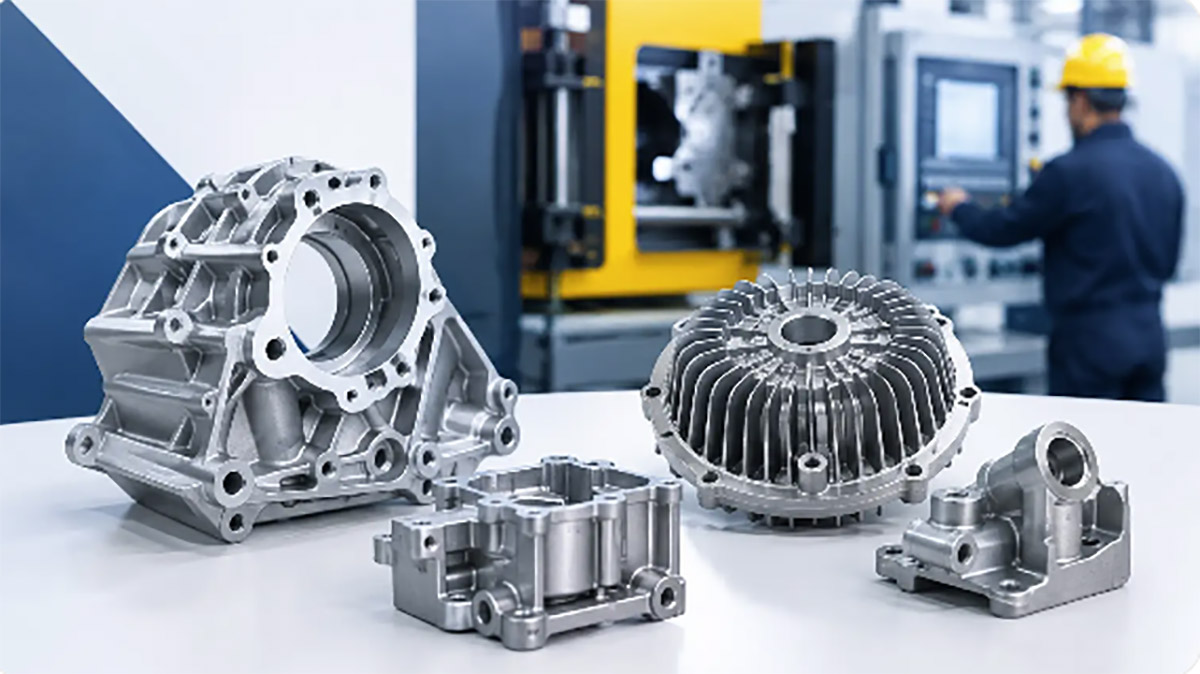
Material choice is another factor. CNC can produce parts in aluminum, stainless steel, brass, engineering plastics, and many specialty materials. If the final part must be metal, injection molding is no longer the direct comparison unless you are evaluating a different product architecture altogether.
CNC also works well for functional prototypes where mechanical performance matters more than cosmetic replication of a future molded surface. Machined ABS-like prototypes have value, but machined acetal, nylon, aluminum, or PEEK components are often chosen because they let teams test strength, wear, heat resistance, or thread performance in a realistic way.
The downside is unit economics. Machining time, material waste, fixturing, and operator input tend to keep per-part pricing relatively high. As volumes rise, those costs rarely scale as efficiently as molding.
When injection molding is the better choice
Injection molding becomes attractive when part geometry is stable and demand is high enough to justify tooling. The process is designed for repeatability, throughput, and low unit cost over a long production run.
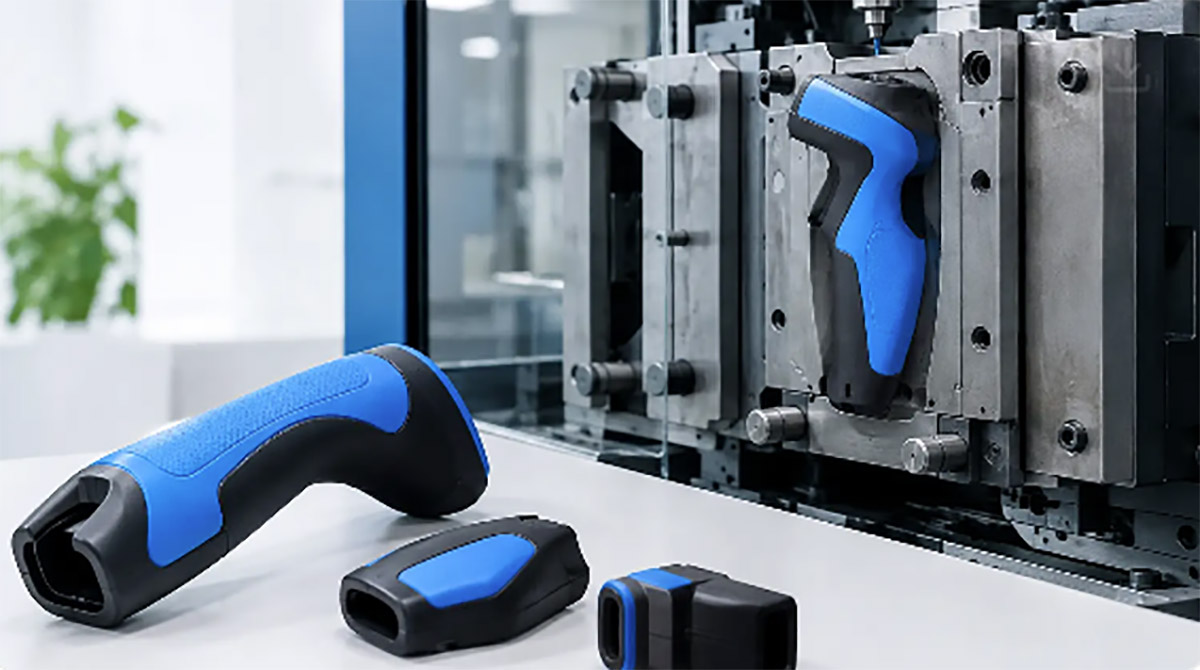
For plastic consumer products, electronic enclosures, buttons, covers, clips, and internal structural parts, molding is often the end-state manufacturing method. A well-built mold can deliver consistent dimensions, good cosmetic finish, and cycle times measured in seconds rather than hours.
This is where procurement and operations teams usually see the strongest business case. Tooling may be expensive upfront, but that cost is amortized across production volume. At low quantity, the math often favors CNC. At medium to high quantity, molded parts usually become dramatically cheaper per unit.
Molding also supports production features that would be inefficient to machine repeatedly, such as snap fits, living hinges in selected materials, integrated bosses, ribs, and complex organic forms. Those features still need proper draft, wall thickness control, and gate planning, but they are native to the molding process.
The limitation is commitment. Once steel is cut, changes are slower and more expensive. That is why experienced manufacturers push DFM review before tooling release rather than after the first molded defect appears.
Cost is not just part price
Most comparisons of cnc machining vs injection molding fail because they isolate quoted unit price and ignore total program cost. That is a sourcing mistake.
For CNC machining, there is usually little or no tooling cost beyond fixtures and programming, but per-part cost remains relatively high. For injection molding, there is a clear upfront mold cost, but unit price drops sharply at scale. The break-even point depends on geometry, resin, tolerance requirements, cavity count, and expected annual usage.
There is also the cost of change. If you machine 50 prototype parts and revise the design twice, that may still be cheaper than modifying a mold several times during development. On the other hand, if you already know the design is locked and your forecast is strong, delaying the mold can create more cost through slow output and missed sales.
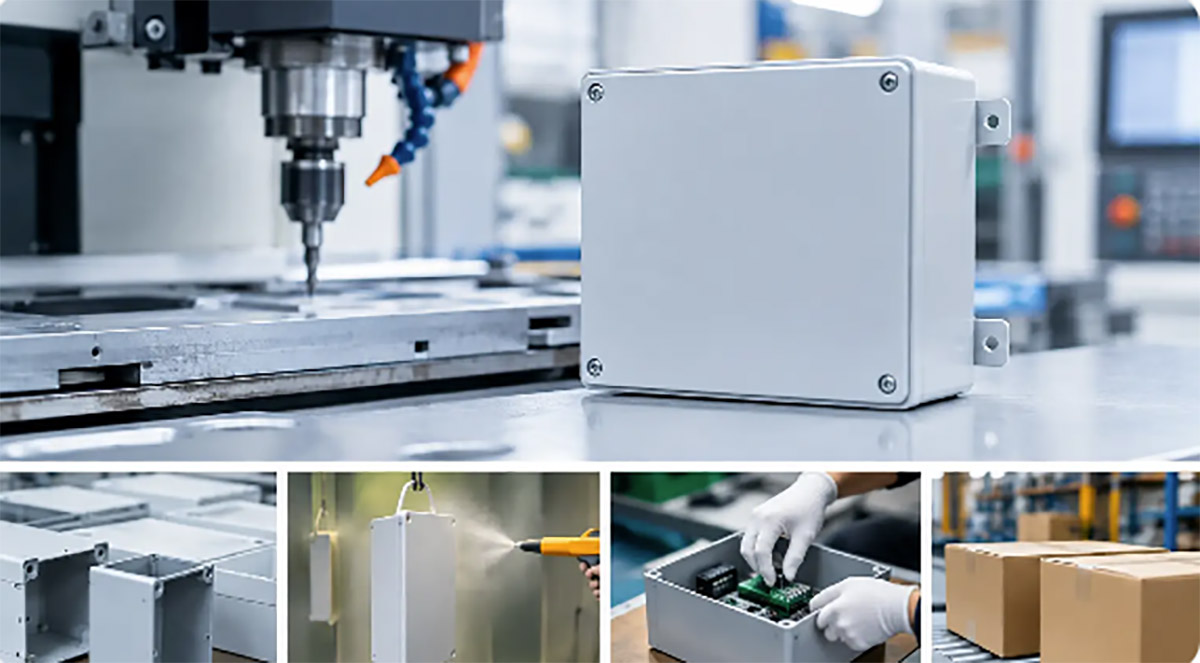
Secondary operations matter too. A molded part may still need trimming, insert installation, ultrasonic welding, pad printing, or assembly. A machined part may require anodizing, bead blasting, tapping, or deburring. The best process is the one that minimizes total manufacturing effort across the full part and product workflow.
Tolerances, finish, and design constraints
CNC machining generally offers excellent control for tight tolerances and critical features, especially on metals and engineering plastics. Flatness, hole location, threads, and precision interfaces are often easier to manage in machining than in molding, where shrinkage and material flow must be controlled carefully.
That said, injection molding can hold repeatable production tolerances very well when the part is designed correctly and the tool is built for the requirement. The issue is not that molding is inaccurate. The issue is that molded part quality depends heavily on wall consistency, draft, gate location, cooling, resin behavior, and process control.
Surface finish is another point where intent matters. If you need a cosmetic plastic exterior with defined texture and consistent appearance across thousands of units, molding has the advantage. If you need sharp machined details or a metal finish, CNC is the more natural fit.
Design rules are also different. CNC prefers accessible tool paths, manageable internal radii, and practical fixturing. Injection molding prefers draft angles, uniform wall thickness, and geometry that can eject cleanly from the mold. A part that looks simple in CAD may be expensive in either process if it ignores those realities.
A practical decision framework
In most programs, the choice comes down to four questions. First, what is your current volume - ten parts, one thousand, or one hundred thousand? Second, how stable is the design? Third, what material and mechanical requirements are non-negotiable? Fourth, how quickly do you need first articles and then ongoing production?
If volume is low, design is still evolving, or the part must be metal, CNC machining is usually the safer path. If volume is rising, geometry is frozen, and the part is a plastic component intended for repeated production, injection molding is usually the better long-term solution.
There is also a middle ground. Many successful launches use CNC machining, SLA, or soft tooling for validation and pilot builds, then move to hardened tooling for mass production. That staged approach reduces risk and gives engineering, procurement, and quality teams time to verify actual demand before committing to full-scale production assets.
For companies managing multiple components, the right answer may involve both processes in the same product. A molded plastic housing can pair with CNC-machined aluminum heat sinks, fixtures, or internal brackets. In that environment, supplier coordination matters almost as much as process selection.
Why lifecycle planning matters more than process loyalty
The most efficient manufacturing strategy is rarely about defending one process over another. It is about using each process at the right stage. Early design work rewards flexibility. Scaled production rewards repeatability and unit economics. Trying to force one method across the entire product lifecycle usually creates avoidable cost.
That is why manufacturing support should start with application review, not just quoting. A capable partner will look at part geometry, tolerances, finish requirements, annual volume, and assembly context before recommending the path forward. Xiamen Creator Technology works in that model because many customers do not need a single process. They need a controlled transition from prototype to tooling to production.
If you are evaluating cnc machining vs injection molding, start with the business case behind the part, not just the part itself. The best manufacturing decision is the one that still looks right after design changes, pilot builds, quality checks, and real production demand all show up.