Compare compression molding versus injection molding by tooling, materials, cost, lead time, part geometry, and volume to select a process with confidence.

A molded part can look simple on a
CAD screen and become expensive once tooling, material behavior, cycle time,
and assembly requirements enter the discussion. The decision between compression
molding versus injection molding is not just a question of which
process costs less per part. It determines how a product is designed, how
quickly it can move from prototype to production, and where manufacturing risk
appears.
For most projects, injection
molding is the default choice for high-volume thermoplastic components with
detailed geometry. Compression molding remains highly relevant for silicone,
rubber, thermoset materials, large parts, and applications where material
performance matters more than extreme dimensional detail. The right answer
depends on the part, the annual demand, and the production plan behind it.
How the Two Molding Processes Work
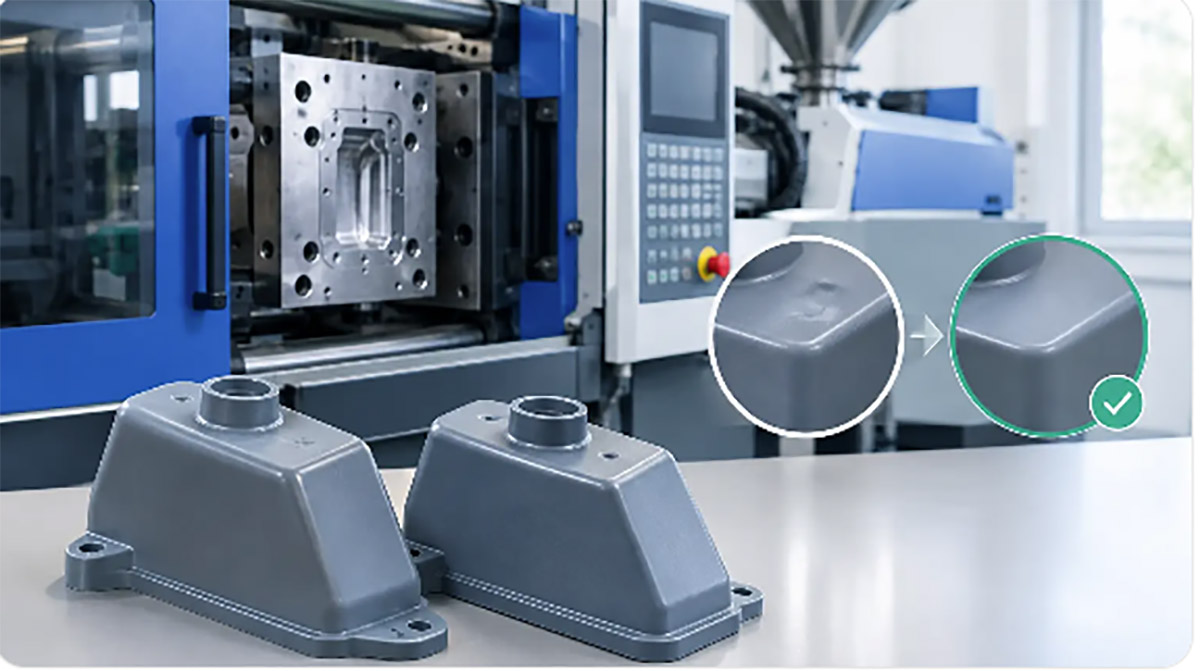
Injection molding produces a part by melting material
and forcing it under pressure into a closed mold cavity. Once the material
cools or cures, the mold opens and ejects the finished component. The process
is fast, repeatable, and well suited to automated production. It is commonly
used for housings, clips, caps, brackets, consumer-product components, and
precision plastic parts.
Compression molding starts
with a measured charge of material placed directly into an open, heated mold.
The mold closes under pressure, spreading the material through the cavity.
After the material cures or sets, the part is removed and excess flash may be
trimmed. This method is widely used for silicone, rubber, thermoset plastics,
seals, gaskets, electrical insulation components, and certain composite parts.
The basic difference is where
and how the material is formed. Injection molding pushes material into a fully
closed cavity through gates and runners. Compression molding compresses a
premeasured material charge between mold surfaces.
Compression Molding Versus
Injection Molding: Key Differences
The best comparison begins with the production factors
that affect cost, quality, and part performance.
Tooling complexity and investment
Injection molds are generally more complex. They may
require runners, gates, cooling channels, ejector systems, slides, lifters,
hot-runner systems, and carefully controlled venting. The upfront tooling cost
can be significant, especially for multi-cavity molds or parts with side
actions and tight tolerances.
Compression molds are usually
simpler in construction. A basic compression tool may have fewer moving
elements and lower machining complexity, which can reduce initial tooling
investment. That advantage is meaningful for pilot production, lower-volume
programs, or parts made from silicone and rubber compounds.
Simpler tooling does not
automatically mean compression molding is the lower-cost choice. If a product
requires very high output, automated handling, or consistent short cycles,
injection molding can recover its initial tooling cost quickly through lower
unit pricing.
Material compatibility
Injection molding is strongly associated with
thermoplastics such as ABS, polypropylene, polycarbonate, nylon, POM, TPE, and
many filled engineering resins. It can also be used with liquid silicone rubber
and selected thermoset materials using specialized equipment.
Compression molding is
particularly effective for high-consistency silicone rubber, natural rubber, EPDM,
nitrile, fluorosilicone, and thermoset compounds. These materials can be
difficult or inefficient to process through a conventional injection molding
system. Compression molding also works well when the material needs to retain
specific elastic, heat-resistant, chemical-resistant, or electrical insulation
properties.
Material selection should come
before process selection whenever possible. A softer sealing component and a
rigid electronics enclosure may both be called “plastic parts,” but their
manufacturing requirements are completely different.
Geometry and design freedom
Injection molding provides more flexibility for
detailed geometry. It can produce thin walls, snap features, ribs, bosses,
textured surfaces, logos, living hinges, and complex internal features with
strong repeatability. It is often the better option for parts that must mate
with other components or meet demanding cosmetic standards.
Compression molding performs
best with simpler, thicker, and more open geometries. Deep undercuts, thin
sections, sharp corners, and complex internal structures can be challenging.
Flash is also more common because material can escape at the mold parting line
under compression.
That said, compression molding
can be the practical choice for large silicone parts, thick gaskets,
diaphragms, protective covers, and components where flexibility matters more
than molded-in detail. Good design for manufacturing can often eliminate
unnecessary geometry before the mold is built.
Tolerances and surface finish
Injection molding generally delivers tighter
dimensional control, particularly when tooling, resin conditioning, process
parameters, and inspection methods are properly managed. It is better suited to
parts with close assembly interfaces, controlled wall thickness, and repeatable
cosmetic surfaces.
Compression molding can
achieve reliable production quality, but dimensional variation may be higher
due to material placement, flash, cure shrinkage, and post-molding trimming.
Tolerances must be established realistically for the selected material.
Silicone and rubber components, for example, naturally require a different
tolerance approach than rigid thermoplastic housings.
For either process, tool
design alone does not guarantee quality. Part consistency depends on material
lot control, mold maintenance, curing or cooling conditions, operator
procedures, and inspection planning.
Cost, Volume, and Lead-Time
Considerations
Injection molding typically
makes the most commercial sense when production volume is high enough to
spread tooling
cost across
many parts. Its cycle times are often short, and automation can reduce labor
per piece. A multi-cavity mold can produce several or dozens of parts in a
single cycle, making it effective for sustained volume production.
Compression molding can be
more economical for low to medium volumes, especially when a lower-complexity
tool is appropriate. It may also be the only practical process for a particular
elastomer or thermoset material. However, longer cure cycles, manual loading,
flash removal, and secondary trimming can increase labor content.
Lead time is not determined by
mold construction alone. Injection tooling may take longer because of cooling
design, ejection systems, and complex mechanisms. Compression tooling can be
faster to build when the part design is straightforward. After tooling is
complete, injection molding usually offers faster throughput, while compression
molding may require more handling and finishing.
A sourcing decision should
evaluate total landed manufacturing cost rather than only the quoted tool
price. Include projected volumes, scrap expectations, secondary operations,
packaging requirements, quality inspection, assembly needs, and the likelihood
of future design revisions.
When Compression Molding Is the
Better Choice
Compression molding is often the stronger option when
the component is made from silicone, rubber, or a thermoset compound that needs
controlled curing. It is also suitable for larger parts with relatively simple
forms, where injection tooling complexity would not provide enough production
benefit.
Typical applications include
seals, gaskets, keypads, silicone
covers,
vibration dampers, insulating components, diaphragms, and industrial rubber
parts. For these components, material properties such as durometer, compression
set, temperature resistance, and chemical compatibility often carry more weight
than fine cosmetic features.
It can also support early
production stages when demand is uncertain. A company may use compression
molding to validate material performance and market response before investing
in more specialized high-output tooling.
When Injection Molding Is the
Better Choice
Injection molding is usually the preferred process for
rigid thermoplastic components, high-volume consumer products, detailed
enclosures, and parts that require controlled assembly fit. It supports
consistent production of features that would be difficult to form or repeat
through compression molding.
Consider injection molding
when the part requires thin walls, multiple snap fits, molded threads, precise
ribs, cosmetic texture, inserts, or repeatable dimensions across large
production quantities. It is also well suited to products that will be
assembled with electronic components, fasteners, metal inserts, or other molded
parts.
For a product expected to
scale, the injection mold should be designed around the actual production
strategy. A single-cavity tool may be appropriate for a launch run, while a
multi-cavity tool, hot runner, or automated fixture may be justified once
demand is established.
Design and Manufacturing Questions
to Resolve Early
Before committing to either process, confirm the
functional requirements of the part. Material hardness, environmental exposure,
wall thickness, target tolerances, cosmetic expectations, annual volume, and
assembly interfaces should all be documented. If the component seals against
another part, define the mating condition and compression requirement rather
than specifying dimensions in isolation.
DFM
review is
especially valuable before tooling release. It identifies issues such as
insufficient draft, uneven wall thickness, trapped air, difficult ejection,
unnecessary undercuts, weak knit-line areas, and unrealistic tolerance
callouts. Changes at this stage are usually manageable. Changes after hardened
tooling is complete can affect timing and budget.
For products that combine
rigid plastic, silicone, metal, and electronics, the molding decision should
also be coordinated with the broader build. A part that is inexpensive to mold
but difficult to assemble, inspect, or package is not necessarily the efficient
manufacturing choice.
The practical path is to
select the material first, validate the design against real production
conditions, and match tooling investment to expected demand. Xiamen Creator
Technology can support that decision across DFM, prototype development,
tooling, molding, assembly, and production inspection, helping teams move from
a workable part design to a controlled manufacturing plan.