A prototype that looks right on the bench can still fail the moment it hits real production—tolerances stack up, cosmetic standards shift, and assembly time quietly doubles. Scaling from prototype to production isn't about making more units; it's about building a repeatable process at the right cost. This guide walks through the critical transitions every hardware team must navigate to avoid costly rework.

A prototype that looks right on the bench can still fail the moment you ask it to survive real production. Tolerances stack up, cosmetic standards shift, suppliers substitute materials, and assembly time quietly doubles. That is why knowing how to scale from prototype to production is less about making more units and more about building a process that can repeat the same result at the right cost.
For product teams, engineers, and sourcing managers, the handoff from development to manufacturing is where schedule risk becomes commercial risk. If the prototype was built for proof of concept, production has to be built for repeatability, inspection, lead time, and yield. The companies that scale well do not treat production as a larger version of prototyping. They treat it as a different stage with different controls.
How to scale from prototype to production without costly rework
The first practical shift is to stop judging the design only by function. A prototype can prove geometry, fit, and core performance, but production requires manufacturability. That means reviewing wall thickness, draft angles, undercuts, parting lines, gate location, shrinkage behavior, fastening methods, and tolerance strategy before tooling begins.
This is where DFM and DFA work matter. If your part requires heavy manual trimming, complex secondary machining, or fragile assembly steps, those issues become expensive at volume. A design that is acceptable for ten units can become unstable at ten thousand. Sometimes the best decision is not to preserve every feature from the prototype. It is to simplify the part so the product can be made consistently.
Material selection also changes once production enters the conversation. During prototyping, teams often choose what is fast to machine, print, or cast. In production, the material has to meet performance requirements while remaining available, cost-controlled, and process-compatible. A resin that performs well in an SLA model may tell you very little about how an injection molded grade will behave in impact, surface finish, or long-term wear.
That is why production planning should start with material equivalency, not just prototype appearance. If the end product will use molded ABS, PC, silicone, aluminum die cast, or stamped steel, the development path should reflect those realities early. You do not need final tooling on day one, but you do need prototype decisions that do not mislead the next phase.
Move from prototype intent to production data
A common reason projects stall is that the prototype exists, but the production package does not. Factories do not build from intent. They build from controlled information. Before scaling, the design package should be complete enough to support quoting, tooling, inspection, and assembly planning.
That usually includes 2D drawings with tolerances, 3D files, BOMs, material specifications, surface finish requirements, color standards if relevant, assembly instructions, packaging expectations, and test criteria. If any of those are still being defined after tooling starts, the project is exposed to revision costs and schedule drift.
The deeper issue is version control. Many prototype programs move fast with informal updates shared across engineering, design, and sourcing. That works until one supplier cuts tooling from an outdated revision or a contract assembler receives the wrong BOM. Production requires disciplined document release and change management. Even small revisions can affect mold steel, fixture geometry, or inspection methods.
For OEM brands and hardware startups, this is often the point where an integrated manufacturing partner becomes useful. When prototyping, tooling, molding, machining, sourcing, and assembly are coordinated under one workflow, there are fewer interpretation gaps between stages. That does not remove all risk, but it usually reduces handoff errors.
Tooling is where scale becomes real
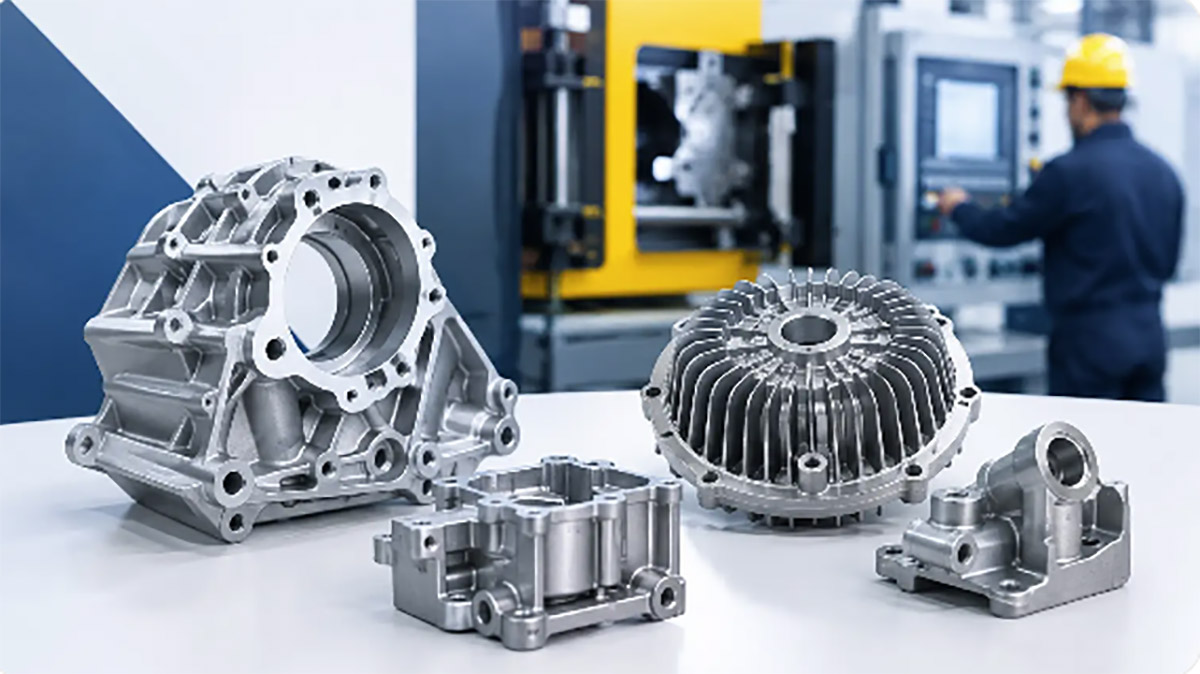
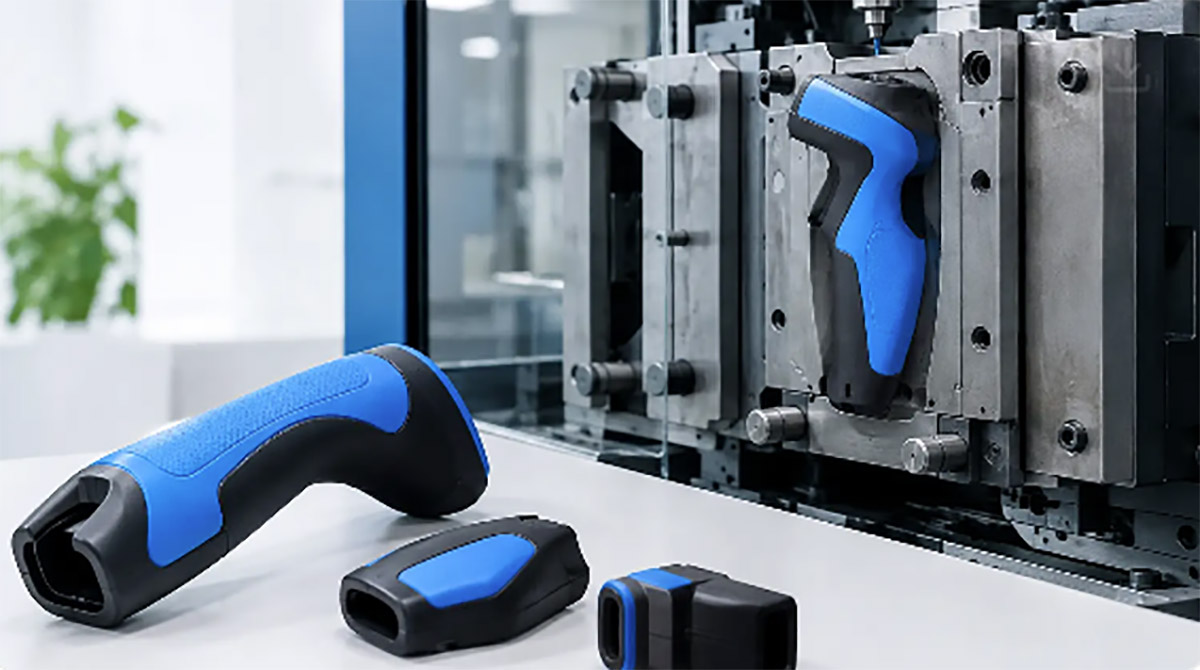
If your product depends on injection molding, die casting, silicone tooling, or stamping, the transition to production is shaped by tool strategy. This is not only a cost decision. It is a capacity, maintenance, quality, and lead-time decision.
Soft tooling may be the right answer for bridge production or market validation. It lowers upfront investment and gives teams room to refine the design. The trade-off is tool life, dimensional stability, and sometimes part consistency. Hard tooling supports longer production runs and tighter process control, but it raises the cost of late changes. The right choice depends on forecast volume, confidence in the design, and how likely the product is to evolve after launch.
Tool review should also include more than cavity geometry. Ejection, venting, cooling, steel selection, wear surfaces, insert strategy, and maintenance access all affect production performance. A mold that technically runs can still create cycle time problems, flash risk, sink marks, or inconsistent filling across cavities.
The teams that scale effectively treat tooling approval as an engineering gate, not a purchasing event. T1 samples are not the finish line. They are the start of process tuning.
Pilot runs expose what prototypes hide
One of the most useful steps in how to scale from prototype to production is the pilot run. This is where you learn whether your product can actually be built in sequence, at pace, and with stable quality.
A pilot run should test more than the parts themselves. It should validate assembly flow, fixture performance, operator instructions, packaging fit, labeling accuracy, incoming material consistency, and final inspection logic. It should also measure practical production data such as cycle time, scrap rate, first-pass yield, and rework frequency.
This stage often surfaces issues that never appeared in a standalone prototype. Maybe a connector is difficult to install without damaging a housing. Maybe a cosmetic surface shows flow marks only under production molding conditions. Maybe a purchased component has too much lot-to-lot variation for your tolerance stack. These are production issues, not design theory, and they are far cheaper to fix before a full release.
Pilot quantity depends on the product and process. For a simple machined part, the pilot may be modest. For a multi-part consumer product with custom packaging and outsourced subcomponents, the pilot needs to be large enough to reveal real process variation.
Quality control has to be designed, not added later
Many teams assume quality improves by adding inspection. In practice, inspection alone does not stabilize a process. If you want repeatable output, the control plan has to be built into the production method.
That means defining CTQs early, linking them to measurable standards, and deciding where in the process those features will be controlled. Some dimensions belong in incoming inspection. Some need in-process checks at molding, machining, or assembly. Others are best confirmed through functional testing at final QC.
It also means being realistic about tolerances. Overly tight tolerances increase cost and rejection without improving product performance. Loose tolerances in critical interfaces create fit and reliability problems. A production-ready drawing reflects what matters functionally and what can be held economically by the chosen process.
For programs using multiple fabrication methods, quality planning becomes even more important. A molded enclosure, stamped bracket, silicone keypad, machined insert, and final assembly all introduce different variation patterns. Quality consistency depends on understanding how those processes interact, not reviewing each one in isolation.
Sourcing and assembly can limit scale even when parts are ready
A product is only as scalable as its weakest supply line. Teams often focus on custom parts and forget that purchased components, packaging materials, adhesives, cables, and fasteners can stop production just as easily as a delayed mold.
Before release, the BOM should be reviewed for long-lead items, single-source risk, MOQ conflicts, and substitution rules. If a key component changes, the impact on form, fit, function, compliance, and assembly should already be understood. Waiting until a shortage happens is too late.
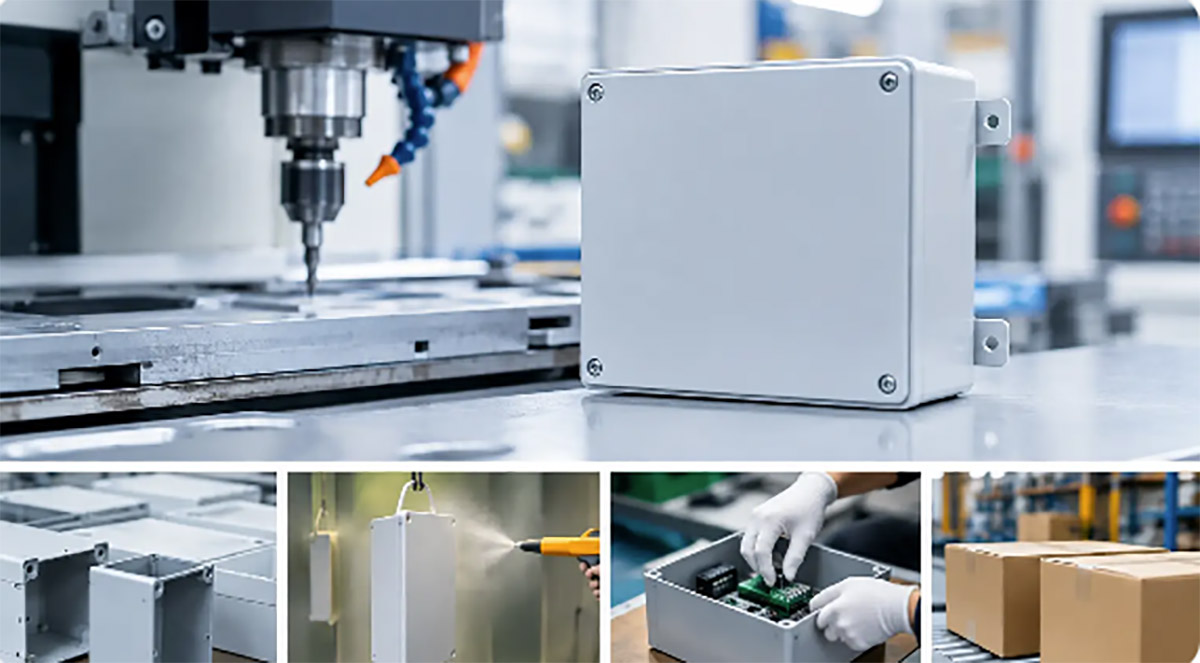
Assembly planning deserves the same attention. A product that requires excessive manual alignment, custom handling, or complex testing will scale slowly and at higher labor cost. Fixtures, work instructions, torque requirements, adhesive cure times, and pack-out methods all affect throughput. Small changes in assembly design can reduce labor significantly over the life of the program.
This is one reason companies like Xiamen Creator Technology position integrated manufacturing support around the full product lifecycle. When component sourcing, process selection, tooling, part production, assembly, and packaging are managed together, it becomes easier to balance cost, lead time, and quality across the entire build.
Scale in stages, not in assumptions
The safest production ramp is usually staged. Start with design validation, move into tooling and first articles, run pilot builds, correct process issues, and then expand volume with actual yield data. That approach may feel slower at the start, but it is often faster than pushing directly into mass production and discovering the process was never stable.
The main trade-off is upfront discipline versus downstream disruption. Teams that rush can save a few weeks early and lose months later in rework, scrap, and customer complaints. Teams that define controls earlier usually get cleaner launches and more predictable unit economics.
If you are deciding how to scale from prototype to production, the right question is not whether the design works once. It is whether the design, tool, supply chain, and assembly process can work repeatedly under commercial conditions. That is the standard production has to meet.
A good prototype proves the product can exist. A good production plan proves the business around that product can hold up when orders start coming in.