CNC machining vs die casting: compare cost, lead time, tolerances, materials, and production volume to select the right process for your part design

A housing that needs 50 units for
field testing should not be evaluated the same way as a component planned for
100,000 units per year. That is the central decision in CNC machining
vs die casting. Both processes produce accurate metal parts, but they
create very different cost structures, lead times, design constraints, and
scaling paths.
For product teams, the right
choice is rarely about which process is technically superior. It is about
selecting the process that supports the current stage of the product while
keeping the transition to production controlled and commercially viable.
CNC Machining vs Die Casting: The
Core Difference
CNC machining is a subtractive process. A machine
removes material from a solid metal block, plate, bar, or billet using
programmed cutting tools. The process is well suited to prototypes, fixtures,
low-volume production, and parts with tight tolerances or detailed features.
Die casting is a forming
process. Molten metal, typically aluminum or zinc alloy, is injected under high
pressure into a hardened steel die. Once the die is built and validated, it can
produce large quantities of near-net-shape parts quickly and repeatedly.
The practical distinction is
straightforward: CNC machining has low upfront tooling investment but a higher
cost per part. Die casting requires significant tooling investment, but its
unit cost falls sharply as volume increases.
When CNC Machining Is the Better
Choice
CNC machining is usually the preferred route when a
design is still changing, production volume is limited, or dimensional
requirements are demanding. It allows engineers to produce parts directly from
a CAD model without committing to permanent production tooling.
Prototypes and low-volume
production
For early functional
prototypes, engineering samples, and pilot builds, CNC machining avoids the cost and
calendar time of die-casting tooling. A revised CAD file can be programmed and
machined without rebuilding a steel die. This is especially useful for hardware
startups and product teams that are testing assembly fit, thermal performance,
strength, or electronics placement.
CNC is also practical for
low-volume production runs. The exact crossover point varies by part size,
material, geometry, cycle time, and die cost, but machining often remains
commercially sensible from one piece through several hundred pieces. For more
complex parts, the viable low-volume range can extend further.
Tight tolerances and critical
features
Machining can hold close tolerances on locating
features, bearing bores, threaded holes, sealing surfaces, and precision mating
interfaces. A die-cast part can achieve good repeatability, but it may still
require secondary machining on these critical features.
This means the decision is not
always CNC machining or die casting. A common production method is die casting
for the main shape, followed by CNC machining for high-precision surfaces. This
hybrid approach controls unit cost while preserving the accuracy needed for
assembly and function.
Material flexibility
CNC machining offers a broad selection of materials,
including aluminum, stainless steel, brass, copper, titanium, and engineering
plastics. That range matters when the final material has not been finalized or
when the design requires an alloy that is not commonly die cast.
Aluminum die casting uses
specific casting alloys chosen for fluidity, strength, corrosion resistance,
and casting behavior. If the product requires a particular wrought aluminum
grade, such as 6061 or 7075, CNC machining is generally the appropriate option.
Design changes without tooling
exposure
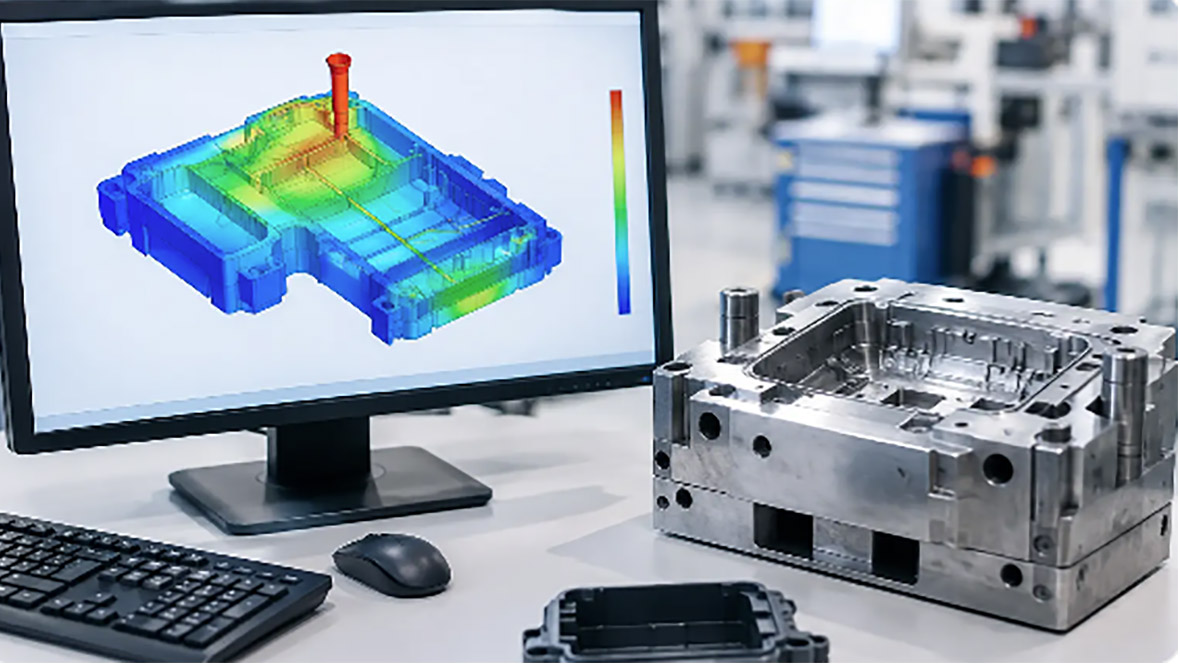
The financial risk of die-casting tooling is not just
its initial price. Significant changes after tool approval can require inserts,
modifications, or an entirely new tool. CNC machining gives the team more room
to improve wall thickness, rib placement, connector openings, fastening points,
and internal component clearances before production geometry is locked.
When Die Casting Is the Better Choice
Die casting becomes compelling when annual demand is
high enough to spread tooling cost across a large number of parts. It is
designed for consistent, repeatable production of complex metal shapes at
speed.
High-volume production economics
Once the die is proven, die casting can produce parts
in seconds or minutes rather than the longer cycle times associated with
machining material away from a billet. Less raw material becomes scrap, and the
process can form many details in a single operation.
For thousands or tens of
thousands of parts, the lower piece price can outweigh the initial cost of the
die. The actual break-even point should be calculated rather than assumed. A
sourcing decision should consider tooling cost, expected annual volume, machining
time, secondary operations, material utilization, finishing, packaging, and
forecast stability.
Complex shapes at production scale
Die casting is effective
for aluminum
housings,
handles, brackets, enclosures, heat sinks, and structural components with ribs,
bosses, thin walls, internal cavities, and cosmetic exterior surfaces. Features
that would require multiple CNC setups may be formed directly in the die.
However, die casting is not a
free-form process. The design needs draft angles so the part can release from
the die. Wall thickness should be reasonably uniform to reduce shrinkage,
porosity, warpage, and incomplete filling. Deep undercuts may require slides or
lifters, which increase tool complexity and cost.
Faster repeatable output after
launch
A production program benefits from die casting when
demand is predictable and delivery requirements call for repeatable output. A
validated die, defined process parameters, inspection plan, and controlled
finishing workflow create a stable production route.
This is particularly relevant
for OEM products that need consistent housings or mechanical components across
multiple manufacturing batches. The value is not only lower unit cost. It is
the ability to plan capacity, maintain repeatable quality, and support ongoing
supply.
Cost Comparison: Look Beyond the
Unit Price
Comparing a machined quotation with a die-cast
quotation without separating tooling from piece price can lead to the wrong
decision. CNC machining usually has modest setup costs and no dedicated hard
tooling. Die casting includes design-for-manufacturing review, die design,
steel tooling, sampling, tool adjustments, and production validation.
A simplified total-cost model
is:
Total cost = tooling cost +
part unit cost x production quantity + secondary operation costs
For CNC machining, tooling
cost is low, but the part unit cost is driven by material removal, machine
hours, setups, tool wear, and labor. For die casting, tooling cost is high, but
the production unit cost is generally lower at scale.
Secondary operations deserve
close attention. Die-cast components may need trimming, deburring, tapping,
reaming, machining, shot blasting, powder coating, painting, anodizing alternatives,
or plating. Machined parts may require deburring, bead blasting, anodizing,
laser marking, or other finishes. The most economical process is the one that
produces the required final part, not simply the lowest quoted blank.
Quality, Tolerances, and Surface
Finish
CNC machining provides a highly controlled surface
finish on cut faces and can achieve fine tolerances when the part geometry and
inspection method are appropriate. It is often selected for parts where
mechanical alignment, sealing, or movement depends on precision.
Die casting can produce good
as-cast surfaces and excellent consistency from part to part after the process
is stabilized. Yet casting-related conditions such as porosity, parting lines,
ejector marks, flash, and draft must be accepted or designed around. Cosmetic
requirements should be discussed early because the alloy, die finish, gate
location, and finishing process all affect the visible result.
For pressure-tight components,
welded parts, or parts receiving certain surface treatments, casting porosity
requires specific evaluation. In some cases, impregnation, leak testing,
process controls, or a different manufacturing method may be required.
Lead Time and Product Development
Risk
CNC machining generally offers a shorter route from
approved drawings to physical parts. The schedule depends on material
availability, part complexity, quantity, finishing, and inspection
requirements, but it does not wait for production die construction.
Die casting requires more
front-end planning. Tool design, tool manufacturing, first articles, sampling,
dimensional correction, and process validation add time before stable
production begins. That investment is justified when the forecast supports it,
but it should not be made prematurely just because the final target volume
looks attractive.
A practical approach is to
machine early prototypes and pilot-run components, then use those builds to
complete DFM feedback, assembly validation, and market testing. Once geometry
and demand are more stable, the part can transition to die casting. This staged
path reduces the chance of carrying an expensive design error into permanent
tooling.
A Practical Selection Method
Start with expected production quantity, but do not
stop there. Review whether the design is stable, which dimensions are
function-critical, whether the selected alloy is castable, and how much
secondary machining will still be required. Also consider forecast confidence.
A projected volume is not the same as an established purchase order pattern.
Choose CNC machining when
flexibility, material choice, short lead time, and precision are the primary
requirements. Choose die casting when the design is mature, volumes are
sustained, geometry suits the process, and the tooling investment can be
recovered through lower long-term unit cost.
For many programs, the
strongest answer is a controlled transition rather than a single-process
commitment. Xiamen Creator Technology can support this progression from
machined prototypes and DFM review through die-casting
tooling,
production, finishing, and assembly. The useful next step is to review the part
drawing, annual volume, tolerance callouts, finish specification, and expected
product changes before locking in the manufacturing route.