Learn how to choose prototype materials based on function, process, finish, cost, and production intent, so prototype results guide tooling decisions.

A prototype that looks correct
but fails under a snap fit, overheats near electronics, or cannot accept the
intended finish can send a project in the wrong direction. Knowing how
to choose prototype materials means deciding what the prototype must
prove before selecting a process or requesting a quotation. The right choice is
rarely just the lowest-cost material or the one closest in color to the final
part.
For product teams, the
material decision affects design validation, lead time, test results, tooling
strategy, and the quality of information available before production. A
cosmetic presentation model has different requirements from a functional
engineering sample, a pilot-run assembly, or a pre-tooling part used for
customer testing.
Start With the Question the
Prototype Must Answer
The most efficient prototype is one designed around a
specific decision. If the purpose is unclear, teams often pay for
production-grade materials and tight tolerances before the design is stable, or
they use a visually convincing material for tests that require real mechanical
performance.
A prototype may need to verify
appearance, dimensions, assembly, mechanical loading, heat resistance, chemical
exposure, user interaction, or manufacturing feasibility. It can serve more
than one purpose, but those requirements should be ranked. A handheld consumer
enclosure, for example, may need cosmetic surfaces and assembly testing early,
while a mounting bracket may need stiffness, fatigue resistance, and accurate
hole locations.
Before material selection,
define four items:
·
The function being tested and the expected load, temperature, and
environment
·
The critical dimensions, tolerances, mating features, and assembly method
·
The required surface condition, color, transparency, texture, or marking
·
The expected production process and the decision this prototype must
support
This short definition prevents
a common mistake: treating every prototype as a miniature version of the final
product. Early prototypes should be fit for purpose. Later prototypes should
increasingly represent production intent.
Match Material Properties to Real
Use Conditions
Material data sheets are useful, but a single
tensile-strength number does not determine whether a part will work. Consider
how the part is loaded and where failure is most likely to occur. A part that
survives a static pull test may still crack at a thin corner after repeated
flexing, creep under sustained load, or deform when exposed to heat.
Mechanical performance
For structural components, assess stiffness, impact
resistance, elongation, fatigue behavior, and creep. ABS-like materials may be
suitable for form, fit, and moderate functional testing of housings. Nylon can
provide better toughness and wear resistance for clips, gears, and mechanically
active features, although moisture absorption can affect dimensions and
properties. Polycarbonate is often considered where impact resistance and heat
performance matter, but transparent parts also require attention to optical
quality and finishing.
For metal parts, CNC-machined
aluminum is practical for fixtures, brackets, thermal components, and
higher-load validation. Stainless steel may be appropriate for corrosion
resistance or demanding strength requirements, though machining time and cost
can be higher. The goal is not to select the strongest material available. It
is to select one that reproduces the failure mode or service condition that
matters.
Temperature, chemicals, and
electrical requirements
Electronic products often need more than a
general-purpose plastic enclosure. Consider heat near batteries, motors, LEDs,
charging components, or power electronics. If the final part requires flame
resistance, chemical resistance, electrical insulation, or a defined
heat-deflection temperature, identify those requirements before functional
testing begins.
A prototype resin can be
useful for design checks, but it may not represent the thermal or electrical
behavior of an injection-molded engineering resin. If a test result will drive
a safety, certification, or tooling decision, use a material and process that
can support a meaningful conclusion.
Flexible and soft-touch components
Silicone, TPU, TPE, and rubber-like prototype
materials are not interchangeable. Their hardness, tear resistance, compression
set, rebound, and bonding behavior vary widely. A silicone keypad, gasket,
overmolded grip, or sealing component should be evaluated for the property most
relevant to its function. A material that feels correct may not seal correctly.
A material that seals well may not withstand repeated compression or assemble
reliably with a rigid housing.
For soft parts, specify the
target hardness range, expected deformation, temperature exposure, and whether
the component will be bonded, mechanically retained, or used in a compression
seal.
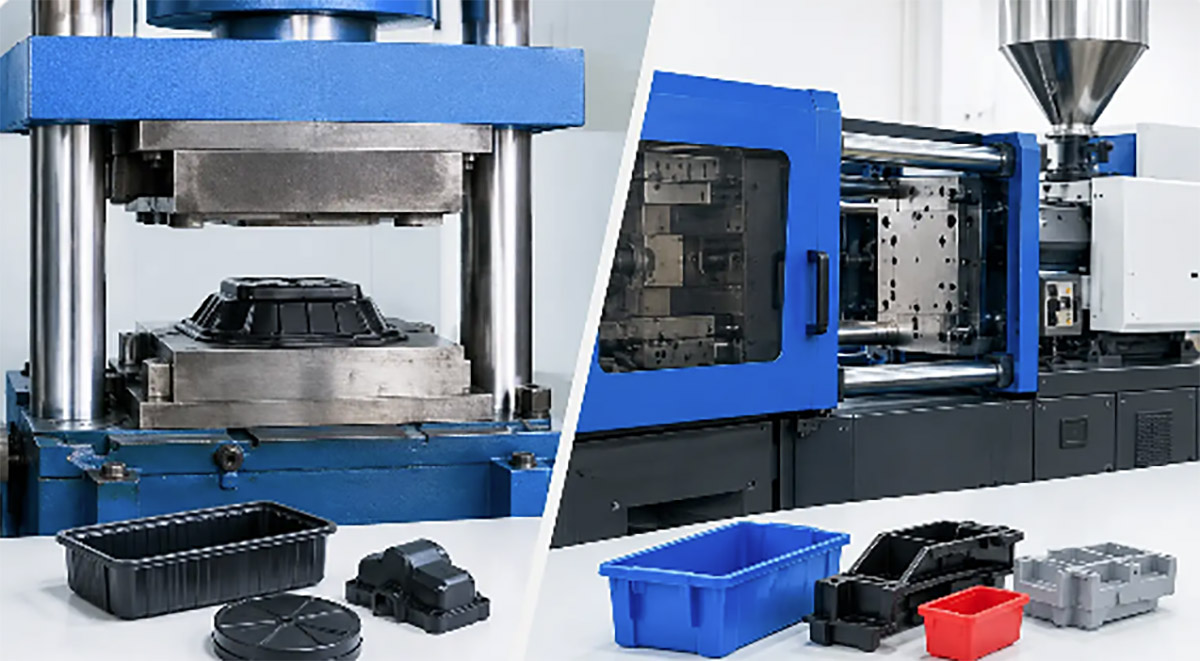
Choose a Prototype Process Along
With the Material
The material is only half of the decision. The
manufacturing process affects strength, anisotropy, tolerance, surface finish,
internal geometry, and available material grades.
SLA is efficient for
high-detail models, smooth cosmetic surfaces, transparent concepts, and complex
small features. It is often well suited to appearance models and fit checks.
However, standard photopolymer resins may be more brittle than production
thermoplastics and can change properties with UV exposure or time.
SLS nylon provides durable
parts without support structures and works well for complex geometries,
enclosures, ducts, clips, and low-volume functional assemblies. Its surface is
typically more textured than SLA, and dimensional allowances may be needed for
close-fitting interfaces.
CNC machining produces parts from
engineering plastics or metal stock, making it valuable when the prototype must
use a near-production material. Machined ABS, PC, POM, nylon, aluminum, and
stainless steel can provide credible functional results. CNC is less economical
for highly complex enclosed features that additive processes can produce
easily, but it is often the better choice for precision and material
performance.
Vacuum casting and silicone
tooling can bridge the gap between one-off additive parts and injection molding. These methods support small
batches, color matching, urethane material options, and early market or
assembly trials. They are useful when multiple units are needed, though the
material behavior and tolerances should still be compared honestly with the
intended molded part.
Consider Production Intent Before
You Commit to Tooling
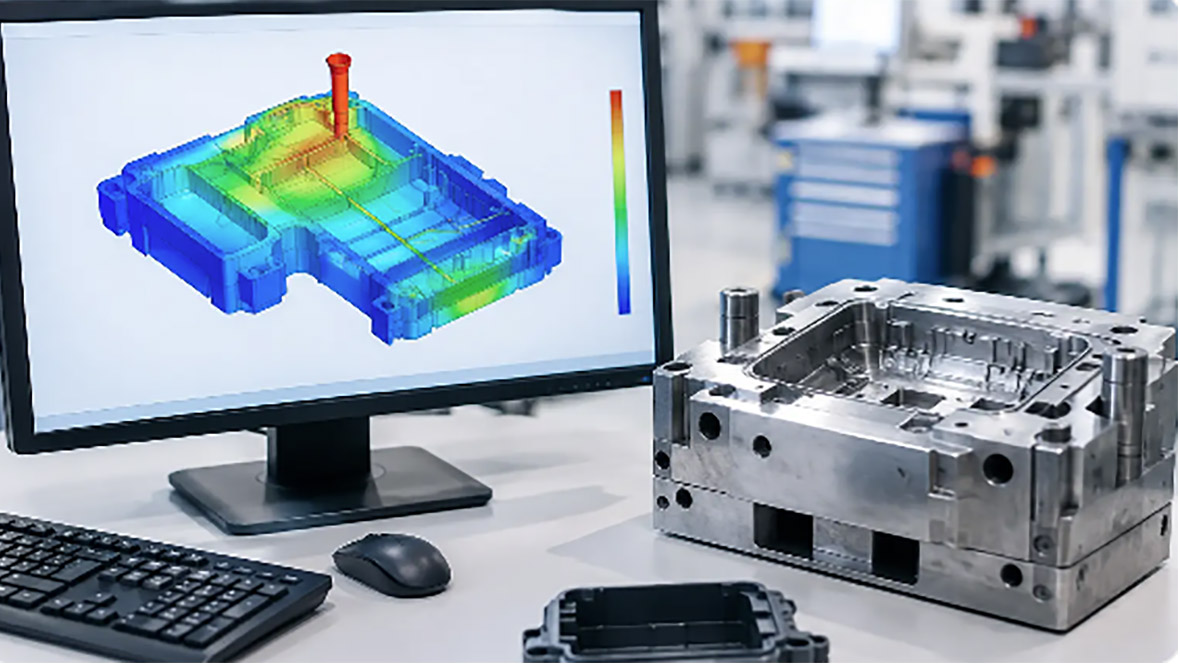
The closer a prototype is to
production, the more it should reveal DFM and DFA issues. Wall thickness transitions,
ribs, draft angles, undercuts, weld lines, gate locations, sink risk, insert
placement, and snap-fit geometry may not behave the same way in a machined or
printed part as they will in injection molding.
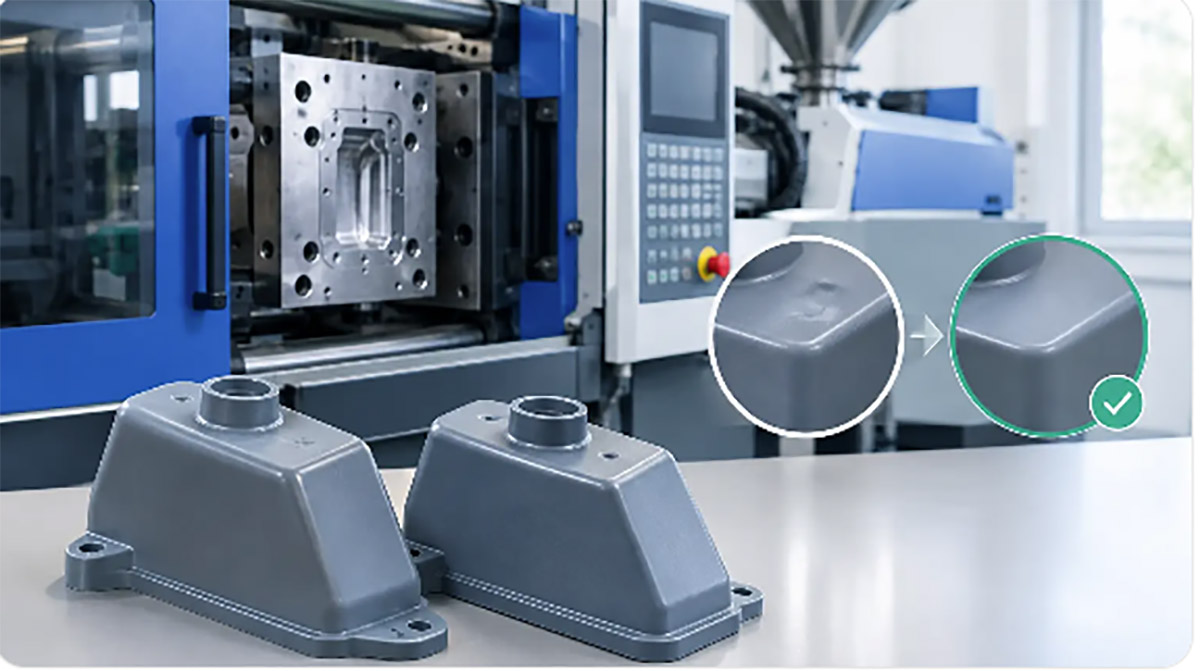
That does not mean all
prototypes must be molded. It means teams should identify when a process change
is necessary. A CNC enclosure may confirm assembly dimensions, while a
soft-tool molded run may be needed to evaluate cosmetic variation, shrinkage,
parting lines, and real snap-fit performance.
For parts intended for die
casting, stamping, or overmoldingF, engage manufacturing input before the design
is frozen. Prototype geometry can validate function while still being adjusted
for material flow, tool access, draft, ejection, bend radii, or secondary
operations.
Balance Cost Against the Cost of
Wrong Information
Low prototype cost is valuable only when the prototype
answers the intended question. An inexpensive resin part is not economical if
it leads to incorrect conclusions about a load-bearing feature. Conversely,
machining every early concept from production-grade material can consume budget
without improving the design decision.
Use lower-cost, faster
processes when evaluating size, ergonomics, layout, and broad assembly
concepts. Increase material and process fidelity when testing safety-critical
features, moving mechanisms, sealing, thermal performance, high-use interfaces,
or production-sensitive details.
A staged approach usually
controls cost better than trying to achieve full production equivalence at the
first iteration. Early rounds can narrow design options quickly. Later rounds
can focus spending on the features most likely to create tooling changes, test
failures, or production delays.
Specify What the Supplier Needs to
Know
A useful prototype request includes more than a 3D
file. State the intended use, material preference or performance target,
critical tolerances, surface requirements, quantity, assembly interfaces, and
test conditions. Call out cosmetic surfaces separately from hidden surfaces,
since finishing effort and acceptance criteria may differ.
If the final material is
unavailable in the selected prototype process, ask for the closest practical
alternative and request a clear explanation of the differences. A capable
manufacturing partner should identify whether the substitute affects stiffness,
impact resistance, shrinkage, texture, color, temperature performance, or
post-processing options.
Xiamen Creator Technology can
support this progression from prototype selection through tooling, pilot
production, assembly, and scaled manufacturing. The value of early
manufacturing review is not merely selecting a material name. It is identifying
which combination of material, process, tolerance, and finishing method will
produce usable validation data.
Use Prototype Results to Reduce the
Next Risk
After testing, document what the part proved and what
remains uncertain. Record failures with enough context to distinguish a design
issue from a prototype-material limitation. A cracked clip may indicate
insufficient section thickness, but it may also result from a brittle resin
that does not represent the intended nylon grade.
The best next prototype is not
automatically a repeat in a different material. It should target the largest
remaining production risk. If fit is confirmed but thermal behavior is unknown,
move to a heat-appropriate material. If function is proven but appearance
remains uncertain, focus on molded surfaces, color, texture, and finishing.
Each iteration should make the tooling decision more informed and the
production handoff more predictable.
Choose prototype materials
with the end decision in mind, and each sample becomes more than a model. It
becomes evidence your engineering, sourcing, and production teams can act on.