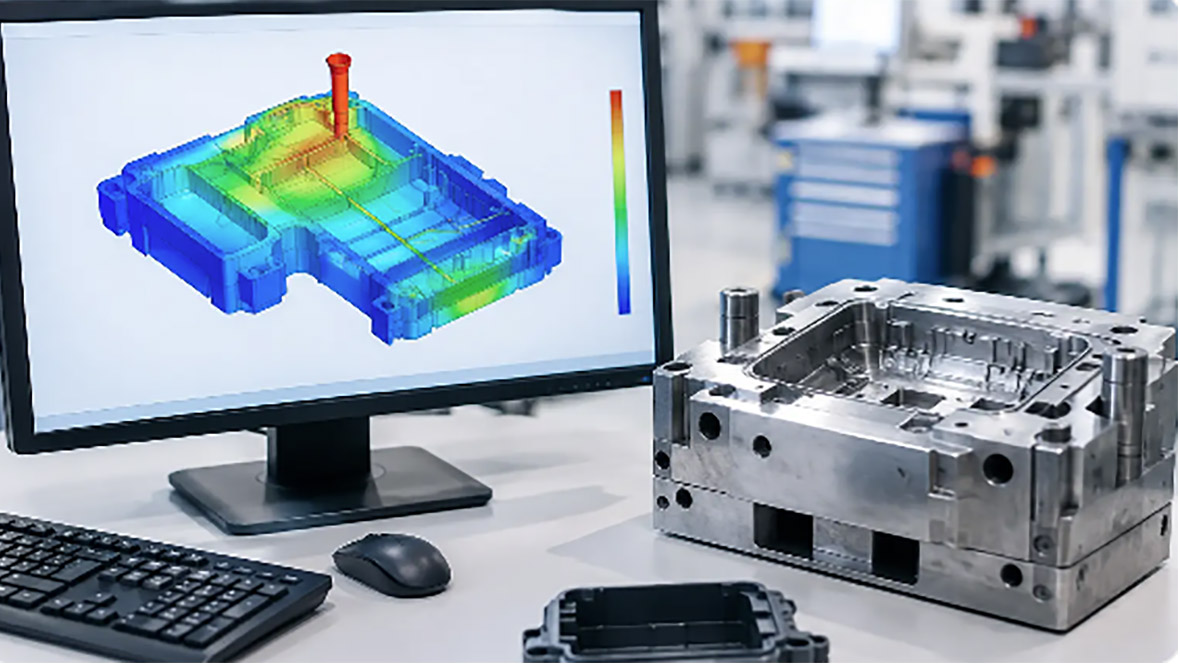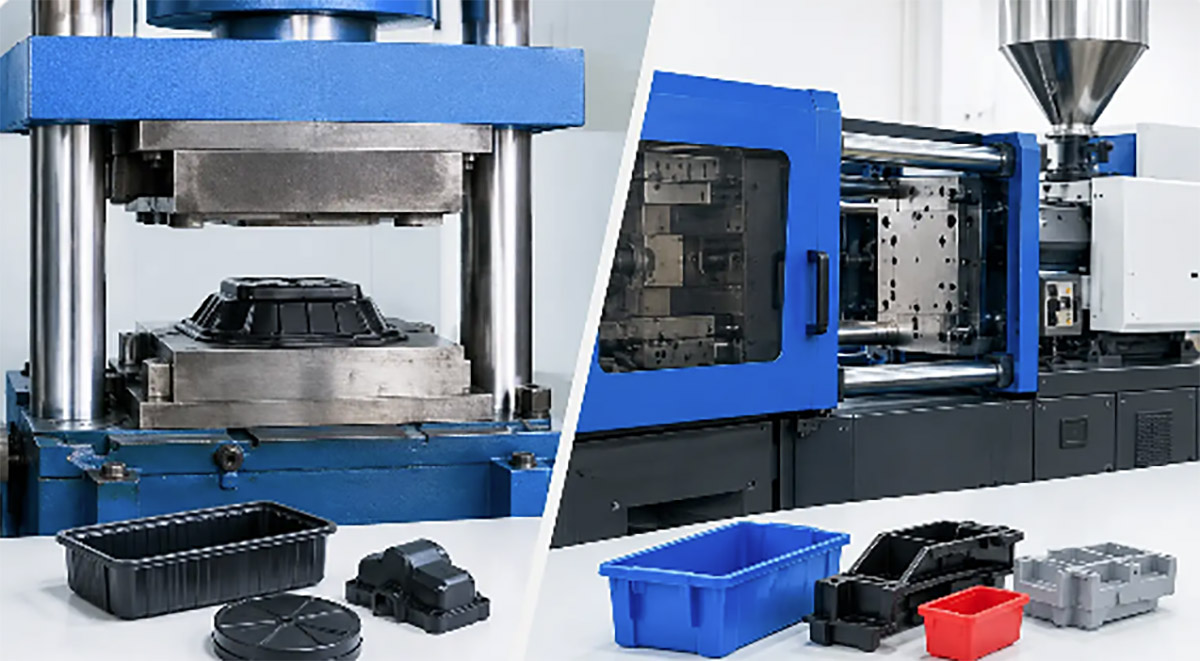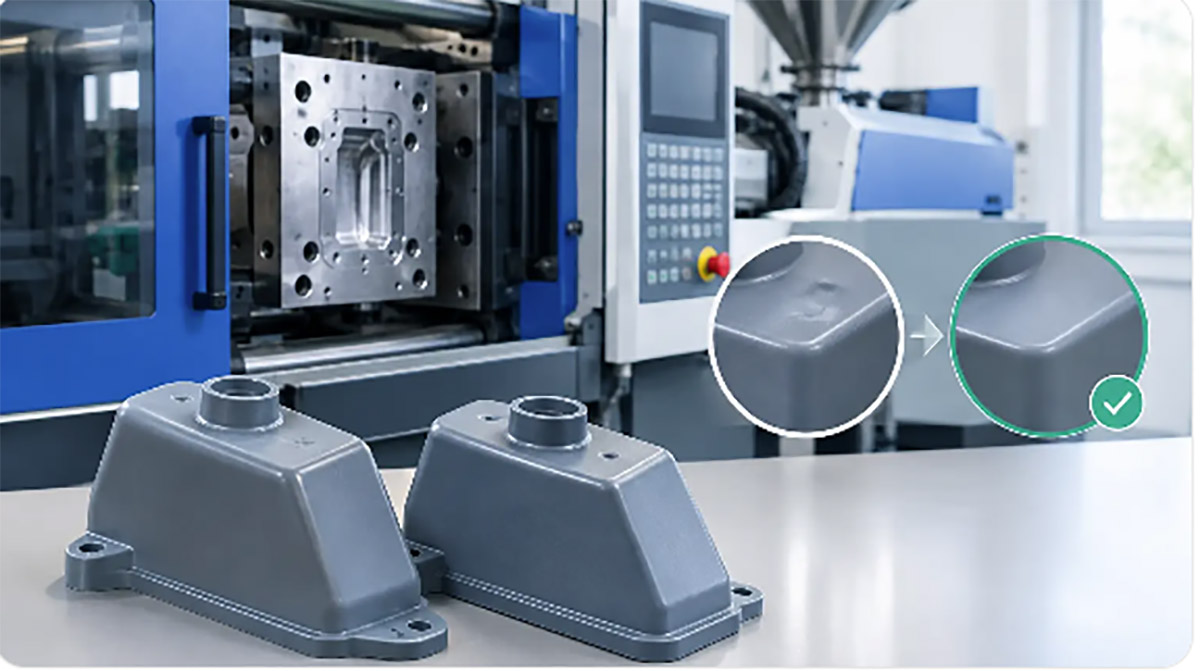
Injection molding delivers repeatable plastic parts at scale. Learn how tooling, material choice, and DFM affect cost, quality, and lead time.

For product teams moving from prototype to production,
injection molding is often the most efficient route for plastic parts that need
repeatability, tight process control, and scalable output. It can support
housings, internal structural parts, clips, covers, brackets, consumer product
components, and many other geometries. But it performs best when part design,
tooling strategy, material selection, and production planning are aligned from
the start.
What
injection molding is really buying you
At a basic level, injection
molding forms plastic parts by injecting molten resin into a precision tool
cavity, cooling the material, and ejecting the finished shape. That description
is accurate, but it misses the commercial reason companies choose it.
What you are really buying is repeatability. Once the
mold is validated and the process window is stable, the same part can be
produced in large volumes with consistent dimensions, surface finish, and cycle
times. That makes it suitable for products where part-to-part variation creates
assembly issues, cosmetic defects, or field failures.
The trade-off is upfront investment. Tooling cost is
higher than for many prototype-focused methods, and changes after steel cut can
be manageable or painful depending on the geometry. Injection molding makes the
most sense when volumes justify the mold, the design is mature enough to lock
key features, and the part has requirements that lower-cost forming methods
cannot meet.
Injection
molding works best when design supports the process
A common mistake is treating
molding as a downstream manufacturing step instead of a design constraint. In
practice, many production issues start in CAD.
Wall thickness is usually the first issue to review.
Uniform walls help material flow, cooling balance, and dimensional stability.
Thick sections may look safer structurally, but they often create sink, warp,
and longer cycle times. If stiffness is the goal, ribs usually perform better
than simply adding mass.
Draft is another area where product intent and
manufacturing reality need to meet. Vertical walls without enough draft
increase ejection force and can damage cosmetic surfaces. Textured finishes
usually require more draft than polished surfaces. Small adjustments here have
an outsized effect on yield and tool life.
Parting line placement, gate location, ejector marks,
and knit lines also matter early. These are not minor factory details. They
influence appearance, structural behavior, and assembly fit. If a visible face
cannot tolerate gate vestige or witness marks, that needs to be addressed
before the tool layout is frozen.
Undercuts deserve the same scrutiny. Some are
necessary, but each one should justify the added complexity. Lifters and
sliders solve real geometry problems, yet they increase mold cost, maintenance,
and risk. In many cases, a snap feature, split geometry, or small redesign can
remove that burden without compromising function.
Material
choice affects more than strength
Resin selection is often
framed as a mechanical requirement, but production teams know the decision
reaches further. The chosen material affects mold design, shrink behavior,
cosmetics, cycle time, and secondary operations.
ABS may be selected for impact resistance and
appearance in consumer housings. PC can improve toughness and heat performance.
PP remains attractive for living hinges, chemical resistance, and
cost-sensitive applications. Nylon offers strength and wear resistance, but
moisture sensitivity and dimensional change need to be managed. Filled
materials can add stiffness, yet they may also increase tool wear and affect
surface finish.
That is why resin choice should be tied to the actual
use case, not just a familiar material from a previous project. A handheld
enclosure, a structural bracket, and a cosmetic cover can all be plastic parts,
but they do not ask the same thing from the process.
Color, texture, flame rating, UV exposure, and
regulatory requirements can narrow options quickly. So can assembly needs. If
the part must be ultrasonically welded, overmolded, bonded, or threaded with
inserts, those requirements should be part of the material discussion early.
Tooling
strategy depends on volume, risk, and timing
Not every injection molding
program should start with a full production tool. The right approach depends on
forecast volume, design stability, and how much risk the team is carrying into
launch.
For bridge production or pilot runs, softer tooling
can make sense when speed matters and design revisions are still possible. For
long-term production, hardened steeltools are usually the better
investment because they support higher shot counts, tighter consistency over
time, and more durable cavity surfaces.
Cavity count is another decision with cost
implications. A single-cavity mold reduces upfront expense and is often
suitable for lower volumes or larger parts. Multi-cavity tooling improves
output and part cost at higher demand, but it requires stronger process balance
and a more committed volume forecast. Choosing too few cavities can cap
capacity. Choosing too many too early can tie up capital before demand is
proven.
Family molds can look attractive because they combine
multiple parts in one tool, especially for assemblies launched together.
Sometimes that is efficient. Sometimes it creates imbalance, scheduling
complications, and maintenance issues if one part changes faster than the
others. The right answer depends on product maturity and replenishment
patterns.
Process
control is what turns a good tool into good parts
A well-built mold does not
guarantee stable production on its own. Injection molding depends on control of
melt temperature, mold temperature, fill speed, packing pressure, cooling time,
and material condition. Small deviations can show up as flash, short shots,
warp, sink, splay, or dimensional drift.
That is why validation matters. First article review,
sampling, dimensional inspection, cosmetic review, and process capability checks are not paperwork
exercises. They establish whether the part can be produced repeatedly within
specification, not just whether a few good samples can be made.
For assemblies, tolerance strategy should be
realistic. Tight tolerances can be achieved on molded parts, but they should be
applied where function requires them. Over-constraining noncritical dimensions
adds cost and scrap pressure without improving product performance. A capable
manufacturing partner will usually push back here for good reason.
Quality planning should also consider what happens
after molding. Parts may need trimming, pad printing, painting, insert
installation, ultrasonic welding, or full assembly with purchased components.
If those downstream steps are part of the program, it is more efficient to
evaluate them during DFM than after the mold is approved.
Where
injection molding fits in a broader manufacturing plan
Injection molding is rarely an isolated decision. For
many products, it sits between early prototype learning and full production
ramp. Teams may start with CNC machining, SLA, or SLSmodels to validate form and
function, then move into prototype tooling, pilot builds, and finally scaled
output with assembly and packaging.
That broader workflow matters because each phase
should reduce uncertainty before the next investment is made. Prototype parts
can answer fit and user testing questions. Tooling reviews can expose molding
risks before steel is cut. Pilot runs can reveal assembly friction, packaging
damage, or supplier coordination gaps that are not obvious at the part level.
This is one reason many OEMs prefer a manufacturing
partner that can support the full path rather than only one process. When
tooling, molding, secondary operations, and assembly planning are managed under
one operational structure, design changes, quality issues, and schedule
adjustments are usually easier to control. Xiamen Creator Technology works in
that model, supporting projects from prototyping through tooling and production
rather than handing off each stage to separate vendors.
When
injection molding is the wrong choice
Injection molding is not
automatically the best answer. If annual volume is low, the geometry is still
changing weekly, or the product requires immediate market testing, the tooling
investment may not make sense yet. In those cases, CNC machining, urethane
casting, or additive methods can be more practical while the design matures.
It can also be the wrong fit for very large parts with
limited volume, or for programs where cosmetic perfection is required but the
design cannot accommodate normal molding constraints. Sometimes the better
decision is to split a part, change the material, or choose a different
manufacturing route altogether.
That kind of judgment is what keeps projects on
budget. Good manufacturing planning is not about forcing every plastic part
into injection molding. It is about knowing when the process will return its
investment and when it will create avoidable cost.
If you are evaluating a part for production, the
useful question is not whether injection molding is fast or common. It is
whether the part, the forecast, and the quality target are aligned well enough
for tooling to pay off over time. That is usually where the smartest cost
savings start.