Compare injection molding vs urethane casting by tooling cost, speed, materials, quality, and volume to select the right process for your part.
 A
production quote can change dramatically based on one early decision: whether a
plastic part should use soft tooling and urethane casting or a hardened mold
and injection molding. Injection molding vs urethane casting is not simply a
choice between a low-cost process and a high-volume process. The right option
depends on expected volume, functional requirements, cosmetic standards,
geometry, schedule, and how much design risk remains.
A
production quote can change dramatically based on one early decision: whether a
plastic part should use soft tooling and urethane casting or a hardened mold
and injection molding. Injection molding vs urethane casting is not simply a
choice between a low-cost process and a high-volume process. The right option
depends on expected volume, functional requirements, cosmetic standards,
geometry, schedule, and how much design risk remains.
For product teams moving from
prototype to production, the key is to select a process that matches the
current stage of the program without creating avoidable tooling expense,
delays, or part-quality compromises.
Injection Molding vs Urethane
Casting: Core Differences
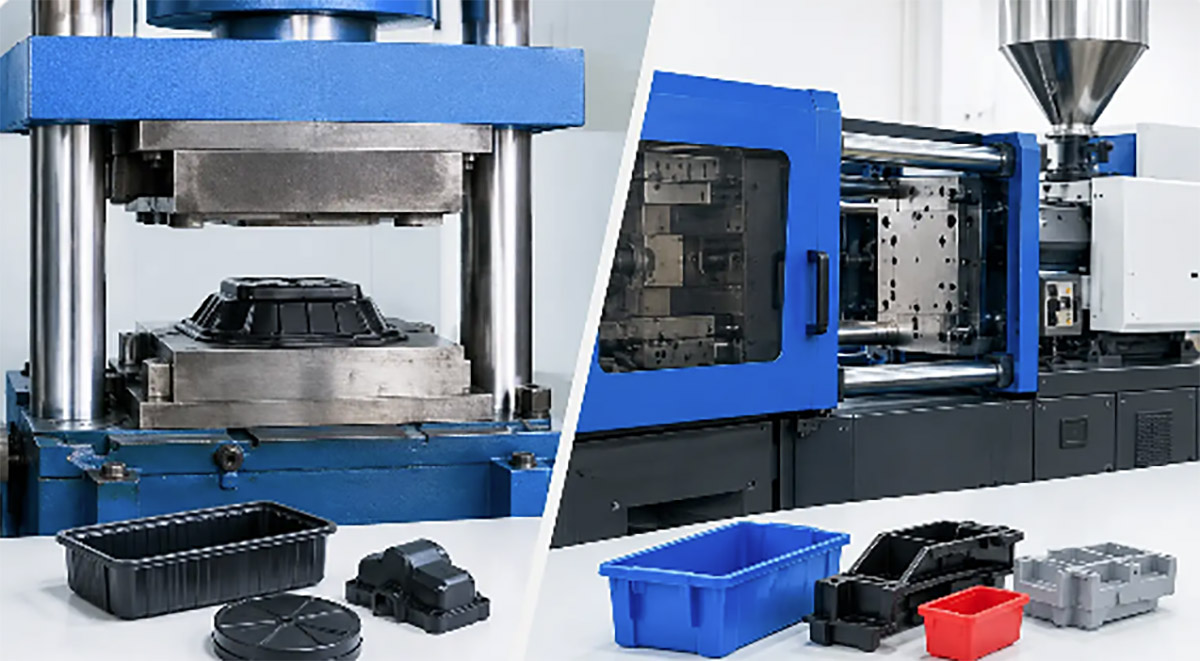
Urethane casting produces parts by pouring two-part
polyurethane resin into a silicone mold. The mold is typically made from a
master pattern produced by SLA, CNC machining, or another high-resolution
prototyping method. Silicone tooling is relatively fast to create and can
reproduce fine surface texture and details from the master pattern.
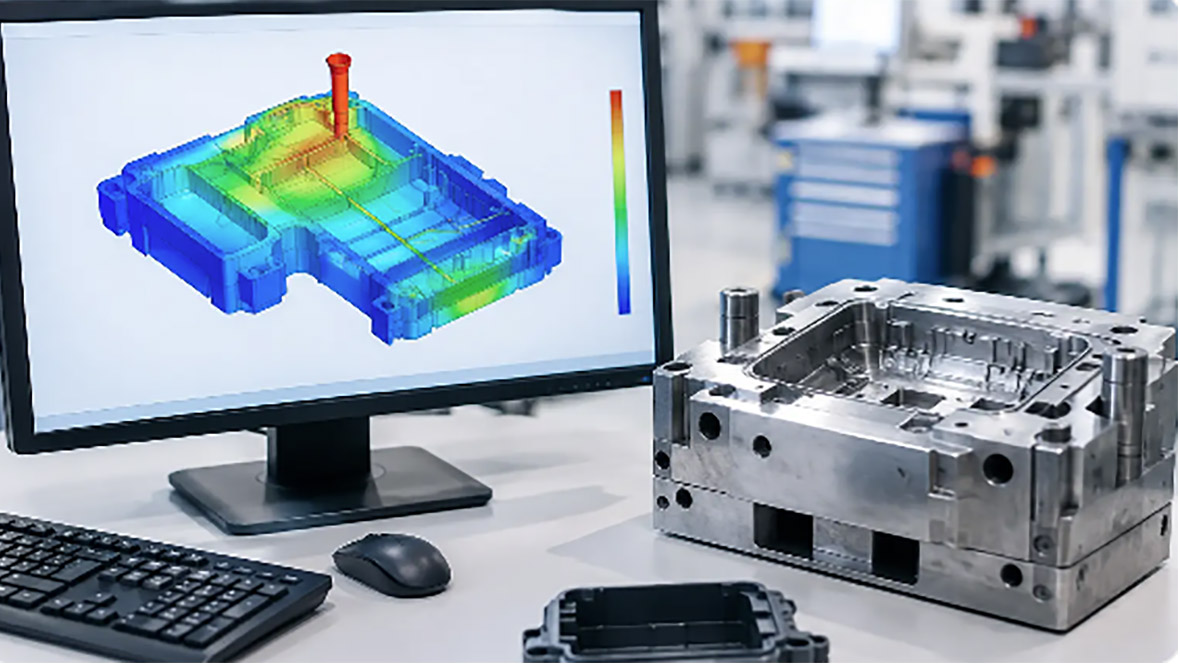
Injection molding heats
plastic pellets until they become molten, then injects the material under
pressure into a precision-machined metal mold. The mold is commonly aluminum
for bridge production or hardened steel for long production programs. After
cooling, the part is ejected and the cycle repeats.
The fundamental difference is
repeatability at scale. A silicone mold may produce roughly 15 to 30 cast
parts, depending on geometry, resin, and handling. A properly designed metal
injection mold can produce thousands to millions of cycles. Injection molding
has higher upfront tooling cost and longer initial lead time, but its unit cost
falls sharply as volume increases.
|
Factor |
Urethane Casting |
Injection Molding |
|
Tooling |
Silicone mold made from a
master pattern |
CNC-machined aluminum or
steel mold |
|
Typical volume |
Low-volume prototypes and
pilot runs |
Medium to high-volume
production |
|
Upfront cost |
Lower |
Higher |
|
Per-part cost |
Higher as volume rises |
Lower at scale |
|
Lead time |
Fast for initial parts |
Longer for tooling, then
fast cycle times |
|
Material options |
Polyurethane resins that
simulate plastics |
Broad range of production
thermoplastics |
|
Part consistency |
Good, with mold-to-mold
variation possible |
High consistency with
controlled process settings |
When Urethane Casting Is the Better
Choice
Urethane casting is most effective when speed and low
initial investment matter more than the lowest possible unit price. It is well
suited to design validation, investor samples, engineering test units,
pre-production demonstrations, market trials, and low-volume replacement parts.
A common use case is a product
that requires 20 to 100 housings before the final design is frozen. Creating
silicone molds allows the team to evaluate assembly fit, color, surface
texture, button feel, and user handling without committing to an expensive
metal tool. If the design changes after testing, a revised master and new
silicone mold can be completed with far less cost and disruption than modifying
an injection mold.
Cast urethane parts can
closely resemble ABS, polypropylene, polycarbonate, rubber, or clear materials
in appearance and general performance. They can be pigmented, painted,
overmolded in selected cases, and finished with textures. However, material
matching should be evaluated carefully. A urethane labeled as ABS-like may
provide similar stiffness and appearance, but it will not necessarily match ABS
in chemical resistance, long-term aging, flammability rating, UV performance,
or mechanical behavior under repeated load.
This limitation matters for
parts that will be exposed to heat, cleaners, outdoor conditions, electrical
safety requirements, or demanding mechanical cycles. Urethane casting is
excellent for functional prototypes, but it should not be treated as an
automatic substitute for final production resin.
When Injection Molding Is the
Better Choice
Injection molding becomes the practical choice when
the design is stable, annual demand is established, and material performance is
central to the product. It is the standard process for many consumer-product
housings, electronic enclosures, connectors, appliance components, clips,
handles, and precision plastic assemblies.
The main advantage is
controlled, repeatable production. Once the mold, resin, process parameters,
and inspection criteria are validated, injection molding can deliver consistent
dimensions and appearance across large batches. The process also supports
production-grade materials, including ABS, PC, PC/ABS, nylon, POM, PP, TPE, and
glass-filled engineering resins. These materials offer known mechanical,
thermal, chemical, and electrical properties that are difficult to duplicate
through casting resins.
Injection molding also
supports features that may be impractical or inconsistent in urethane casting.
These include thin walls, living hinges, snap fits designed for repeated use,
threaded inserts, precise ribs, molded logos, high-gloss surfaces, and tightly
controlled interfaces with mating components. The feasibility of each feature still
depends on part design, material flow, gate location, wall thickness, and
draft.
The trade-off is tooling
commitment. A production mold requires detailed DFM review before machining.
Changes to gate placement, wall thickness, internal undercuts, parting lines,
or critical dimensions can affect mold complexity and cost. Design changes are
possible after tooling, but they may require insert revisions, welding,
remachining, or in some cases a new tool.
Cost: Evaluate Total Program Cost,
Not Tool Price Alone
Comparing only the first tooling quote can lead to the
wrong decision. Urethane casting usually has lower upfront cost because
silicone molds and master patterns are faster to produce. Yet each cast part
requires manual preparation, resin mixing, curing, demolding, trimming, and
inspection. Unit cost remains relatively high, especially as quantities
increase.
Injection molding requires a
larger initial investment for mold design, machining, sampling, and process
validation. After approval, automated cycle times reduce labor per part and
improve output. At sufficient volume, the lower piece price can offset tooling
cost quickly.
The break-even point varies
widely. It may be a few hundred parts for a simple housing, or several thousand
parts for a highly complex tool. It depends on the number of cavities, resin
selection, cycle time, finish requirements, part size, secondary operations,
and forecast accuracy. Rather than using a fixed quantity threshold, request
comparable quotations based on the same part specification and expected demand
profile.
A realistic calculation should
include tooling, unit price, rejects, finishing, packaging, assembly, freight,
and the cost of potential engineering changes. For a product with uncertain
demand, staged investment can be commercially safer: use urethane casting for
early batches, then transition to injection molding after design and market
validation.
Design Requirements That Change the
Decision
Part geometry often reveals the preferred process
before volume does. Urethane casting works well for complex external forms,
cosmetic prototypes, and components with moderate wall thickness. Because the
silicone mold is flexible, it can release some minor undercuts that would
require slides or lifters in a rigid injection mold.
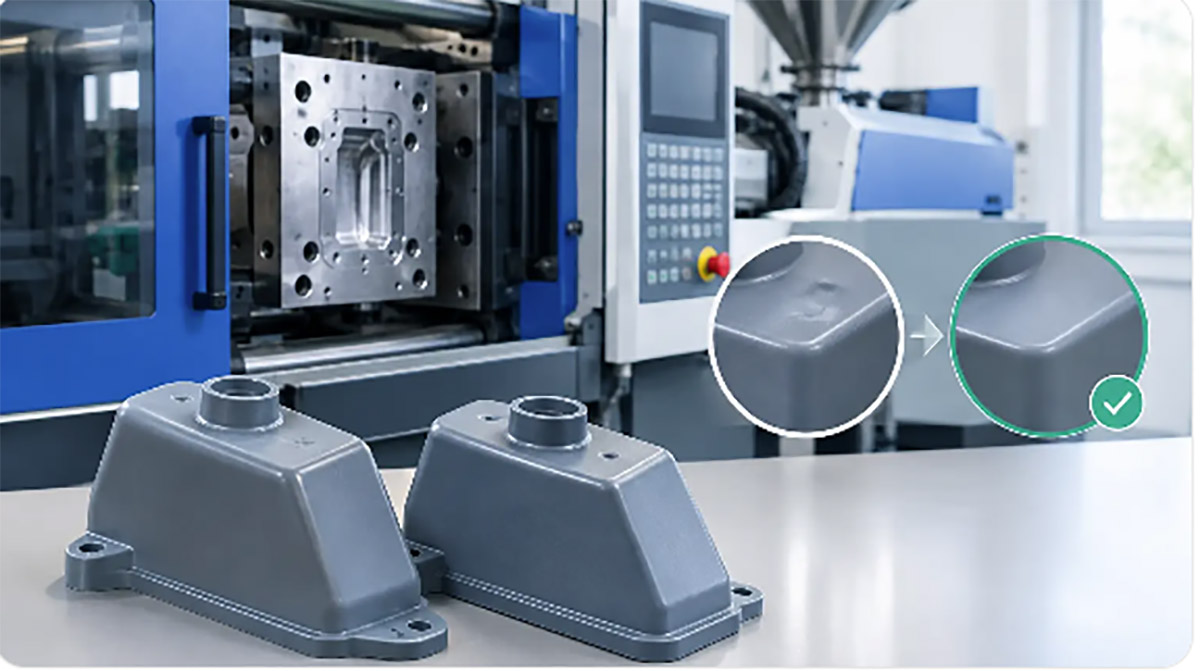
Injection molding requires
more disciplined design for manufacturability. Draft angles are needed for part
release. Wall thickness should be as uniform as possible to reduce sink,
warpage, and incomplete filling. Ribs, bosses, and snap features must be
designed around the selected resin and expected stress. Deep undercuts may
require side actions, which add cost and cycle-time complexity.
Dimensional tolerance also
deserves a practical discussion. Cast parts can achieve good accuracy,
particularly when the master pattern is accurate, but resin shrinkage, silicone
mold aging, and manual processing introduce variation. Injection molding
generally provides better repeatability for critical dimensions once the
process is established. If a part must align with a PCB, seal against a gasket,
engage a mechanism, or fit into an assembly fixture, define the
critical-to-quality dimensions early and assess them against the intended
process.
Material and Finish Requirements
If the product must use a specified production resin,
injection molding is generally required. This includes applications that need a
certified grade, flame resistance, food-contact compliance, medical-grade
traceability, high heat resistance, or specific chemical performance. Material
suppliers provide technical data for molded thermoplastics, while cast resin
properties should be treated as process-specific and validated against the
application.
For visual models and early
functional units, urethane casting provides a strong range of finishes. It can
replicate matte, textured, polished, and clear surfaces from the master. Paint
can also achieve customer-facing color targets. Still, the finish may differ
from the final molded part because injection molding has its own material flow,
gloss, weld-line, gate-mark, and texture behavior.
For products where appearance
is critical, it is often useful to approve both a cast appearance model and an
injection-molded T1 sample. The first validates the industrial design. The
second validates the actual production process.
A Practical Transition Plan
Many programs do not need to
choose one process for the entire product lifecycle. A staged route reduces
risk. Start with CNC, SLA, or SLS prototypes to verify form and basic
fit. Use urethane casting for small pilot quantities and field feedback.
Complete DFM review once the design is stable, then build injection tooling for
production-grade material and repeatable output.
This approach is particularly
useful for hardware startups and OEM teams managing uncertain forecasts. It
prevents a costly metal mold from being built around untested assumptions while
keeping a clear path to scale.
Before releasing tooling,
confirm the annual and lifetime volume forecast, critical dimensions, target
resin, surface requirements, assembly method, compliance needs, and likely
design changes. These inputs allow a manufacturing partner to recommend
suitable tooling steel or aluminum, cavity count, gate strategy, inspection
plan, and production route.
Xiamen Creator Technology can
coordinate this progression across prototype fabrication, silicone or metal
tooling, molding, component sourcing, and assembly. The most effective decision
is not the process with the lowest first quote. It is the process that gives
your team reliable parts, a workable timeline, and a controlled path from
validated design to repeatable production.