Pilot run manufacturing services help teams validate tooling, assembly, quality, and supply before committing to mass production, reducing costly changes.

A
product can look production-ready in a CAD file and still fail when real parts,
operators, packaging, and purchased components meet on the factory floor. Pilot
run manufacturing services give product teams a controlled way to find those
failures before they become expensive production problems. The goal is not
simply to make a small batch. It is to prove that the product, process, and
supply chain can perform repeatedly at an acceptable cost.
For hardware startups, OEM
brands, and procurement teams, a pilot run sits between prototype approval and
full-scale manufacturing. It turns engineering assumptions into measurable
production data. The results should guide tooling corrections, work
instructions, quality standards, component sourcing, and the decision to
release the product for larger-volume production.
What a Pilot Run Is Designed to
Prove
A pilot run is a limited production build using the
intended manufacturing route as closely as practical. Depending on the product
and stage of development, that may include production tooling, selected
production materials, purchased components, assembly fixtures, packaging, and
defined inspection steps.
The key distinction is intent.
A prototype answers whether a design can function. A pilot run answers whether
the design can be made consistently by a production team. A prototype can be
hand-finished by an experienced technician; a production process must be
repeatable by trained operators following documented steps.
The appropriate run size
depends on product complexity, tooling maturity, demand forecast, and the cost
of making changes later. A simple molded housing may need a relatively small
build to confirm mold performance and appearance. An assembled electronic
product with multiple suppliers, silicone seals, stamped parts, and retail
packaging may need a larger run to expose variation across materials, assembly
stations, and incoming components.
Where Pilot Run Manufacturing
Services Add Value
The most useful pilot builds do more than deliver
parts. They create evidence that supports a production release decision. That
evidence typically falls into four areas:
·
Manufacturability: Can parts be molded, machined, die cast, stamped, or finished within
the required tolerances and cosmetic requirements?
·
Assembly: Do
components fit consistently, and can operators complete the build without
excessive adjustment, rework, or special handling?
·
Quality control: Are inspection points, gauges, acceptance criteria, and traceability
requirements clear enough to control variation?
·
Supply readiness: Can purchased components, packaging materials, and secondary
processes arrive in the required sequence and quantity?
A pilot run also shows where a
design is unnecessarily difficult to build. A part may meet its drawing
dimensions but require forceful insertion during assembly. A silicone component
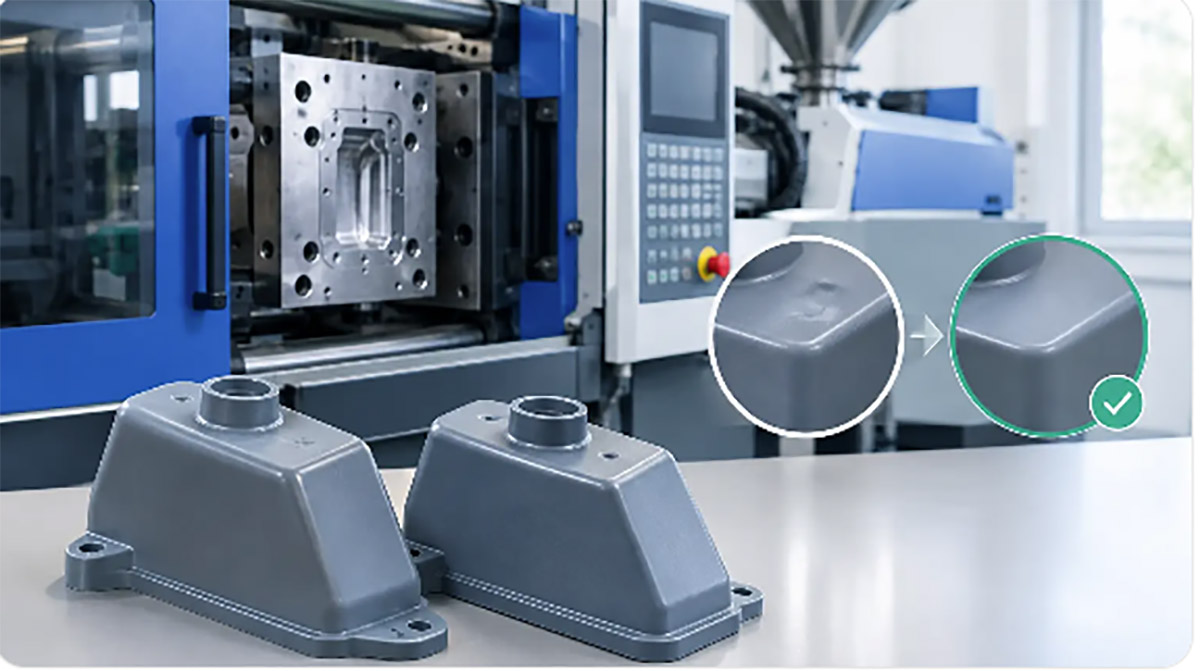
may seal correctly but be hard to orient consistently. A decorative finish may
meet color requirements on individual samples but vary across batches. These
are production issues, not merely design issues, and they should be addressed
before production volume amplifies them.
Start With a Production-Ready Data
Package
Pilot results are only as reliable as the information
used to build the product. Before materials are ordered, the manufacturing team
should review the latest 3D files, drawings, bill of materials, finish
specifications, critical-to-quality dimensions, and assembly requirements.
A clear revision-control
process matters. If a supplier receives an outdated drawing or a component
substitution is made without approval, the pilot can produce misleading results.
Teams should identify the controlled revision for every custom and purchased
part, including labels, manuals, and packaging inserts.
This is also the stage
for design
for manufacturability and design for assembly review. DFM focuses on whether a part can be
produced efficiently and consistently. DFA examines how parts locate, fasten,
orient, and move through assembly. Minor changes, such as adding lead-in
features, increasing a draft angle, adjusting a tolerance stack, or revising a
fastener location, can remove significant labor and defect risk.
For products that combine multiple
processes, coordination is especially important. An injection-molded enclosure
may interface with CNC-machined inserts, stamped contacts, die-cast brackets,
and a silicone gasket. Each process has its own capability limits. The final
assembly must account for the combined variation rather than evaluating each
component in isolation.
Use the Intended Tooling and
Materials When Possible
Temporary tooling and
substitute materials can be useful for early validation, but they do not always
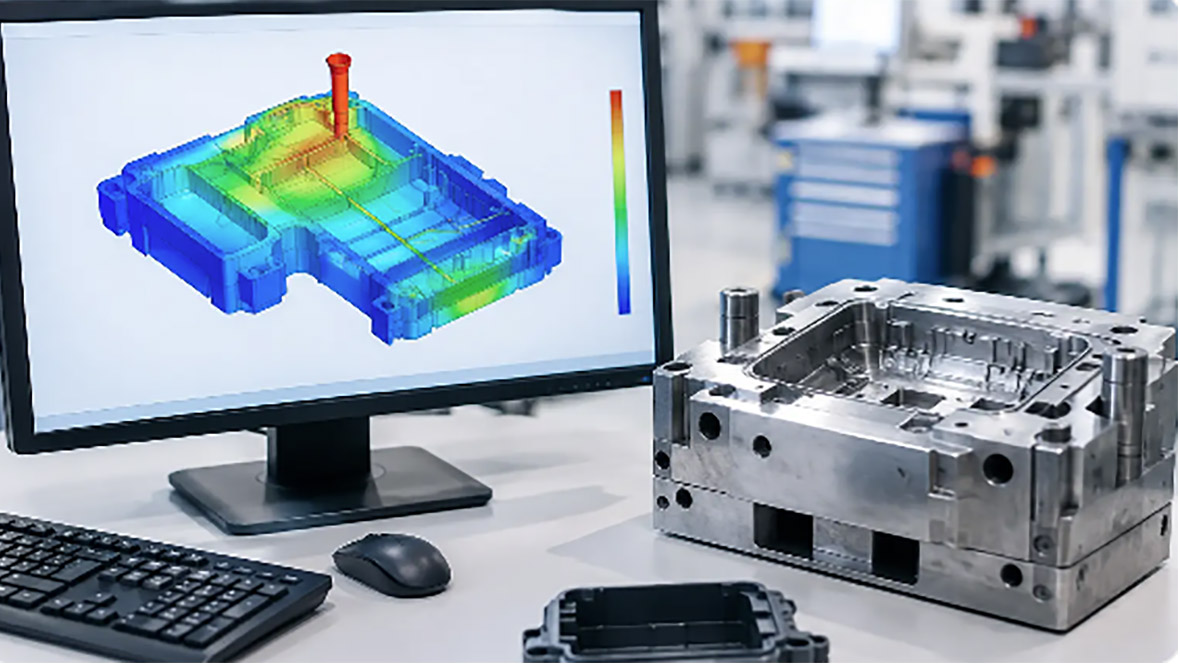
predict production behavior. Soft tooling may reveal basic part geometry,
while production
injection molds reveal gate location effects, shrinkage, cycle time, ejection
behavior, and cosmetic consistency. Likewise, production-grade resin,
elastomer, coating, adhesive, or plating can behave differently from prototype
alternatives.
That does not mean every pilot
requires final hard tooling. The right choice depends on the commercial risk.
Bridge tooling or aluminum tooling may be appropriate when demand is uncertain
or design changes remain likely. Production steel tooling is more suitable when
the design is stable, annual volume justifies the investment, and the pilot
needs to represent the long-term process.
The critical point is to
document what the pilot does and does not represent. If a temporary tool is
used, the team should identify which results can be trusted and which must be
reconfirmed after production tooling is complete.
Build the Process, Not Just the
Units
A productive pilot run follows a defined process flow.
Components should be received, inspected, stored, assembled, tested, and packed
using procedures close to those planned for production. This is how teams
identify missing instructions, unclear operator decisions, poor fixture design,
and bottlenecks between stations.
Work instructions should
include visual references, torque values, adhesive cure times, inspection
points, and pass-fail criteria where applicable. If a product requires
programming, functional testing, leak testing, or electrical verification, the
pilot should confirm that the test equipment is practical for the expected
daily output.
Assembly fixtures deserve
particular attention. A fixture may be needed to hold a component at the
correct angle, maintain a bonding position, protect cosmetic surfaces, or
confirm connector insertion. Without suitable fixtures, operators often
compensate with hand pressure and judgment. That may work for ten units but not
for thousands.
At Xiamen Creator Technology,
integrated prototyping, tooling, component production, sourcing, assembly, and
packaging support can reduce handoffs during this stage. A coordinated workflow
makes it easier to trace a pilot issue back to the relevant mold, part
revision, supplier component, fixture, or assembly operation.
Measure Yield, Rework, and Cycle
Time
A pilot should produce numbers, not only observations.
First-pass yield shows how many units pass without rework. Rework rate
identifies steps that consume labor or create cosmetic risk. Scrap rate
indicates whether material, tooling, handling, or process settings need
correction.
Cycle time should be measured
at both the process and product level. The molding cycle may be acceptable, but
the overall output can still be constrained by manual trimming, adhesive
curing, testing, or packaging. Measuring station time helps determine whether
additional fixtures, parallel workstations, or process changes are needed
before scale-up.
Quality
data should
also be tied to specific defect categories. Rather than recording a general
failure, classify whether it is a dimensional issue, cosmetic defect, assembly
interference, functional failure, missing component, or packaging error. This
makes corrective action more targeted and helps distinguish isolated events
from recurring process problems.
Decide What Must Change Before
Scale-Up
Not every pilot finding requires a redesign. Some
issues can be solved through clearer work instructions, improved incoming
inspection, revised process parameters, or a simple fixture. Others require
changes to tooling, component tolerances, material selection, or product
architecture.
The decision should consider frequency,
severity, cost, and the likelihood that the problem will worsen at volume. A
low-frequency cosmetic defect may be acceptable for an internal industrial
component but unacceptable for a consumer product with a visible high-gloss
surface. A small amount of manual rework may be manageable for a low-volume
product, while the same rework can destroy margins in high-volume production.
Before authorizing mass
production, close the loop with an updated action list. Confirm which changes
have been implemented, which remain open, who owns each action, and what
verification is required. If an issue affects safety, regulatory compliance,
core function, or a critical customer requirement, another focused validation
build may be justified.
Treat the Pilot as a Commercial
Checkpoint
Pilot run manufacturing services are often discussed
as an engineering activity, but they are also a commercial control point. The
build can validate labor assumptions, packaging costs, material yields,
purchase quantities, and production lead times. It gives procurement and
operations teams a more realistic basis for forecasting than prototype pricing
alone.
A well-managed pilot does not
guarantee that mass production will be free of problems. It does, however, move
problems into a stage where changes are faster, less disruptive, and less
costly. The best next step is to review pilot data with engineering, quality,
procurement, and manufacturing together, then release production only when the
process is understood well enough to repeat.