Learn what affects CNC machining cost, from material and tolerances to setup, tooling, quantities, and finishing, so you can quote parts more accurately.

A CNC quote can change
significantly when a drawing is revised by only one detail: a tighter
tolerance, a deeper pocket, an added finish, or a material change. That is why
understanding what affects CNC machining cost is useful well
before a part reaches procurement. The lowest-cost component is rarely the one
with the fewest features. It is the one designed to meet its functional
requirements with efficient material use, stable machining operations, and a
production approach that fits the expected volume.
For engineers, product teams,
and sourcing managers, the goal is not simply to reduce the unit price. It is
to remove cost that does not add performance, reliability, appearance, or
assembly value. The following factors have the greatest effect on CNC machining
pricing and should be reviewed during design-for-manufacturability discussions.
Material Choice Sets the Starting
Cost
Raw material affects both the purchase price and the
time required to machine the part. Aluminum grades such as 6061 are commonly cost-effective
because they machine quickly, are widely available, and work well for
prototypes, fixtures, housings, and many production components. Stainless
steel, titanium, hardened steel, and nickel alloys generally require slower
cutting speeds, more tool wear, and longer cycle times.
Material form matters as well.
A part machined from bar stock, plate, or billet may generate different amounts
of scrap depending on its geometry. A small finished component taken from a
large block can consume substantial material and machine time. In some cases,
redesigning the part to use standard stock dimensions reduces waste and
shortens setup requirements.
The specified material grade
should match the application. Selecting a premium alloy without a clear
mechanical, thermal, corrosion, or regulatory requirement can increase cost
with no functional return. Conversely, choosing an inexpensive material that
cannot hold the required finish or stability may create quality problems later.
Part Geometry Drives Machine Time
CNC machining cost is closely tied to cycle time.
Complex geometry takes longer to program, fixture, machine, inspect, and
sometimes finish. Deep cavities, narrow slots, thin walls, undercuts, and
internal features all require careful process planning.
A deep pocket, for example,
may need a long-reach cutting tool. Longer tools are less rigid, so the
machinist may need lighter cuts and slower feeds to control vibration. That
adds machining time. Very small radii can have a similar effect because they
require small-diameter cutters that remove material more slowly.
Parts with features on
multiple faces may require several setups. Each setup involves locating the
part, securing it, confirming orientation, and running the operation. A 3-axis
machine can efficiently produce many prismatic parts, but contours, angled
holes, and compound surfaces may require 4-axis or 5-axis machining. Multi-axis
equipment can reduce repositioning and improve feature accuracy, but its hourly
rate and programming requirements may be higher.
The practical question is
whether every feature is necessary. If a cosmetic recess, internal corner
radius, or unusual profile does not support performance or assembly,
simplifying it can lower the quote without compromising the product.
Internal Corners and Tool Access
Machining cutters are round, so internal corners
cannot be perfectly sharp using conventional milling. Specifying a small
internal radius forces the use of a smaller tool, which increases cycle time.
Allowing a larger corner radius where possible improves tool access and reduces
cost.
Tool access should also be
considered for holes, pockets, and side features. If a feature can only be
reached with an extended tool or a special fixture, it will usually cost more
than a comparable feature accessible from the top of the part. Clear drawings
and 3D models help the manufacturing team identify these issues before
production.
Tolerances and Inspection
Requirements Add Cost
Tight tolerances are often necessary for bearing fits,
sealing surfaces, precision assemblies, optical interfaces, and critical
alignment features. Applying tight tolerances across an entire drawing,
however, increases cost quickly. The machine may need slower finishing passes,
more stable fixturing, in-process measurement, and additional inspection.
A general tolerance is usually
more economical for noncritical dimensions. Critical dimensions should be
identified individually with tolerances that reflect the actual functional
need. This approach gives the supplier room to use efficient processes on
features that do not require precision control.
Geometric dimensioning and
tolerancing can also affect the process plan. Flatness, concentricity,
position, profile, and runout requirements may require additional setups or
coordinate measuring machine inspection. These controls are valuable when they
protect assembly performance, but they should not be added by default.
Surface finish requirements
deserve the same discipline. A machined finish may be sufficient for an
internal bracket or concealed housing. A low roughness value, polished surface,
or cosmetic finish should be specified only where the application requires it.
Quantity Changes the Cost Structure
Quantity affects CNC machining cost because fixed
engineering and setup expenses are spread across the production run.
Programming, fixture preparation, first-article inspection, tool selection, and
machine setup may represent a substantial share of the price for one or ten
parts. The same work has a much smaller effect on the unit cost of a larger
batch.
Low-volume prototype machining
prioritizes speed and flexibility. Standard workholding, readily available
materials, and efficient programming are often more valuable than dedicated
tooling. At higher volumes, custom fixtures, optimized toolpaths, pallet
systems, or alternate processes may become commercially sensible because they
reduce the cycle time per part.
There is no single quantity at
which CNC machining stops being the right process. It depends on part size,
material, geometry, annual demand, quality requirements, and whether tooling
can be justified. For a metal housing with complex features, CNC may remain
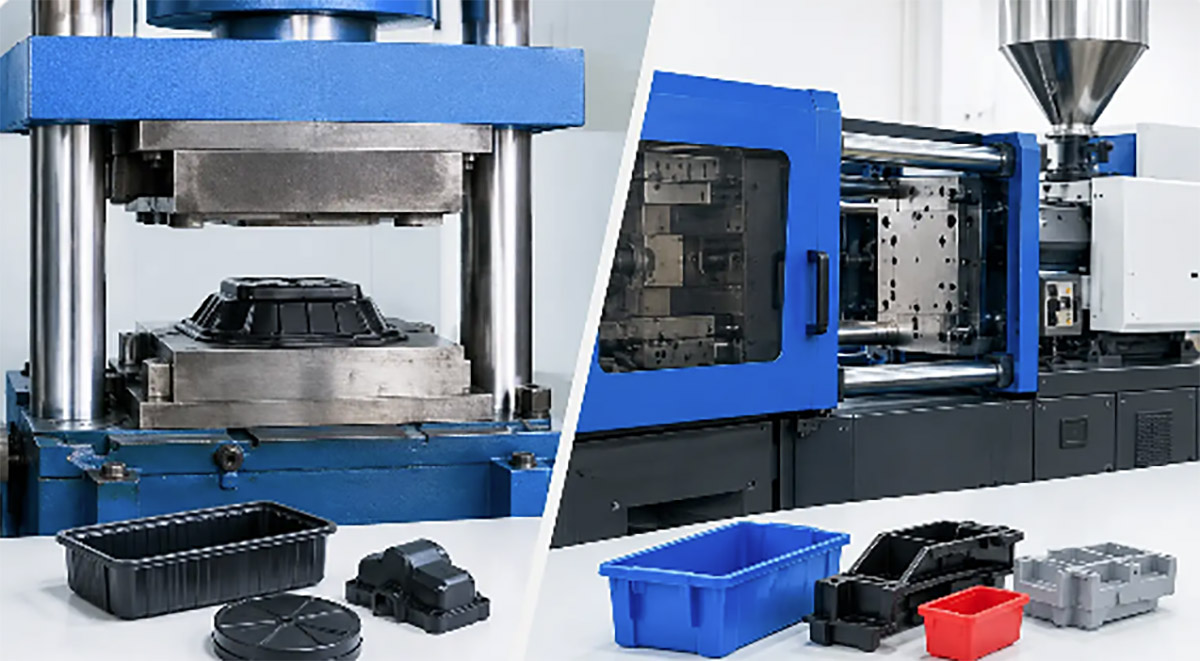
appropriate at substantial volumes. For a simple plastic component needed in
large quantities, injection molding may
provide a lower long-term piece price after tooling investment.
Setup, Fixturing, and Programming
Are Real Production Costs
A quote includes more than spindle time. Before the
first production part is cut, the manufacturer must review the model, plan
operations, create CNC programs, select tools, and determine how the part will
be held securely. Parts that are difficult to fixture may need custom jaws,
soft jaws, vacuum fixtures, or specialized workholding.
Thin, flexible, or irregularly
shaped parts require particular attention. They can distort under clamping
pressure or cutting forces, creating dimensional variation. The solution may
involve extra support, multiple operations, slower machining, or stress-relief
steps. These methods protect quality, but they add cost.
Designing stable locating
surfaces into a part can make production more efficient. When possible, avoid
requiring a finished cosmetic surface to serve as the only clamping area. A
temporary machining tab or an area later hidden in assembly may give the shop a
better way to hold the component.
Secondary Operations and Finishes
Can Exceed Machining Time
Many CNC parts require work after milling or turning.
Deburring, tapping, thread inserts, heat treatment, welding, laser marking,
bead blasting, anodizing, plating, powder coating, and painting all affect
final cost and lead time.
Finishes are not interchangeable.
Anodizing can improve corrosion resistance and appearance for aluminum, while
bead blasting creates a uniform matte texture before finishing. Powder coating
provides a durable external coating but may affect dimensional features if
masking is not planned. Plating, passivation, and heat treatment introduce
their own process controls and potential dimensional changes.
Every secondary process also
adds handling. Parts may need to be transported to a qualified finishing
provider, masked, racked, inspected, returned, and repackaged. Combining
compatible requirements and limiting cosmetic finishes to visible surfaces can
reduce unnecessary expense.
How to Control CNC Machining Cost
Before Quoting
The most effective cost reductions happen at the
drawing stage, not after the first quote is issued. Provide a complete 3D
model, a clear 2D drawing where critical dimensions are identified, the
required material and finish, expected quantity, and any inspection or
certification needs. Ambiguity often results in conservative assumptions, quote
revisions, or delays.
During a DFM review, focus on
the features that drive operations: tight tolerances, deep or narrow pockets,
sharp internal corners, thin walls, hard-to-reach holes, and cosmetic
requirements. Ask whether those features can be adjusted while preserving the
part's function. A supplier with prototyping, tooling, and production
capability can also help determine whether the design should remain CNC
machined or transition to molding, die casting, stamping, or
another process as demand grows.
At Xiamen Creator Technology,
this type of review is most useful when it happens early, while product teams
can still make low-impact design changes rather than costly production
corrections.
A productive CNC cost
discussion starts with the part's job, not the drawing's complexity. Define
what must be precise, strong, attractive, corrosion-resistant, or
assembly-critical, then let the remaining features support efficient
manufacturing. That balance produces parts that are easier to quote, easier to
inspect, and more predictable to scale.