Plastic injection mold cost depends on part design, steel, cavities, tolerance, and volume. Learn how to estimate tooling and reduce risk before production runs.

A
quoted mold price can vary from a few thousand dollars for a simple prototype
tool to well into six figures for a multi-cavity production mold. That range is
not arbitrary. Plastic injection mold cost reflects the engineering work,
materials, machining time, validation requirements, and expected production
life built into the tool.
For product teams and
procurement managers, the right question is rarely, “What is the cheapest
mold?” It is, “What tool specification produces the required part quality at
the lowest total cost over the planned production volume?” A low initial
tooling price can create expensive problems through slow cycle times, excessive
maintenance, poor repeatability, or avoidable part defects. A properly
specified tool balances upfront investment with production economics.
What Determines Plastic Injection
Mold Cost?
The principal cost driver is part complexity. A flat,
open container with generous draft, uniform walls, and no undercuts can be
molded with a relatively straightforward two-plate tool. A housing with clips,
internal ribs, cosmetic surfaces, tight sealing features, threaded sections, or
side openings may need slides, lifters, unscrewing mechanisms, or other moving
components. Each added mechanism requires design time, precision machining,
fitting, and inspection.
Part size also matters. Larger
parts require a larger mold base, larger machine platen capacity, more material
removal during machining, and often a more demanding cooling layout. Even when
the part geometry is simple, a large tool can be significantly more expensive
than a small, detailed tool.
The required production
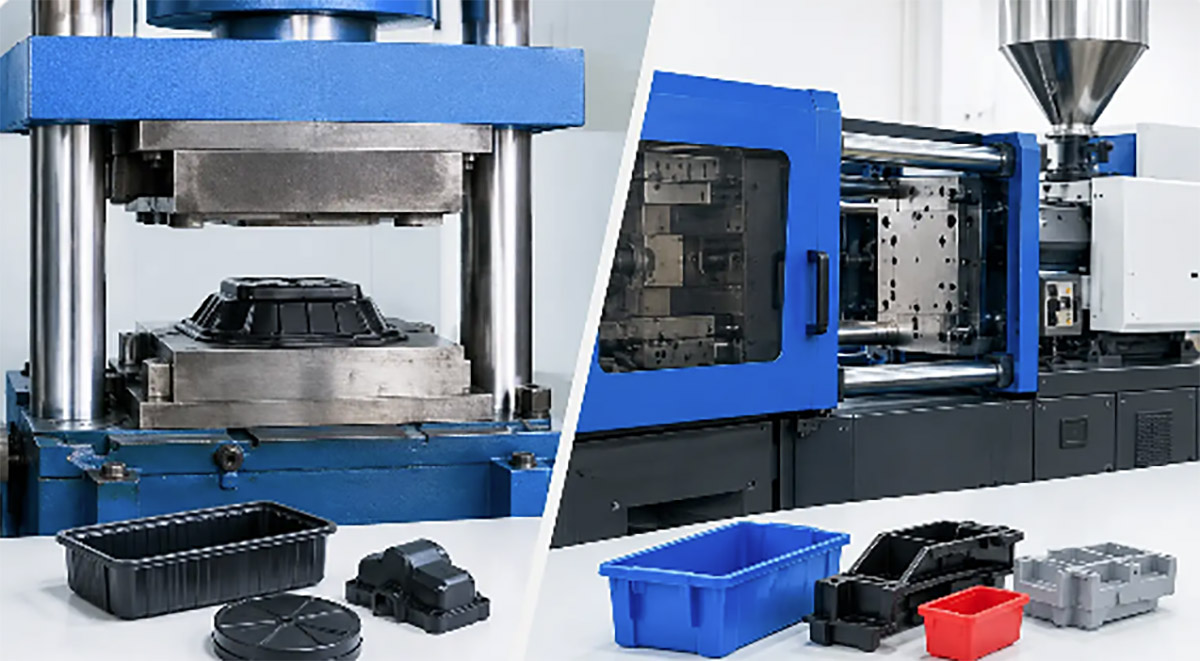
quantity changes the appropriate tooling strategy. A bridge tool for several hundred or
several thousand parts may use softer aluminum or pre-hardened steel and a
simplified construction. A high-volume production tool may require hardened
tool steel, wear-resistant inserts, automatic operation, and extended mold-life
provisions. Neither approach is inherently better. The correct choice depends
on forecast volume, material abrasiveness, approval timing, and the likelihood
of design changes.
Tool Material and Mold Life
Tool material has a direct effect on both price and
durability. Aluminum tooling can be fast to machine and practical for
prototypes, pilot production, and lower-volume programs. It is often a useful
option when product design is still being verified or when demand is limited.
Steel tools generally cost
more, particularly when hardened grades are specified. They provide better
resistance to wear and can support longer production runs, especially with
glass-filled resins or other abrasive materials. Steel is also usually the
stronger choice for parts requiring highly polished cosmetic surfaces, close
dimensional control over time, or repeated use in automated production.
A mold quote should define the
intended mold life rather than simply stating that the tool is “production
quality.” Expected shots, resin type, maintenance assumptions, and cavity count
provide a more useful basis for comparison.
Cavities, Cycle Time, and Unit Cost
Cavity count is one of the most commercially important
decisions in mold design. A single-cavity mold has a lower initial cost, but
every cycle produces only one part. A four- or eight-cavity tool costs more to
build, yet it can reduce molding cost per part when demand is sufficient.
More cavities do not
automatically mean lower total cost. The molding machine must have enough clamp
force and shot capacity. The cooling system must keep all cavities consistent.
Part handling, inspection, packaging, and demand patterns must also support the
higher output. If annual demand is moderate or uncertain, an oversized
multi-cavity mold can leave capital tied up in unused capacity.
Cycle time deserves equal
attention. A tool that cools efficiently and ejects reliably can produce more
parts per shift without adding cavities. Cooling channel design, wall
thickness, resin selection, gate location, and mold temperature control all
affect cycle time. Reducing a few seconds per cycle can have a meaningful
impact over a long production run.
Design Features That Increase
Tooling Cost
Some features are essential to
product function. Others create tool complexity without delivering enough customer
value. Design for manufacturability review is where these
differences become visible before steel is cut.
Undercuts are a common
example. An undercut may require a side action or lifter, adding moving
components and increasing the risk of maintenance and production interruption.
In some cases, a small design adjustment, such as changing an opening direction
or splitting a feature into a separate component, can eliminate the mechanism.
Tight tolerances can also
increase plastic injection mold cost. Plastic dimensions change with shrinkage,
temperature, moisture absorption, and processing conditions. Specifying tight
tolerances across every dimension is rarely practical or necessary. Critical
interfaces should be controlled; noncritical dimensions should have realistic
tolerances that reflect the material and part geometry.
Other features that deserve
early review include deep ribs, thick-to-thin wall transitions, sharp internal
corners, low draft angles, complex textures, and high-gloss surfaces. These
details can affect filling, cooling, ejection, polishing, and tool maintenance.
The goal is not to remove useful features. It is to achieve the required function
with a stable molding process.
The Mold Is Only One Part of the
Project Cost
Tooling price should be evaluated alongside part price
and development cost. A complete quote may include mold design, DFM feedback,
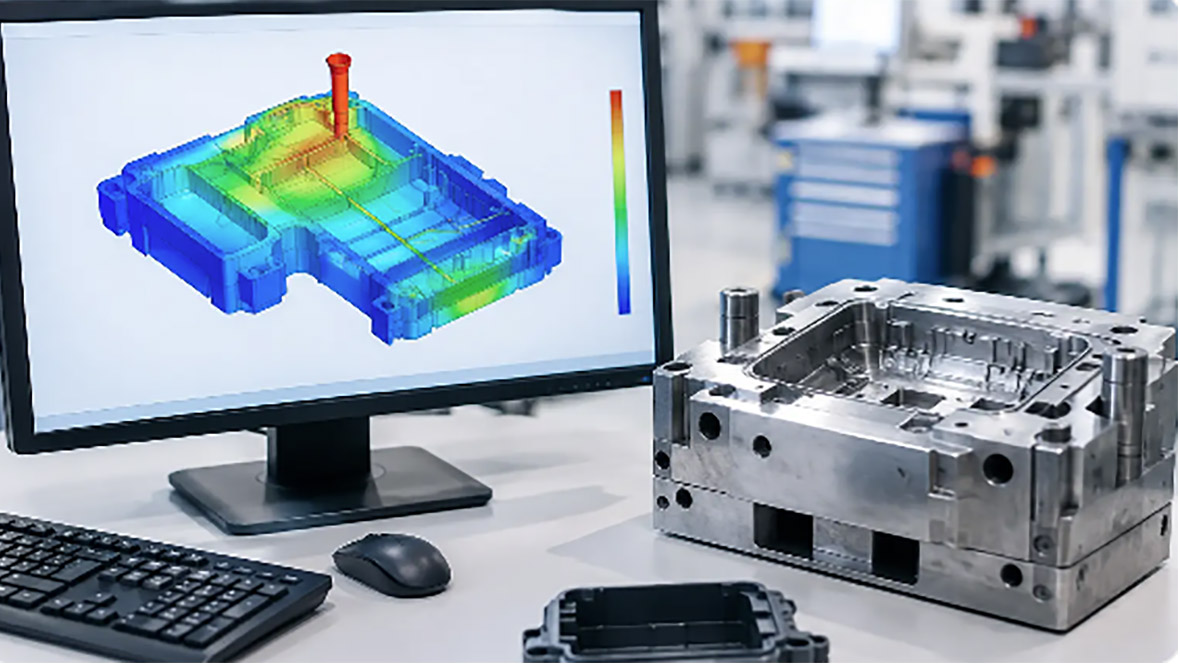
mold flow analysis when required, steel procurement, CNC machining, EDM, wire
cutting, polishing, assembly, sampling, and trial runs. It may also include
fixtures, gauges, inspection reports, packaging requirements, and secondary
processes such as painting, printing, ultrasonic welding, or assembly.
The runner system is another
important variable. A cold-runner mold is less expensive to build but generates
runner material every cycle. Depending on the resin and part requirements, that
material may be reground, recycled, or treated as scrap. A hot-runner system
has a higher upfront price, but it can reduce material waste and improve
automation for higher-volume programs.
Part material influences
tooling requirements as well. Commodity resins may be relatively forgiving,
while engineering plastics can require higher mold temperatures, specialized
gate design, more careful venting, or corrosion-resistant steel. Glass-filled
nylon, for example, can wear mold surfaces much faster than an unfilled
polypropylene. A tool designed without considering the final resin may look
economical at the start but have a shorter service life than expected.
How to Compare Mold Quotes
Correctly
The lowest tooling quotation may omit details that
another supplier has included. Comparing only the total price makes it
difficult to identify the real trade-offs. Procurement teams should request a
clear tool specification and confirm what is included in sampling, modification
allowances, and production support.
A useful quote review should
cover at least these points:
·
Mold base size, steel grades, inserts, and stated mold life
·
Number of cavities and runner system type
·
Slides, lifters, unscrewing features, and other mechanisms
·
Included DFM review, mold design approval, T1 samples, and modification
process
·
Planned resin, surface finish, texture, color requirements, and tolerance
assumptions
·
Expected cycle time, molding machine tonnage, and part price at the
planned volume
This level of detail makes it
easier to compare equivalent solutions. It also identifies where a supplier may
be pricing a prototype approach while another is quoting a longer-life
production tool.
Reducing Tooling Cost Without
Creating Production Risk
The most effective savings occur before the tool is
manufactured. A focused DFM review can identify draft issues, uneven walls,
difficult ejection points, and unnecessary undercuts while changes are still
inexpensive. Once machining has started, revisions can affect inserts, moving
components, cooling lines, and delivery timing.
Where product architecture
allows, consider modular mold inserts. Replaceable inserts can make it easier
to revise a logo, localized feature, or high-wear area without remaking the
full mold. Family molds, which produce different components in one cycle, can
sometimes reduce initial investment for matched low-volume parts. However, they
require balanced fill behavior and coordinated demand. They are not always the
best choice for independent part volumes.
It is also worth separating
prototype needs from production needs. Early functional prototypes may be
better made with CNC machining, SLA, SLS, or soft tooling
before committing to injection mold steel. These methods allow faster design
learning, although they do not always reproduce final molded-part behavior. The
decision depends on whether the immediate priority is appearance, functional
testing, material validation, or market launch volume.
For programs moving from
prototype to mass production, Xiamen Creator Technology can coordinate DFM
feedback, tooling, injection molding, secondary operations, and assembly within
one manufacturing workflow. That reduces handoffs between separate vendors and
helps ensure that design assumptions remain aligned with production requirements.
Questions to Resolve Before
Releasing a Mold
Before approving tooling, confirm the annual volume
forecast, target part cost, final resin, cosmetic standard, critical
dimensions, and likely product revisions. These inputs determine whether the
program needs a prototype tool, bridge tool, or hardened production mold.
Also define the acceptance
process. Approved samples should be measured against an agreed drawing,
material specification, and cosmetic standard. If the part interfaces with
another component, test the assembly rather than approving the molded part in
isolation. Mold changes are most manageable when acceptance criteria are
documented before the first trial.
A mold is a production asset,
not just a purchase order line item. The best cost outcome comes from matching
the tool design to the part, material, quality requirements, and demand
forecast, then resolving manufacturability issues while the design is still
flexible. That approach protects both the tooling budget and the production schedule
when the program is ready to scale.