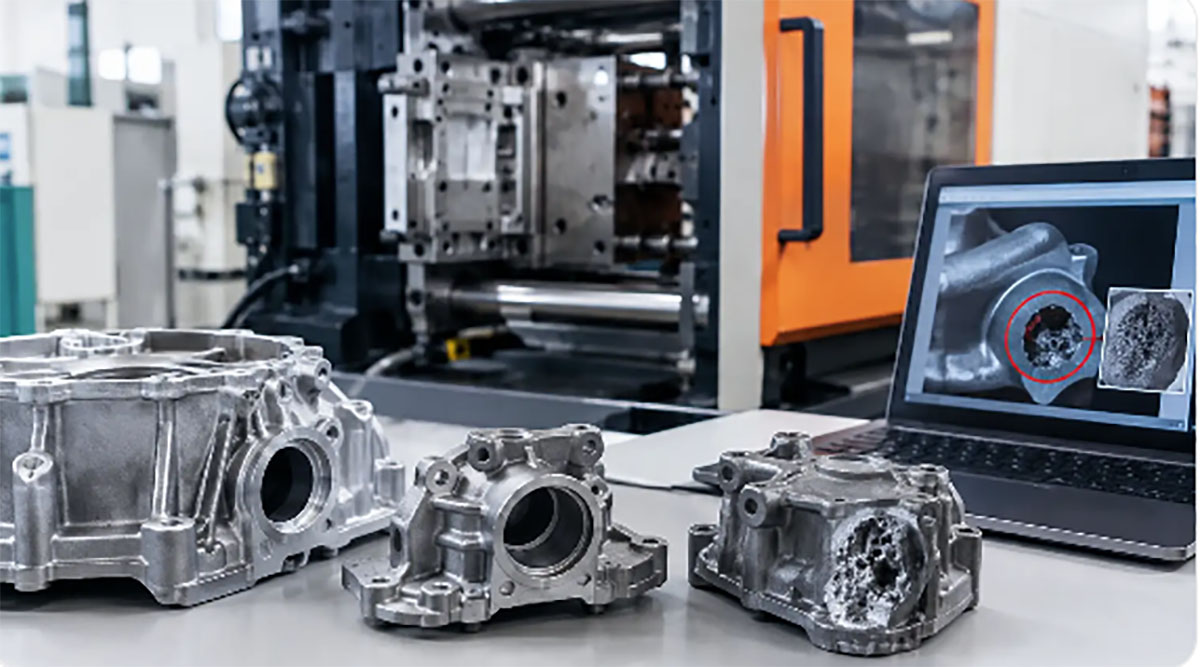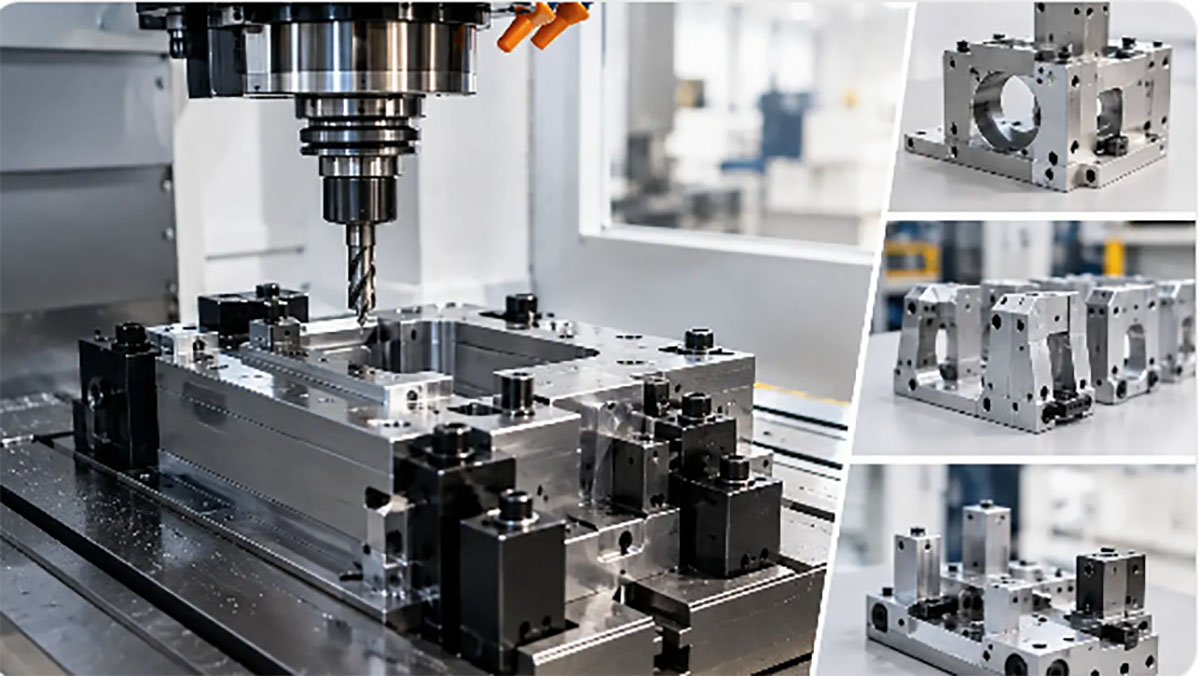
DFM analysis finds production risks early, helping teams reduce tooling changes, control part cost, and move prototypes into reliable volume production.

A
prototype can prove that a product works while hiding the details that make it
expensive, inconsistent, or slow to manufacture. A thin wall may look
acceptable in an SLA model but warp during injection molding. A tight CNC
tolerance may add cost without improving function. A housing may assemble on a
bench but require excessive labor once production reaches thousands of units.
DFM analysis exposes those issues before they become tooling changes, delayed
launches, and avoidable quality claims.
For product companies, DFM is
not a final approval step before placing a purchase order. It is a practical
review of how a part or complete assembly will be produced, inspected,
assembled, and packaged at the required volume. The goal is not to simplify a
design at any cost. The goal is to preserve the intended function, appearance,
and user experience while choosing production methods that are commercially
realistic.
What DFM Analysis Reviews
Design for Manufacturing analysis evaluates whether a
design matches the capabilities and limits of its intended manufacturing
process. The review should begin with the actual production route, not with
general design rules. A feature that is economical in CNC machining may be
difficult in die casting. A geometry suitable for silicone molding may not
release reliably from a plastic injection mold.
A useful DFM review considers
the part as part of a larger production system. This includes material
selection, tooling construction, process parameters, secondary operations,
inspection requirements, assembly sequence, handling, and packaging. When the
product has electronics, purchased components, or cosmetic surfaces, the review
also considers sourcing tolerances, fit interfaces, and protection during
shipment.
The output is typically a set
of actionable findings rather than a simple pass or fail decision. Each finding
should explain the issue, its production impact, recommended adjustment, and
any trade-off involved. For example, increasing a wall thickness may improve
mold filling and stiffness, but it can also create sink marks if the change is
not balanced with ribs, coring, and gate placement.
Why DFM Analysis Should Start
Before Tooling
Tooling commits a design to a production method. Once
a mold base, cavity, core, slide, or stamping die is built, changes become more
expensive and can affect the production schedule. Some modifications are
manageable, such as adjusting a simple shutoff surface. Others require welding,
re-machining, new inserts, or a completely revised tool.
Early review is particularly
valuable when a product moves from prototype to volume production. Rapid
prototypes can be made with processes that tolerate complex geometry and do not
require dedicated tooling. Production processes have different
constraints. Injection molding requires draft for part
release, reasonably consistent wall sections, and controlled undercuts. Die
casting requires attention to metal flow, ejection, porosity risk, and
machining allowance. Sheet metal parts need bend relief, feasible radii, and
dimensions that account for forming variation.
The lowest-cost time to solve
a manufacturability problem is usually before tool design begins. That does not
mean every issue must be removed from the product. Some features are worth
their added cost because they improve performance, safety, or brand appearance.
The decision should be intentional, supported by a clear understanding of cost,
cycle time, tooling complexity, and quality risk.
The Main Areas to Check in a DFM
Review
Material
and Process Fit
Material choice affects much more than appearance and
mechanical performance. Resin grade influences shrinkage, flow behavior,
weld-line performance, impact resistance, surface finish, and chemical
resistance. Metal selection affects machining speed, casting behavior,
corrosion protection, and post-processing requirements.
The process must also match
the planned volume. CNC machining can be the right choice for early pilots, low-volume
components, or highly precise features. Injection molding generally becomes
more economical as volume increases, but it requires tooling investment and
design discipline. Urethane casting and soft tooling can fill the gap when
teams need functional parts before committing to hardened production tools.
Geometry, Wall Thickness, and Draft
Part geometry often determines whether a tool can run
consistently. Uneven wall thickness causes differential cooling and shrinkage,
which can lead to warpage, sink marks, voids, or dimensional variation.
Designers do not need perfectly uniform walls in every case, but major
transitions should be managed with gradual changes, coring, and appropriate rib
design.
Draft is another common issue.
Vertical surfaces need sufficient taper so parts release from the mold without
scuffing, sticking, or damaging cosmetic textures. The required draft depends
on material, part depth, surface finish, texture, and tool direction. A smooth
internal wall may need less draft than a deeply textured external surface.
Ribs and bosses deserve close
review because they are frequent sources of cosmetic and structural problems.
Thick ribs can create sink marks, while undersized ribs may not deliver the
intended stiffness. Bosses for screws must be evaluated for fastening load,
molding flow, steel access, and clearance for assembly tools.
Undercuts, Parting Lines, and Tool
Actions
Undercuts are not automatically unacceptable. They may
require slides, lifters, collapsible cores, hand-loaded inserts, or secondary
operations. Each option has consequences for tool cost, cycle time,
maintenance, and consistency.
A DFM review determines
whether an undercut is essential to product function. If it is not, a small
design change may allow a simpler straight-pull mold. If it is essential, the
design team can select the most suitable tooling solution and account for it in
the project budget. The same approach applies to parting lines. Their location
affects flash risk, visible witness lines, steel construction, and the ability
to mold detailed features accurately.
Tolerances and Inspection Strategy
Over-specified tolerances can turn a straightforward
part into a costly production challenge. Every critical dimension should have a
functional reason: a sealing interface, bearing fit, electronic connector
location, or assembly alignment feature. Noncritical dimensions should use
tolerances appropriate to the material and process.
The review should also define
how critical features will be measured. A tolerance that cannot be checked
efficiently on the production floor may create delays or inconsistent judgment.
Depending on the part, this may involve calipers, go/no-go gauges, coordinate
measuring equipment, fixture-based checks, visual standards, or first-article inspection reports.
Assembly and Secondary Operations
A product can have
manufacturable individual parts and still be difficult to build. Design for Assembly should run alongside DFM
analysis, especially for complete products. The review considers orientation,
fastener access, error-proofing, adhesive application, cable routing, insert
installation, ultrasonic welding, labeling, and functional testing.
Reducing the number of unique
fasteners, minimizing loose components, and providing clear locating features
can shorten assembly time and reduce errors. However, fewer parts are not
always better. A single complex molded component may reduce assembly steps but
create a high-risk tool and difficult quality control. The right decision
depends on volume, serviceability, cosmetic requirements, and the cost of
production equipment.
A Practical DFM Analysis Workflow
An effective review begins with complete information.
The manufacturing team needs 3D CAD files, 2D drawings where applicable,
material specifications, surface requirements, target annual volume, expected
launch timing, and known functional requirements. If the product is an
assembly, a bill of materials and assembly sequence are equally useful.
The manufacturer then reviews
the proposed process and identifies key risks. For a molded housing, this may
include draft, wall thickness, gate location, ejection, undercuts,
shrinkage-sensitive dimensions, and texture requirements. For a machined metal
component, the focus may shift to tool access, deep pockets, internal corner
radii, datum strategy, stock material, and finishing operations.
Findings should be
prioritized. Issues that prevent production or create major tooling changes
need immediate decisions. Cost-reduction opportunities can be ranked by
expected savings and impact on product performance. Cosmetic preferences should
be separated from functional requirements so the team can make trade-offs with
accurate information.
After design changes are
agreed, the updated model should be reviewed again before tool release. Tool
design, prototype samples, and first articles then provide additional
confirmation. DFM is iterative because manufacturing knowledge becomes more
specific as the project moves from CAD to physical parts.
Common Mistakes That Increase
Production Cost
One common mistake is designing only for the prototype
method. Another is selecting materials by appearance or a generic specification
without considering process behavior, durability, and available grades. Teams
also lose time when they provide incomplete drawings or leave critical
requirements implied rather than documented.
Late cosmetic decisions can
create similar problems. Texture, gloss level, paint, plating, laser marking,
and color matching may affect draft requirements, molding quality, handling
procedures, and inspection standards. These details should be defined early
enough to influence tooling and process planning.
A final issue is treating cost
reduction as a one-time exercise. Material pricing, component availability,
annual volume, and production methods can change over a product lifecycle. A
design that was appropriate for a 500-unit pilot may need a different tool,
assembly fixture, or sourcing strategy at 50,000 units per year.
Turning DFM Findings Into Better
Production Decisions
The value of DFM analysis comes from decisions, not
from a marked-up CAD file. The best reviews give engineering, procurement, and
product teams a shared basis for deciding what to protect, what to simplify,
and where to invest. They also create a clearer path from prototype samples to
repeatable mass production.
At Xiamen Creator Technology,
DFM review can be coordinated with prototyping, tooling, machining, molding,
assembly, and packaging requirements, which helps prevent process handoffs from
creating new issues. The practical objective remains the same: build parts that
meet the product requirement while controlling cost, quality variation, and
production lead time.
A well-timed DFM review does
not make a product less ambitious. It makes the manufacturing plan honest
enough to support the product after launch.