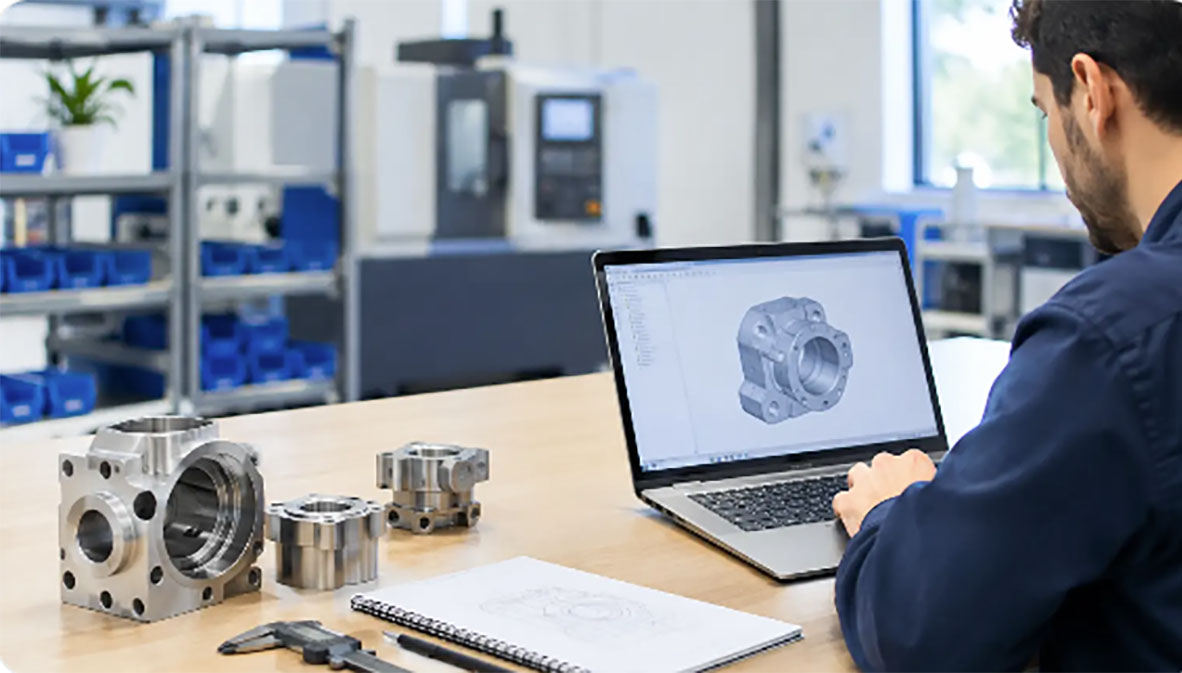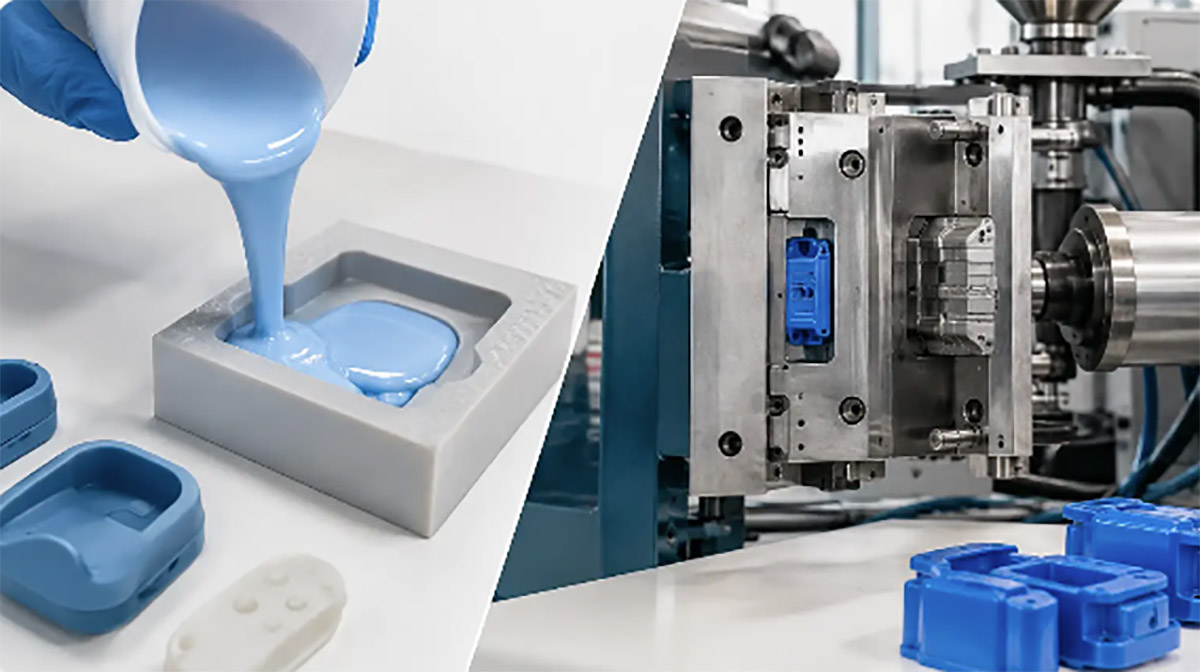
Custom fixture machining services support accurate setups, repeatable inspection, and scalable production from prototypes through full manufacturing runs.

A fixture that locates a part 0.010
inch differently from one cycle to the next can turn an otherwise capable
machining process into a scrap problem. The purpose of custom fixture
machining services is not simply to produce a holding device. It is to
create a repeatable production condition where parts can be located, clamped,
machined, inspected, and released with controlled variation.
For product companies and OEM
procurement teams, that distinction matters. A fixture affects cycle time,
operator handling, machining access, inspection reliability, tool life, and the
consistency of every part that follows. The right fixture can support a short
pilot run, then be modified or replaced with a more automated solution as
volume grows. The wrong fixture can delay production before the first shipment
is approved.
What Custom Fixture Machining
Services Deliver
Custom fixtures are purpose-built tools used to
secure, locate, support, or inspect a component during manufacturing. They are
commonly machined from aluminum, steel, stainless steel, engineering plastics,
or a combination of materials selected for the application.
A machining fixture may hold a
die-cast housing while critical faces are milled. An assembly fixture may align
a molded enclosure, gasket, and electronic subassembly before fastening. An
inspection fixture may establish datums so a quality team can verify hole
locations, profile features, or functional fit. Although these tools serve
different stages, they all reduce dependence on manual judgment.
The best fixture design starts
with the part, not with a standard clamp or base plate. Material behavior,
tolerances, surface-finish requirements, part rigidity, anticipated production
volume, and available machine capacity all influence the design. Thin-wall
plastic parts, for example, may need broad, low-force support to prevent
distortion. A high-volume aluminum component may justify hydraulic or pneumatic
clamping to reduce loading time.
Start With Datum Strategy and
Process Requirements
Fixture performance depends heavily on how the part is
located. A fixture should reference stable, meaningful datum surfaces that
relate to the drawing and to the part's functional requirements. If a critical
hole pattern is dimensioned from a specific face and edge, those features
should usually guide the locating strategy.
The common 3-2-1 locating
principle remains useful: three points establish a primary plane, two points
control a secondary plane, and one point establishes the final orientation. In
practice, the application may require additional supports, floating locators,
relief areas, or compliant contact surfaces. The goal is to constrain the part
without over-constraining it.
Over-constraint is a frequent
source of avoidable variation. If a casting or molded part has normal
dimensional variation, forcing it against too many rigid locators can cause
rocking, inconsistent seating, or stress during clamping. A well-designed
fixture distinguishes between surfaces needed for accurate location and
surfaces that merely need support.
Before machining begins, the
fixture supplier should understand the full operating sequence. Useful inputs
include the part drawing and CAD model, target production quantity, machine
type, tooling access, machining operations, required inspection points, and
cosmetic surface restrictions. Assembly or inspection requirements should also
be defined early, particularly when the fixture will interact with several
components rather than one machined part.
Clamp Force Is a Design Decision,
Not an Afterthought
A clamp must resist cutting forces and prevent movement,
but more force is not automatically better. Excessive force can deform plastic,
thin sheet metal, die castings, and low-rigidity machined components. It can
also leave marks on visible surfaces.
Clamp selection depends on
material, cutting load, contact area, part geometry, and operator access.
Toggle clamps are practical for many manual machining and assembly operations.
Cam clamps and wedge clamps can save space where top access is limited.
Pneumatic clamping can improve consistency and reduce fatigue in repeat
production. Vacuum may be appropriate for flat, nonporous components, though it
is generally not a substitute for mechanical restraint during higher-force
machining.
Match the Fixture to the Production
Stage
Not every project needs the same level of fixture
investment. The correct approach depends on part maturity and volume.
For prototypes and engineering
validation, simple soft jaws, modular plates, or low-complexity machined nests
often provide enough control. They can be produced quickly and adjusted as the
design changes. Spending heavily on dedicated automation before the part design
is stable can create rework and unnecessary cost.
For pilot production, a more
repeatable fixture may be needed to validate cycle times, machining capability,
assembly flow, and inspection methods. This stage is often where design-for-manufacturability
feedback has
the greatest commercial value. If an internal corner requires an impractically
small cutting tool, or if a hidden fastener creates awkward assembly access,
the fixture review can expose the issue before volume production.
For established production,
dedicated fixtures should support repeatable loading, rapid clamping, clear
operator orientation, and practical maintenance. Where demand justifies it,
multiple identical fixtures can run across several machines or workstations.
This reduces bottlenecks and provides continuity when one fixture is being
serviced or adjusted.
Design Features That Improve
Repeatability
A fixture should make correct loading easy and
incorrect loading difficult. Poka-yoke features such as asymmetric locating
pins, keyed nests, orientation stops, and part-presence sensors can prevent common
errors before they reach the machine or assembly station.
Machining access is equally
important. The fixture must provide clearance for cutters, drills, probes, and
chip evacuation while maintaining sufficient support. A fixture that holds the
part securely but blocks access to a critical feature is not production-ready.
Designers should also account for tool changes, spindle travel, vise envelope,
coolant flow, and safe loading paths.
Serviceability matters in
longer programs. Wear components such as locating pins, bushings, clamp pads,
and wear plates should be replaceable when possible. Critical components should
be identified in the drawing package, with replacement tolerances defined. This
is especially relevant for high-cycle fixtures where minor wear can gradually
change part location.
For fixtures used in
inspection, gage repeatability and reproducibility should be considered. An
inspection fixture that allows different seating positions can produce
inconsistent measurement results even when the part itself is within tolerance.
Contact points, datum pads, and clamping sequence should be controlled as
carefully as the measurement device.
Material Selection Affects Cost and
Working Life
Aluminum is widely used for fixture bodies because it
machines efficiently, reduces weight, and is suitable for many low- and
medium-volume applications. Steel is often selected for wear surfaces, hardened
locators, high clamping loads, or long production life. Stainless steel may be
appropriate where corrosion resistance or frequent cleaning is required.
Engineering plastics can
protect cosmetic surfaces and reduce the risk of marring. Delrin, nylon,
urethane, and similar materials are useful for soft contact points, but they
have limits. They may creep under sustained load, wear faster than metal, or
vary with temperature. Their use should be based on the process environment
rather than assumed as a universal solution for delicate parts.
The lowest-cost fixture
material is not always the lowest-cost production choice. A light aluminum
fixture may reduce handling time. Hardened steel pins may cost more upfront but
avoid repeated positional adjustments. The right balance depends on expected
cycles, required tolerance, and the cost of a production interruption.
Quality Control Should Include the
Fixture
A fixture is part of the manufacturing system, so it
should be inspected before release. Critical locator positions, clamp travel,
base flatness, datum relationships, and functional clearances should be
verified against the approved design. For complex fixtures, an assembly trial
with actual production parts is essential.
Documentation should include
fixture drawings, part numbers for replaceable components, revision control,
and operating instructions when the setup is not self-evident. Clear
identification prevents an outdated fixture from returning to the production
floor after a part revision.
At Xiamen Creator Technology,
fixture machining can be coordinated with CNC parts, rapid prototypes, tooling,
molding, die casting, assembly, and packaging requirements. That integrated
approach is useful when the fixture must evolve alongside the product rather
than being treated as an isolated purchase.
Questions to Resolve Before
Ordering a Fixture
A capable supplier will ask practical questions early:
What operation will the fixture support? Which dimensions are critical? How
many cycles are expected? Is the part likely to change? What machine,
workholding system, or inspection equipment will be used? Those questions are
not administrative detail. They determine whether the fixture will support
production or become another variable to manage.
It also helps to define
acceptance criteria in advance. This may include a trial run, a first-article
part machined
in the fixture, verification of repeat location after multiple load cycles, or
inspection results against designated datums. Agreement on these criteria
reduces ambiguity when the fixture reaches the shop floor.
A fixture should earn its
place in the process by making work more predictable. When its locating scheme,
materials, clamping method, and maintenance plan match the real production
environment, it becomes a practical control point that protects quality while
keeping throughput moving.