Silicone molding vs injection molding: compare materials, tooling, cost, volume, and performance to select the right process for your production plan.

A
part that looks simple on a CAD screen can require very different tooling,
cycle times, and quality controls once it reaches production. The silicone
molding vs injection molding decision is not simply a choice between a soft
material and a hard one. It affects part geometry, annual volume, unit cost,
lead time, assembly requirements, and the product’s performance in heat,
chemicals, and repeated use.
For product teams, the first
step is defining the component’s job. A sealing gasket, baby-product valve, wearable
strap, and overmolded grip may require silicone. A housing, latch, structural
bracket, or transparent lens may be better suited to thermoplastic injection
molding. In some projects, both processes are required within the same finished
assembly.
What the Terms Actually Mean
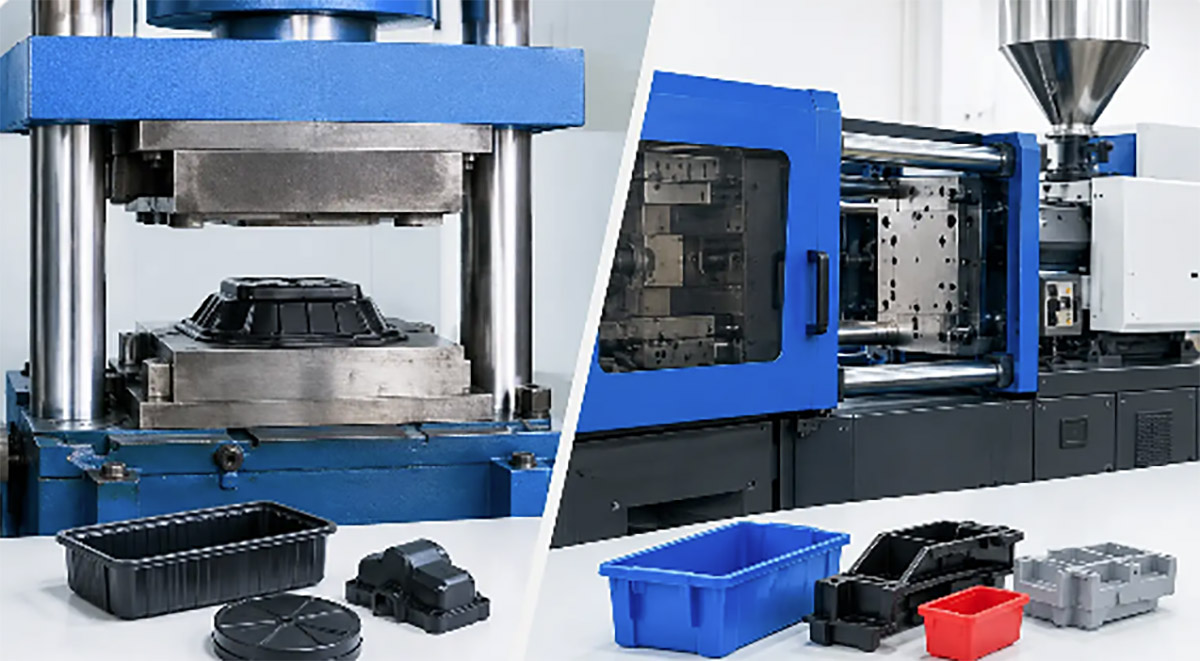
Injection molding is a production process in which
material is heated, injected under pressure into a closed mold, cooled, and
ejected as a finished part. It is most often associated with thermoplastics
such as ABS, polypropylene, nylon, polycarbonate, TPE, and PC/ABS. The material
solidifies by cooling and, for many thermoplastics, can be reground and reused
within controlled limits.
Silicone molding is a broader
term. It can refer to compression molding, transfer molding, liquid silicone
rubber (LSR) injection molding, or room-temperature-vulcanizing silicone
casting. Silicone is an elastomer that cures through a chemical reaction rather
than simply cooling into shape. Once cured, it cannot be melted and remolded
like a typical thermoplastic.
This distinction matters
because LSR injection molding is technically an injection molding process. When
buyers compare silicone molding with injection molding, they usually mean
silicone molding versus conventional thermoplastic injection molding. A clear
material and process specification prevents confusion during quoting and
tooling review.
Silicone Molding vs Injection
Molding: Core Differences
The most practical differences fall into four areas:
material behavior, tooling approach, processing conditions, and production
economics.
Silicone retains flexibility
across a wide temperature range and generally offers strong resistance to
moisture, UV exposure, ozone, and many chemicals. It is widely used for seals,
medical and food-contact components, electrical insulation, valves, diaphragms,
and soft-touch consumer parts. Depending on the grade, silicone can also meet
requirements for biocompatibility, flame resistance, or high-temperature
service.
Thermoplastic injection
molding provides a far wider selection of rigid, semi-rigid, and engineered
materials. It is usually the better fit where a part needs stiffness, impact
resistance, precise snap features, thin walls, cosmetic surfaces, threads, or
structural load capacity. Material additives can provide glass reinforcement,
flame retardancy, conductive properties, UV resistance, or custom color.
Tooling for both processes is
a capital investment, but mold design priorities differ. Thermoplastic molds
require controlled cooling channels, gate design, shrinkage management,
ejection features, and often complex slides or lifters for undercuts. Silicone
compression molds may be simpler for certain geometries, while LSR tools need
accurate metering, temperature control, venting, and flash management.
Silicone’s low viscosity can enter very small gaps, so tool fit and maintenance
directly affect flash levels.
Cycle time also has different
drivers. Thermoplastic parts generally cycle according to fill time and cooling
time. A thicker wall can significantly increase cooling requirements. Silicone
parts cure in the tool, and cycle time depends on the silicone formulation,
mold temperature, part thickness, and curing system. Post-curing may be needed
for some silicone parts, especially where volatile removal, odor control, or
demanding material specifications apply.
Choose Silicone When Function
Depends on Elasticity
Silicone is usually the stronger choice when the part
must flex repeatedly without taking a permanent set. A properly designed
silicone valve can open and close thousands of times. A silicone gasket can
maintain a seal through temperature changes that would make many conventional
plastics brittle or distorted.
Consider silicone molding when
the part requires:
·
Compression set resistance for seals, gaskets, and O-rings
·
Stable flexibility in hot, cold, wet, or outdoor environments
·
Soft skin-contact surfaces for wearables, personal care, or consumer
products
·
Electrical insulation or flame-resistant performance
·
Compatibility with relevant food-contact or medical-grade material
requirements
That said, silicone is not
automatically the best soft material. Thermoplastic elastomers can offer a
lower-cost option for grips, pads, and flexible consumer components,
particularly when the operating environment is moderate and high-volume
injection molding is planned. TPE may also bond effectively to selected plastic
substrates in two-shot or overmolding applications. The right choice depends on
the required temperature range, chemical exposure, tactile feel, regulatory
needs, and expected service life.
Choose Thermoplastic Injection
Molding for Structure and Scale
Conventional injection molding is often the most
economical route for medium- and high-volume plastic components. Once the mold
is validated, it provides repeatable dimensions, fast cycles, and consistent
surface finish. It is well suited to housings, enclosures, clips, knobs,
packaging components, appliance parts, electronic components, and many
mechanical assemblies.
Thermoplastics also offer
broad design freedom. Ribs can add stiffness without excessive wall
thickness. Living hinges can be designed into
polypropylene parts. Textures, logos, and cosmetic finishes can be built into
the mold surface. Inserts can be overmolded, and multiple materials can be
combined through two-shot molding where the product design supports it.
The trade-off is that
injection molding rewards disciplined design for manufacturability. Wall
thickness should be as uniform as possible. Draft is needed for reliable
ejection. Thick sections can sink, warp, or extend cycle time. Sharp internal
corners create stress concentration and can restrict resin flow. These issues
are manageable, but they should be reviewed before steel is cut rather than
corrected after production trials.
Tooling Cost, Unit Cost, and Volume
Low unit price does not always mean low project cost.
A hardened multi-cavity thermoplastic mold can justify its higher upfront cost
when annual demand is high and production will run for several years. For early
market testing or limited production, a simpler tool, a lower-cavity mold, or
an alternate process may reduce financial exposure.
Silicone compression molding
can be commercially sensible for lower-to-medium volumes, larger flexible
parts, and geometries that do not require the output rate of automated LSR
molding. LSR injection molding is more appropriate where repeatability,
automation, tight tolerances, and higher volumes justify specialized equipment
and tooling.
Procurement teams should
compare the full cost model: tooling, material price, expected cycle time,
cavity count, scrap rate, secondary operations, inspection requirements,
packaging, and logistics. A silicone component may cost more per piece than a
molded plastic alternative, yet reduce warranty risk by surviving heat and
repeated compression. Conversely, a rigid plastic redesign may eliminate a
metal component and reduce assembly time enough to offset more complex tooling.
Design and Quality Considerations
Before Tooling
A manufacturing review should start with the part’s
functional requirements, not a preferred process. Define hardness for silicone
components using the appropriate Shore scale, identify critical sealing
surfaces, and specify allowable flash. For thermoplastic parts, identify
critical dimensions, cosmetic faces, gate restrictions, weld-line concerns, and
expected loads.
Tolerance expectations also
need context. Both silicone and thermoplastics experience shrinkage, but
flexible silicone parts can be difficult to measure consistently if the
inspection method compresses or stretches the component. A drawing should
establish datum strategy and measurement conditions, particularly for sealing
features and assemblies. For plastic parts, material grade, mold temperature,
moisture control, and fiber orientation can influence dimensional results.
If the product combines hard
plastic and silicone, interface design becomes a major issue. Mechanical
retention features such as undercuts, holes, grooves, and ribs can improve
retention. Chemical bonding may be possible with a compatible material pair and
the right surface preparation or primer system, but it should be validated
through peel, pull, thermal cycling, and environmental testing. Do not assume
that an overmold will bond reliably because the materials appear compatible on
a data sheet.
A Practical Selection Path
Start by asking what failure mode the part cannot
tolerate. If it cannot lose elasticity, leak, crack under heat, or become
uncomfortable against skin, evaluate silicone first. If it cannot warp, lose
structural rigidity, miss tight assembly dimensions, or become uneconomical at
high volume, evaluate engineered thermoplastics first.
Then confirm the production
plan. Prototype materials and processes can validate form and fit, but they do
not always predict molded-part behavior. Before committing to production
tooling, review draft, wall thickness, parting line location, gate location,
tolerances, surface finish, material certification needs, and inspection
criteria. A coordinated DFM review can identify whether
compression molding, LSR injection molding, conventional injection molding, or
a mixed-process assembly offers the best commercial result.
The best process is the one
that meets function, quality, and volume requirements without creating
unnecessary tooling risk. When the product requires both a durable plastic
structure and a dependable silicone interface, planning those processes
together early can prevent expensive redesigns after the first production run.