Learn how to source custom components with clearer specifications, supplier checks, DFM input, and quality planning from prototype to production at scale.

A
component can look straightforward on a CAD model and become the source of a
missed launch date once material, tooling, tolerances, finish, and assembly
requirements reach the factory. Knowing how to source custom components means
controlling those details before purchase orders are issued, not reacting after
samples fail or production schedules slip.
For product companies and OEM
teams, the goal is not simply to find the lowest quoted unit price. The goal is
to establish a supply path that delivers parts with repeatable quality,
commercially viable lead times, and a clear route from prototype quantities to
production volume.
Start Custom Component Sourcing
With a Complete Definition
A supplier can only quote and manufacture what has
been defined. Incomplete data creates assumptions, and assumptions often appear
later as engineering changes, price increases, or inconsistent parts.
The sourcing package should
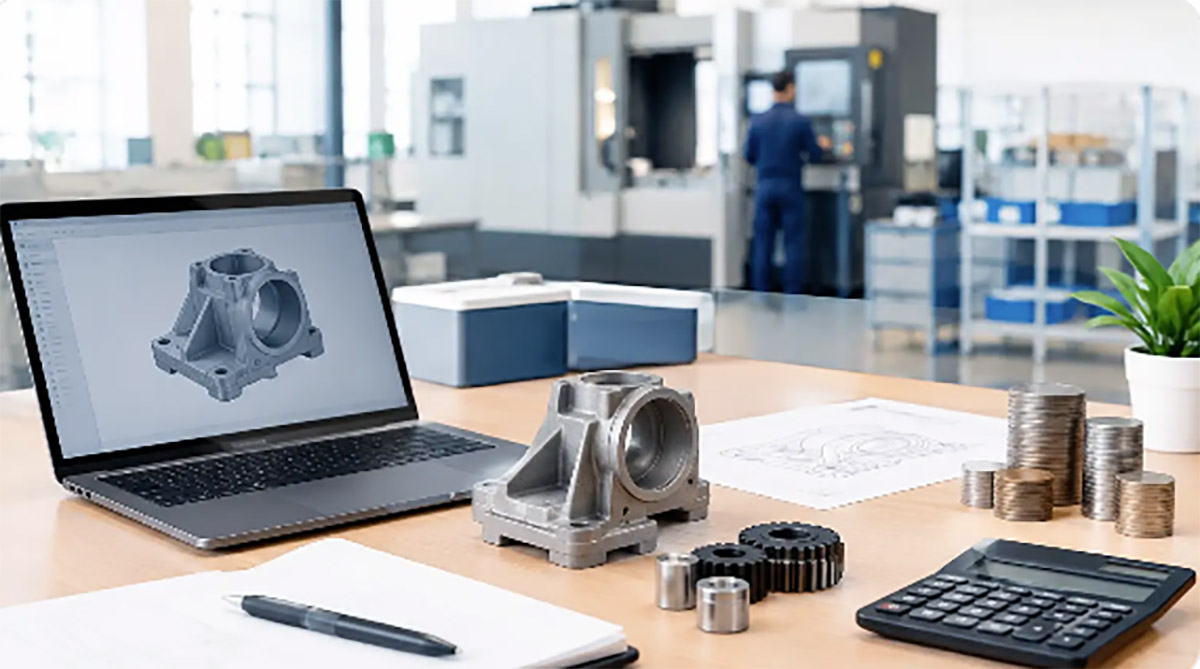
begin with a current 3D model and a controlled 2D drawing. The drawing needs
dimensions, tolerances, material grades, surface finish, color requirements,
critical-to-function features, and inspection criteria. If the part interfaces
with other components, identify the mating dimensions and the assembly
function. A cosmetic housing, for example, may need texture and color approval,
while a load-bearing bracket requires material certification and defined
flatness or positional tolerances.
Avoid applying tight
tolerances across an entire drawing by default. Every tighter tolerance can
increase machining time, tooling complexity, inspection effort, and scrap risk.
Mark the features that genuinely affect fit, performance, safety, or
appearance. This gives a manufacturer room to select an efficient process
without compromising product function.
For electronic or assembled
products, the package also needs a bill of materials, approved component
alternatives, assembly drawings, test requirements, labeling details, and
packaging instructions. Component sourcing is much easier when the factory can
see how individual parts work within the final product.
Match the Process to Volume, Geometry,
and Material
The correct process depends on the required quantity,
part design, material, and expected product life. A process that is economical
for 50 units may be impractical for 50,000.
CNC machining is often
appropriate for functional prototypes, fixtures, precision metal parts, and
lower-volume production. It avoids dedicated tooling but carries a higher
per-part cost as quantity rises. SLA and SLS processes support rapid prototype
evaluation, though prototype resin or powder materials may not represent final
production performance.
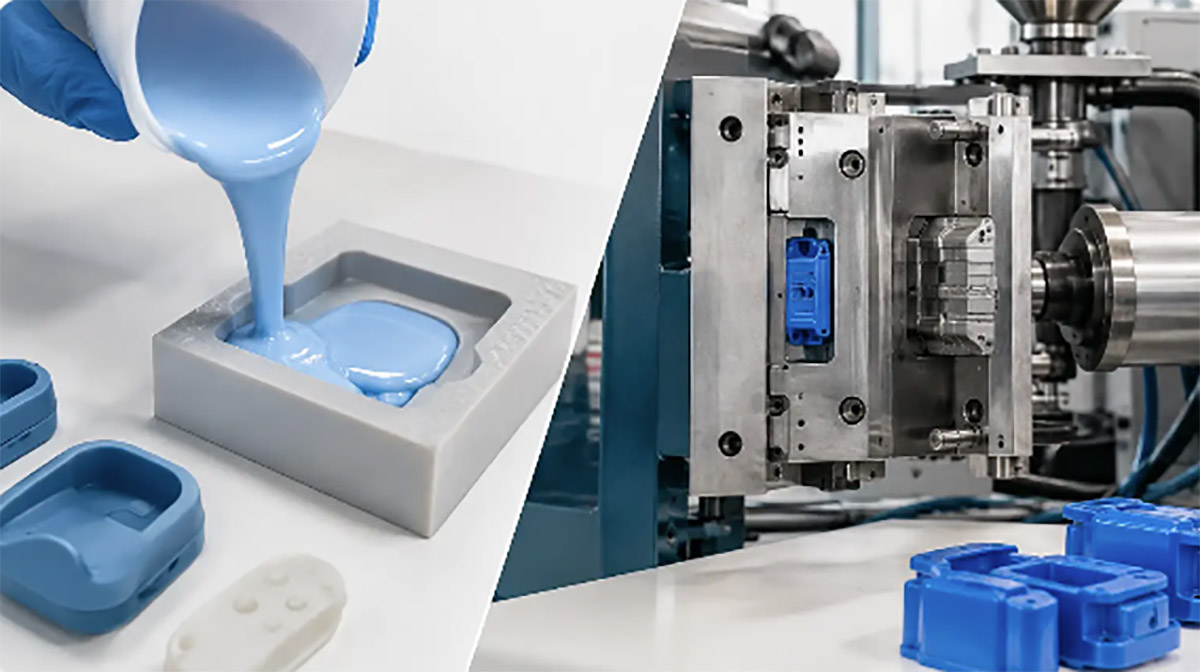
For plastic components,
injection molding becomes more compelling when volumes justify the tooling
investment. Soft or bridge tooling can support pilot runs and market
validation, while hardened steel tooling is generally better suited to long
production programs. Silicone parts may require compression molding or liquid
silicone rubber molding, depending on geometry, performance requirements, and
annual volume.
Metal components may be
machined, die cast, stamped, bent, welded, or finished through several
secondary processes. Die casting can reduce unit cost for
high-volume complex geometries, but it requires early attention to draft
angles, wall thickness, porosity risk, and tooling design. Stamping is highly
efficient for repeatable sheet-metal forms, yet design changes after tool
release can be expensive.
A capable supplier should
explain these trade-offs instead of pushing every part toward its preferred
process. Ask for process options when the annual volume is uncertain. A phased
plan may use machined or printed prototypes first, a pilot mold for validation,
and production tooling after design freeze.
Evaluate Suppliers Beyond the
Initial Quote
The lowest quote can conceal gaps in process control,
material sourcing, inspection capability, or project management. Those gaps
become expensive when a production issue requires fast containment and
corrective action.
When evaluating a supplier, review
whether it can support the work required today and the work likely to follow.
For many programs, a manufacturer that coordinates prototyping, tooling,
molding or machining, finishing, component sourcing, and assembly reduces
handoffs between vendors. Fewer handoffs can improve schedule control, although
the supplier still needs demonstrated depth in each critical process.
Ask practical questions about
production execution:
·
What equipment and process controls will be used for the proposed part?
·
How are incoming materials and purchased components verified?
·
Which dimensions are inspected, at what frequency, and with what measuring
equipment?
·
Can the supplier provide first article inspection reports, material certificates, and
production traceability where needed?
·
Who owns engineering communication, schedule updates, and
corrective-action follow-up?
Capabilities should be
supported by evidence. Request representative samples, inspection reports,
photos of similar process work, and a clear explanation of how nonconforming
parts are handled. For critical parts, an on-site audit or third-party audit
may be justified. For lower-risk commodity parts, a detailed technical review
and sample validation may be sufficient.
Use DFM Before Releasing Tooling or
Production Orders
Design for manufacturability, or DFM, is one of the most
effective ways to prevent cost and lead-time problems. It is not a cosmetic
review performed after the design is complete. It is a technical discussion
between the product team and the people who will build the part.
A DFM review should address
wall thickness, draft, undercuts, ribs, gate location, shrinkage, tool access,
parting lines, tolerance stack-up, material selection, and secondary
operations. For machined components, it should consider cutter access, internal
corner radii, setups, fixturing, and material availability. For assemblies,
design for assembly should address orientation, fastening methods,
error-proofing, adhesive cure time, cable routing, and test access.
The best time to make a design
change is before tooling is cut. A small change to a rib, internal corner, or
snap feature can remove a complicated tool action and reduce both mold cost and
cycle time. However, DFM recommendations should always be reviewed against the
product's functional requirements. Lower manufacturing cost is not useful if the
change weakens a critical feature or reduces user-perceived quality.
Control Samples With Clear Approval
Gates
Sampling should be structured, not treated as an
informal exchange of parts. Define what each build is intended to prove:
appearance, fit, functional performance, assembly sequence, reliability, or
manufacturing repeatability.
An early prototype may
validate form and fit. A later engineering sample may use production-intent
materials and processes. Before mass production, a first article or pre-production
build should confirm that tooling, fixtures, work instructions, and inspection
methods produce acceptable parts consistently.
Record approvals and
deviations in writing. If a sample is accepted with a cosmetic variation or
dimensional concession, specify whether that concession applies only to the
sample or to future production. Without that distinction, temporary exceptions
can quietly become an uncontrolled production standard.
For products with multiple
sourced components, validate the assembled condition. Individually compliant
parts can still fail when tolerance variation accumulates across housings,
fasteners, gaskets, circuit boards, and moving features.
Build Quality Requirements Into the
Purchase Order
Quality cannot be added through final inspection
alone. The purchase order and controlled specifications should state what is
required before manufacturing begins.
Define acceptance standards
for critical dimensions, appearance, color, materials, functional testing, and
packaging. Include the required inspection documentation and whether the
supplier must obtain approval before substituting material, process, component
brand, or sub-supplier. If production lots must be traceable, define lot
marking, record retention, and labeling requirements upfront.
Inspection level should match
product risk. A simple noncritical molded cap may require visual checks and
dimensional spot inspection. A structural, sealing, electrical, or regulated
component may need tighter controls, documented test results, and lot-based
traceability. Excessive inspection increases cost, but weak inspection
increases the likelihood that defects reach assembly or customers.
Plan for Supply Risk and Production
Change
A custom component is rarely isolated from supply
risk. Resin grades, aluminum alloys, electronic parts, coatings, adhesives, and
packaging materials can experience availability changes. The sourcing plan
should identify long-lead items early and include approved alternatives where
technically acceptable.
For recurring programs,
consider a second qualified source for high-risk components or a contingency
process for parts with limited material availability. Dual sourcing is not
always practical, especially for proprietary tooling or highly specialized
processes, but knowing the fallback options improves negotiating position and
recovery speed.
Changes also need control
after launch. A replacement resin, tooling repair, revised mold cavity, new sub-supplier,
or altered plating process can affect fit and performance. Require notification
and approval for meaningful changes, then revalidate the affected
characteristics before full production resumes.
Treat Sourcing as an Ongoing
Manufacturing Process
The most effective sourcing programs create a feedback
loop between design, procurement, quality, and production. Cost data from early
builds informs the next design revision. Assembly findings improve component
drawings. Field issues identify where material choices, tolerances, or
inspection plans need adjustment.
A manufacturing partner with
integrated prototype, tooling, production, sourcing, and assembly support can
make that loop faster by keeping technical decisions close to execution. The
practical standard is simple: source components in a way that makes the next
build more predictable than the last one.