Our guide to custom die casting explains alloys, tooling, DFM, quality control, and production planning for reliable custom metal parts at scale today.

A
die-cast part can look simple in CAD and become expensive quickly once tooling,
alloy flow, wall thickness, and finishing requirements enter the discussion.
This guide to custom die casting is intended for engineering, sourcing, and
product teams that need to convert a component design into repeatable
production without adding avoidable tooling changes, quality risks, or
lead-time delays.
Die casting is best evaluated
as a production system rather than a single process. The part design, selected
alloy, die construction, machine capacity, inspection plan, secondary
operations, and expected annual volume all affect the final cost and
performance of the component.
What Custom Die Casting Is Best
Suited For
Custom die casting forms molten metal under pressure
in a hardened steel die. Once the metal solidifies, the die opens and ejects a
near-net-shape component. The process is commonly used for aluminum, zinc, and
magnesium parts that require dimensional consistency, complex geometry, and
efficient output at moderate to high volumes.
It is a practical option for
housings, brackets, heat sinks, handles, structural frames, automotive
components, electronic enclosures, appliance parts, and hardware with
integrated functional features. Die casting can consolidate several machined or
assembled pieces into one part, reducing hardware, assembly labor, and
tolerance stack-up.
The economics depend on
volume. Tooling requires an upfront investment, so die casting is usually less
suitable for a few prototypes or a very small initial run. CNC machining, SLA
or SLS printing, or soft tooling may be better during design validation. Once
geometry and demand are stable, die casting can reduce unit cost
substantially compared with machining parts from billet.
A Guide to Custom Die Casting
Materials
Alloy selection should begin with the function of the
part, not simply the lowest material price. Mechanical loads, weight targets,
corrosion exposure, thermal performance, cosmetic expectations, and
post-processing requirements all matter.
Aluminum die casting
Aluminum is widely selected for its strength-to-weight
ratio, corrosion resistance, heat dissipation, and suitability for larger
structural or electronic components. It is commonly used for motor housings,
lighting bodies, equipment covers, and heat-management parts. Aluminum can
support thin walls and complex details, but it requires careful process control
to manage porosity, particularly when parts will be machined, pressure-tested,
welded, or heat treated.
Zinc die casting
Zinc offers excellent fluidity and can reproduce fine
details, threads, small features, and thin walls effectively. It is often a
strong fit for smaller precision parts, decorative hardware, locks,
consumer-product components, and mechanisms. Zinc dies can have a long service
life, and the material is well suited to plating and cosmetic finishing. Its
higher density makes it less attractive when low weight is a primary
requirement.
Magnesium die casting
Magnesium is used when reducing weight is critical,
such as in selected transportation, portable equipment, and electronics
applications. It provides good machinability and stiffness relative to weight.
The material choice requires an experienced manufacturing plan because
corrosion protection, processing conditions, and supply requirements differ
from aluminum and zinc.
Design for Manufacturing Before
Tool Release
Most die-casting cost
reductions are identified before the die steel is cut. A formal DFM review should assess geometry
against metal flow, mold release, filling behavior, cooling, machining
requirements, and inspection access. A drawing can be dimensionally correct
while still creating avoidable production difficulty.
Wall thickness should be as
uniform as practical. Abrupt changes can cause uneven cooling, shrinkage,
distortion, or localized porosity. When thicker areas are structurally
necessary, transitions should be gradual. Ribs can often provide stiffness more
efficiently than increasing the thickness of an entire wall.
Draft angles are required to
release the part from the die. The exact draft depends on alloy, surface
texture, feature depth, and whether the area is formed on the cover half,
ejector half, or a moving slide. Deep pockets, textured surfaces, and internal
features typically need more draft than simple external walls.
Undercuts deserve early
attention because they may require slides, lifters, or additional die actions.
These mechanisms can make a part feasible, but they increase tooling cost,
maintenance requirements, and cycle complexity. In some cases, a minor design
revision can remove the undercut and eliminate an entire tool mechanism.
Specify tolerances according
to function. Tight tolerances should be reserved for critical interfaces,
sealing surfaces, bearing locations, and assembly features. Applying
precision-machining tolerances across an entire casting increases inspection
burden and may require secondary machining without improving product
performance.
Tooling Decisions That Affect Cost
and Lead Time
A die-casting tool is not a generic mold. It is
engineered around the part geometry, alloy, machine tonnage, cavity count,
gating layout, thermal management, ejection strategy, and expected production
life. Tooling design directly affects fill quality, repeatability, cycle time,
and maintenance needs.
The number of cavities is a
commercial and operational decision. A multi-cavity die increases output and
can reduce piece price at sustained volume, but it costs more to build and
takes longer to modify. For a new product with uncertain demand, a
single-cavity or lower-cavity tool may provide a more controlled production
start. For established programs, higher cavity counts can be justified by the
required annual output.
Gate location and runner
design must support controlled metal flow into the cavity. These features are
later trimmed from the part, so the design must also account for trimming
access, material yield, and cosmetic restrictions. Venting and overflow areas
are equally important because trapped air and poor gas evacuation can
contribute to porosity or incomplete fill.
Before approving tooling,
confirm ownership terms, die life expectations, spare-component planning,
revision procedures, and storage arrangements. These details matter when a
product remains in production for years or must be transferred between
manufacturing stages.
Production Control and Quality
Planning
Die casting quality cannot be
judged only by the appearance of the first sample. A reliable control plan
begins with approved drawings, material specifications, critical dimensions,
cosmetic standards, and defined acceptance criteria. The supplier should
establish how these requirements will be checked during first article review and regular production.
Typical controls include
incoming alloy verification, machine parameter monitoring, first-piece
inspection, in-process dimensional checks, visual inspection, and final
sampling. Where required, additional methods may include X-ray inspection for
internal porosity, leak testing, thread gauging, coating thickness measurement,
hardness testing, and coordinate measuring machine inspection.
The right inspection method
depends on the part's failure mode. A cosmetic enclosure may need defined
surface standards and color consistency after finishing. A fluid-handling body
may need leak testing. A precision assembly may need controlled datums and a
capability study on critical dimensions. Applying every available test to every
part adds cost without necessarily improving risk control.
Porosity requires particular
attention. Some porosity is acceptable in many die-cast components, especially
in noncritical internal areas. It becomes a serious concern when it affects
sealing, pressure containment, structural performance, machining surfaces, or
finishing quality. Identify these requirements early so the tooling and process
approach can be designed accordingly.
Secondary Operations and Finishing
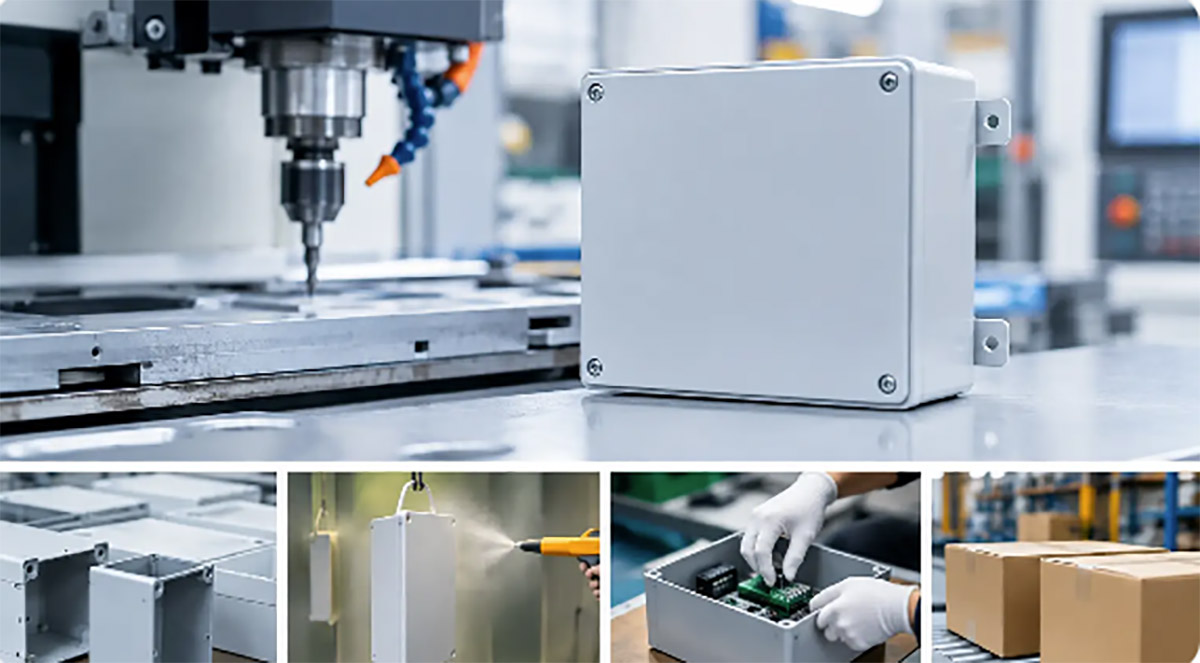
Die casting often produces a near-net-shape part, but
secondary operations are common. Trim removal, deburring, CNC machining,
tapping, reaming, polishing, shot blasting, powder coating, painting, plating,
and assembly may be required to meet the finished-product specification.
Coordinate these steps as one
process plan. For example, critical mounting holes may need machining after
casting, while cosmetic surfaces may require careful fixture design to prevent
marks during handling. If a part will be powder coated or plated, discuss
masking, rack points, surface preparation, and dimensional buildup before
finalizing the drawing.
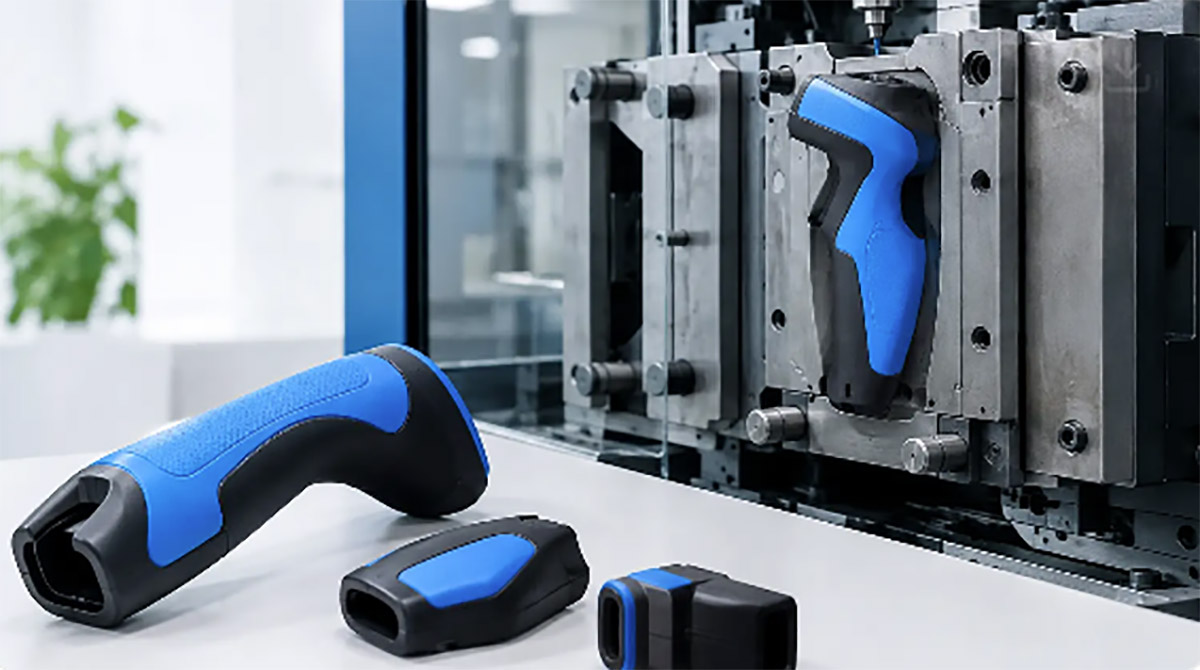
For products requiring
multiple component types, an integrated manufacturing plan can also combine
die-cast parts with injection-molded plastics, stamped metal, silicone
components, purchased hardware, and final assembly. This reduces handoffs and
makes it easier to control fit between related components.
Selecting a Manufacturing Partner
for Custom Die Casting
A capable die-casting supplier should be able to
discuss more than machine capacity and unit price. Review their DFM process,
tooling engineering capability, alloy options, sampling workflow, quality
documentation, secondary-operation management, and communication structure for
engineering changes.
Ask how prototype findings
move into production tooling decisions. A supplier that can support CNC
prototypes, design refinement, tooling, casting, machining, finishing, and
assembly can identify interface risks earlier than a fragmented supply chain.
That does not mean every project needs every service. It means the production
path can be planned around the product rather than around the limits of one
process.
For procurement teams, compare
quotations on a like-for-like basis. Confirm whether the price includes
tooling, trim dies, machining fixtures, inspection fixtures, finishing,
packaging, material certification, and expected scrap assumptions. The lowest
initial quotation can become the higher-cost option if key operations or
quality requirements are excluded.
A well-executed die-casting program starts with clear functional requirements and honest volume expectations. Bring the casting partner into the design review before tool release, and the resulting part is more likely to be practical to produce, consistent to inspect, and economical to scale