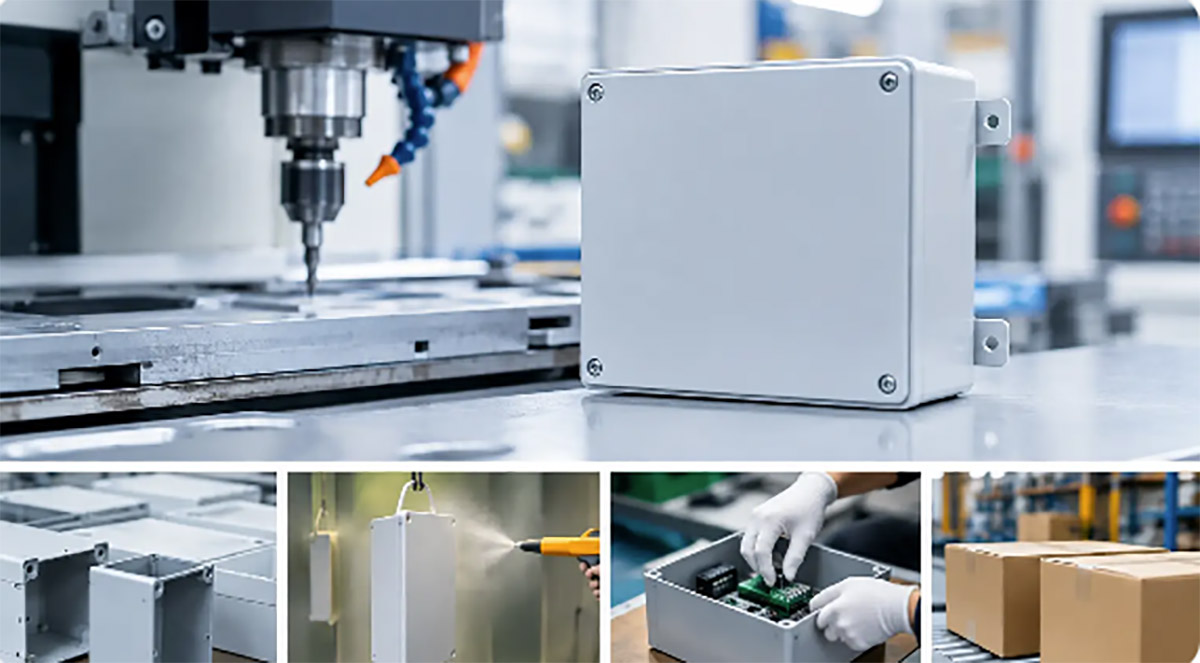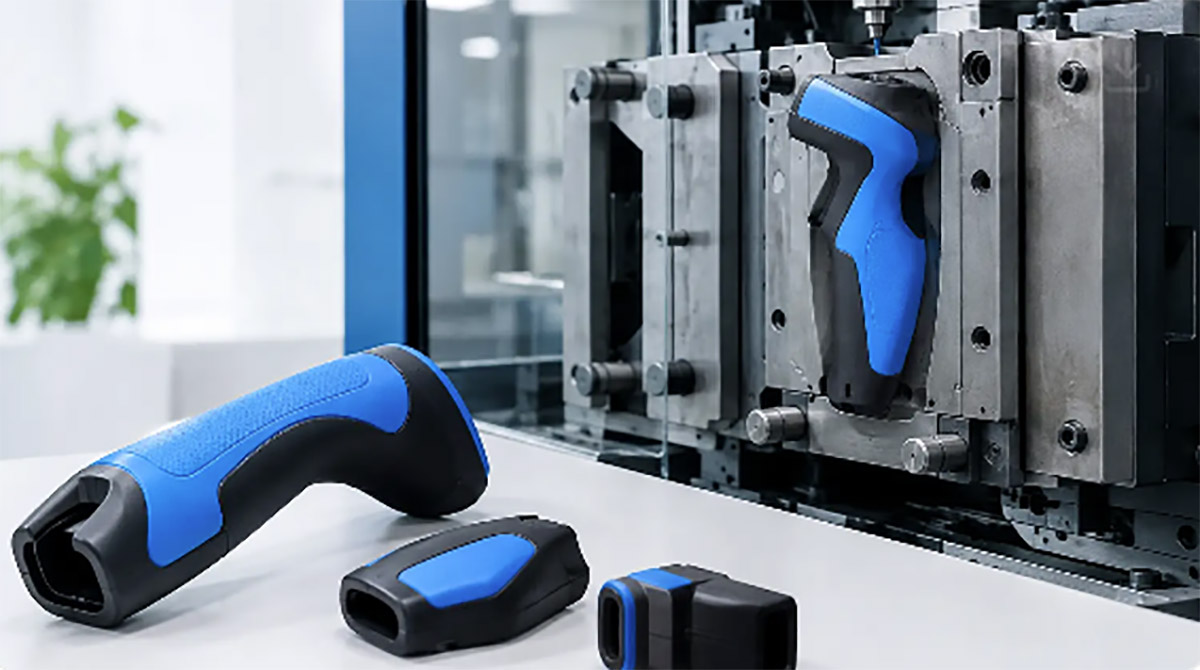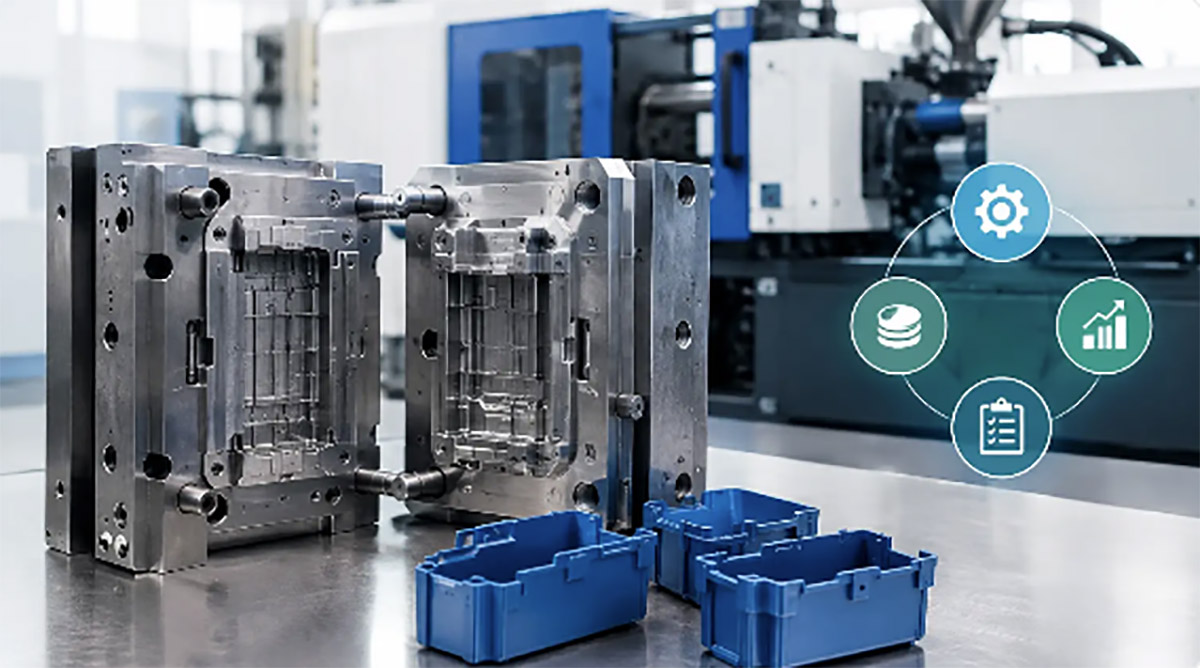
Manufacturing cost optimization lowers total product cost through DFM, tooling strategy, process selection, sourcing, and quality control at full scale.

A
part that appears inexpensive on a supplier quotation can become expensive once
scrap, secondary operations, assembly time, inspection, freight, and field
failures enter the picture. Effective manufacturing cost optimization addresses
the total delivered cost of a product, not just the unit price of one
component. For product teams, the best savings usually begin before a tool is
cut or a purchase order is released.
The practical objective is
straightforward: produce a part or complete product at the required quality
level, in the required volume, with predictable lead times and minimal
avoidable work. That requires decisions across design, materials, tooling,
process selection, sourcing, assembly, and quality control to support the same
commercial target.
Start With the Total Cost Model
Unit price is a useful number, but it is not a
complete decision tool. A lower molding price may require a costly tool
modification later. A less expensive material may increase rejects, create
cosmetic variation, or add assembly difficulty. A supplier with a low component
quote may also leave the buyer responsible for coordinating packaging,
purchased parts, inspection, and final assembly.
A workable cost model
separates recurring and non-recurring costs. Non-recurring costs include
engineering support, prototypes, molds, fixtures, gauges, and validation
samples. Recurring costs include raw material, machine time, labor, finishing,
packaging, quality inspection, logistics, and expected yield loss.
The right balance depends on
volume and product maturity. For a short pilot run, it can be sensible to
accept a higher per-part cost to avoid committing to production tooling before
the design is proven. For a stable product with ongoing demand, investment in a
production-grade mold, automation, or dedicated fixture can lower total cost
over the life of the program.
Apply Manufacturing Cost
Optimization During Design
The highest-impact cost
decisions are often made in CAD. Once geometry, material, tolerances, and
cosmetic requirements are fixed, the available savings become narrower. Design for manufacturability should therefore be part
of early product development, not a final review after specifications have been
released.
Match the process to the part and
volume
A process should fit the geometry, performance
requirements, surface finish, quantity, and expected product life. CNC
machining is often appropriate for functional prototypes, tight-tolerance metal
parts, and low-volume production. SLA and SLS can accelerate prototype
evaluation when design changes are likely. Injection molding becomes economical
when volumes justify tooling investment and repeatable plastic parts are
required.
For metal housings, brackets,
and structural parts, die casting or stamping may offer lower recurring cost at
volume than machining from solid stock. However, each process introduces
different design rules, tooling costs, and tolerance limits. A stamped part may
reduce material waste and cycle time, but it may need secondary forming or
hardware insertion. Die casting can produce complex forms efficiently, but wall
thickness, draft, porosity risk, and post-machining requirements must be
managed.
There is no universally
lowest-cost process. The right choice changes with annual volume, part
complexity, revision risk, and the cost of failure in the finished product.
Control tolerances and surface
requirements
Over-specification is a frequent source of unnecessary
cost. Tight tolerances increase machining time, inspection requirements, tool
wear, and rejection risk. Cosmetic finishes can add polishing, texture control,
protective handling, and more restrictive acceptance criteria.
Specify tight tolerances only
where they affect fit, function, sealing, motion, or safety. Use datum structures
that reflect how the part is assembled and inspected. On molded parts, define
acceptable sink, flash, gate vestige, and color variation realistically rather
than applying a blanket cosmetic standard to every surface.
The same discipline applies to
materials. A premium resin, alloy, or silicone grade should be selected for a
measurable requirement such as temperature resistance, flame rating, chemical
exposure, impact performance, electrical properties, or regulatory compliance.
If the requirement is unclear, the material may be carrying cost without adding
product value.
Reduce part count before reducing
part price
A product with fewer parts often costs less to
produce, inspect, procure, and assemble. Combining functions into a molded
enclosure, replacing multiple fasteners with snap features where appropriate,
or designing self-locating features can eliminate recurring labor and reduce
assembly errors.
Part consolidation has limits.
A highly complex molded part can require expensive tooling, create warpage
risk, or make maintenance difficult. The useful question is not simply whether
two parts can become one, but whether the change lowers total cost while
preserving moldability, serviceability, and quality.
Treat Tooling as a Production Asset
Tooling decisions should reflect the expected
production path. A prototype tool, soft tool, and hardened production mold
serve different purposes. Selecting the cheapest tool without considering cycle
time, cavity count, maintenance, and tool life can create recurring cost
problems for years.
For injection molding, a
single-cavity mold may be appropriate for low demand, product validation, or
frequent design revisions. As volume grows, multi-cavity tooling can reduce
machine cost per part and improve output. Features such as hot runners,
automated part removal, or in-mold inserts may improve economics, but only when
the production volume can recover the added investment.
Tool design also affects
quality. Correct gate location, cooling layout, venting, ejection, and steel
selection help control warpage, sink marks, short shots, and cycle variability.
A lower cycle time is valuable, but not if it produces unstable dimensions or
raises the scrap rate. Tool optimization should improve repeatability first,
then throughput.
Improve Yield and Quality at the
Source
Scrap is not only a material loss. It consumes machine
capacity, operator time, inspection effort, and delivery margin. Rework can be
even more costly because it adds labor after the original process has already
failed to produce a conforming part.
The strongest cost control is
prevention. Establish clear critical-to-quality dimensions, approved material
specifications, process parameters, work instructions, and inspection methods
before volume production begins. First article inspection and production sample
approval should verify both the part requirements and the manufacturing method
used to achieve them.
For assemblies, error-proofing
can be more economical than relying on final inspection. Fixtures that control
orientation, poka-yoke features that prevent incorrect component installation,
and functional tests that identify defects early reduce the cost of downstream
correction. This is especially relevant for products that combine molded
components, stamped or machined metal parts, silicone elements, electronics,
and packaging.
Inspection should be
proportionate to risk. Inspecting every dimension on every part may not be
necessary, while failing to monitor a critical mating feature can create
expensive assembly failures. A control plan focused on meaningful process risks
supports quality without adding inspection labor that does not improve
outcomes.
Consolidate Coordination Without
Losing Technical Control
Supplier fragmentation often hides cost. A product
company may use one source for prototypes, another for tooling, a third for
molding, and additional vendors for metal parts, silicone parts, assembly, and
packaging. Each handoff can add freight, communication delays, tolerance
stack-up issues, and responsibility gaps when defects appear.
An integrated manufacturing
workflow can reduce those costs by coordinating design feedback, tooling, component sourcing, production, assembly, and
packaging under one operational plan. Xiamen Creator Technology supports this
approach across prototyping, tooling, custom component production, and complete
product manufacturing, allowing technical issues to be addressed before they
become cross-supplier delays.
Integration does not mean
giving up visibility. Buyers should still request clear drawings, bills of
materials, sample approvals, inspection criteria, production schedules, and
change-control procedures. The advantage is that the manufacturing partner can
manage interfaces between processes while the customer retains control over
product requirements.
Make Sourcing Decisions Based on
Stability
Material and component sourcing should not be
evaluated only by the lowest available purchase price. A lower-cost source may
introduce lot variation, uncertain lead times, inconsistent documentation, or
minimum order quantities that create obsolete inventory. These risks become
more significant when a product depends on matched colors, specific resin
properties, custom electronics, or regulated materials.
A stable sourcing strategy
defines approved alternatives where possible, confirms supplier lead times, and
protects critical items with reasonable inventory planning. Standardizing
common fasteners, connectors, finishes, and packaging materials can also
improve purchasing leverage and reduce the number of unique parts that must be
managed.
Cost reduction should be
reviewed after each major production stage. Prototype results may reveal that a
wall thickness needs revision. Tool trials may show that a gate change can
reduce cosmetic defects. Early production may identify an assembly step that should
be fixture-assisted. These are not failures of planning. They are the practical
feedback needed to make a product easier and less expensive to build.
The most durable savings come
from a product design and manufacturing plan that can repeat the same result at
scale. When process capability, quality requirements, and commercial targets
are aligned early, cost becomes controlled rather than merely negotiated.