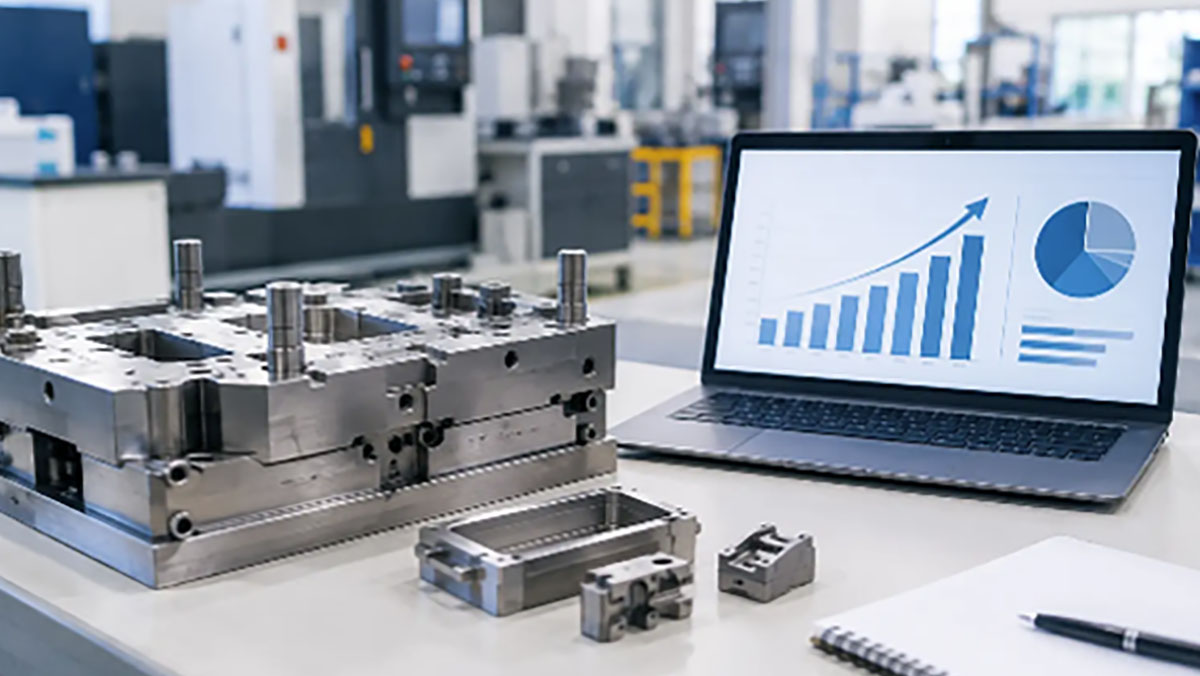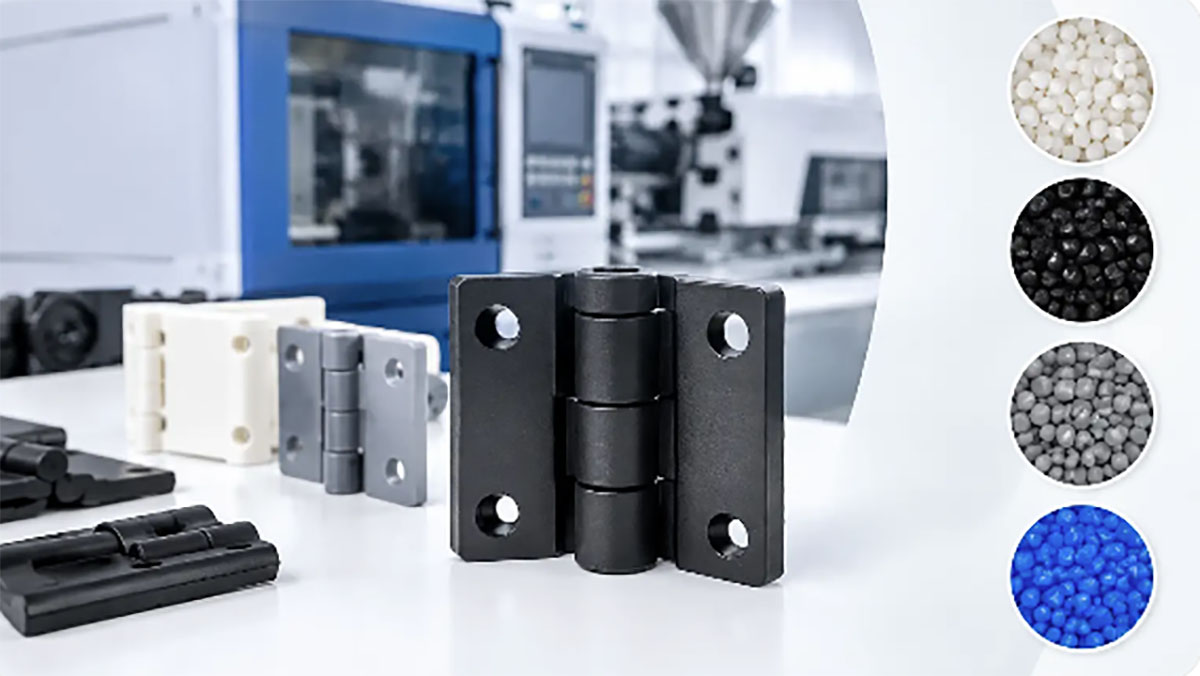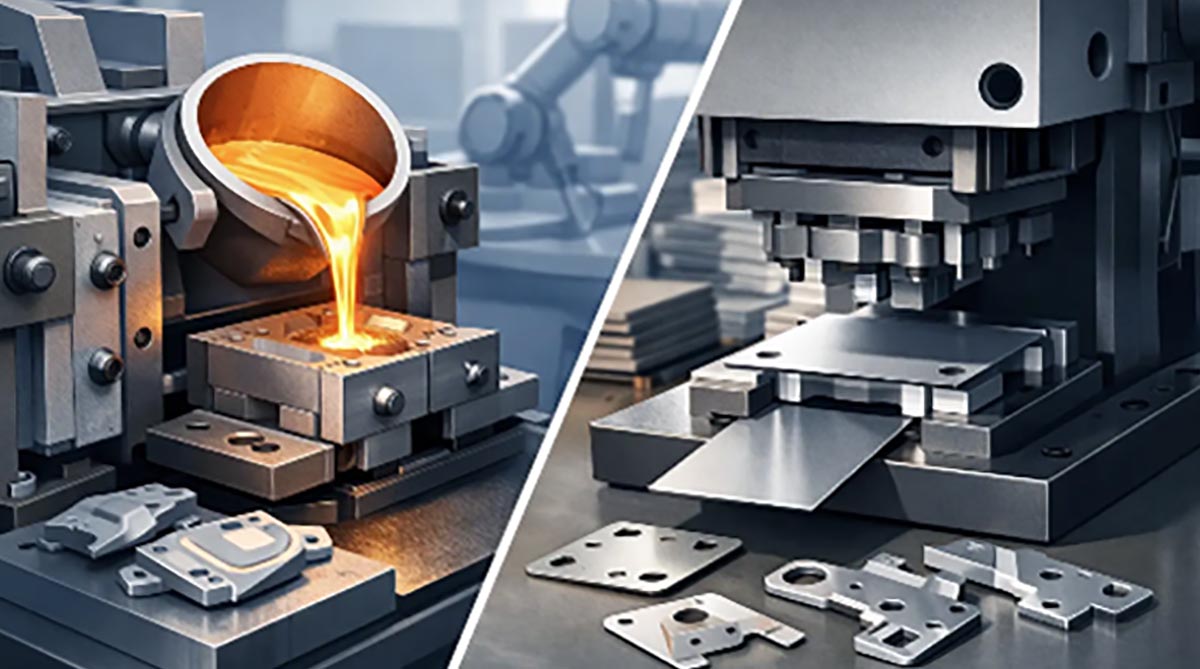
Rapid prototyping helps teams validate form, fit, function, and manufacturability before tooling, reducing risk, lead times, and production changes.

A prototype can look convincing on a screen and still fail at the factory. A wall may be too thin to fill consistently, a snap feature may fatigue after repeated use, or a cosmetic surface may show sink marks once the part is molded. Rapid prototyping gives product teams a practical way to expose these issues before they become tooling changes, delayed launches, or avoidable production cost.
For hardware companies, OEM brands, engineers, and procurement teams, the value is not simply getting a physical sample quickly. The real value is making better decisions while the design is still flexible. A useful prototype answers a specific question about the product, then supports the next manufacturing decision.
What Rapid Prototyping Should Validate
Rapid prototyping is the fast production of physical parts or assemblies from digital design data. Depending on the material, process, and intended test, it can be used to review appearance, confirm dimensions, test an assembly, evaluate user interaction, or prepare a design for production tooling.
The right prototype depends on what needs to be learned. A visual model for an industrial design review does not require the same material behavior as a functional latch, a fluid-handling component, or an electronics enclosure. Selecting a process based only on the lowest unit price can produce a sample that looks acceptable but gives misleading test results.
Most prototype programs need to validate one or more of the following areas:
- Form: overall shape, size, ergonomics, visual proportion, and surface appearance.
- Fit: mating features, tolerances, fasteners, internal clearances, and interaction with purchased components.
- Function: movement, load response, sealing, heat exposure, electrical integration, or repeated-use performance.
- Manufacturing readiness: draft angles, wall thickness, gate locations, undercuts, parting lines, assembly sequence, and material selection.
These goals often require more than one prototype iteration. A low-cost early model can establish form and fit. A later CNC-machined or production-intent sample can verify tighter tolerances and functional requirements. Treating every prototype as if it must serve every purpose adds cost without necessarily improving the decision quality.
Choosing a Rapid Prototyping Process
The process should match the design stage, geometry, material requirement, and test method. Manufacturing teams should also consider whether the prototype will lead directly into bridge tooling or mass production. That connection reduces rework when the project moves from sample approval to production release.
SLA for Fine Detail and Presentation Models
SLA prototypes are well suited to fine features, smooth surfaces, and complex geometries. They are commonly used for appearance models, housing concepts, detailed ergonomic reviews, and components that need a high-quality finish after sanding, painting, or other secondary treatment.
However, standard SLA resins do not always represent the impact strength, heat resistance, long-term stability, or fatigue performance of engineering thermoplastics. They can be effective for evaluating shape and assembly, but teams should be careful about using them as proof of real-world mechanical performance. Specialty resins may improve certain properties, though they still need to be assessed against the final production material.
SLS for Functional Nylon Parts
SLS produces durable nylon components without the support structures required by many resin processes. It is useful for functional housings, brackets, ducts, clips, and small-run parts with internal channels or complex shapes. Its material behavior is generally more suitable for practical handling and fit checks than a display-focused resin model.
The trade-off is surface texture and dimensional variation. SLS parts may require finishing for cosmetic applications, and tight interfaces may need post-processing or design compensation. For a prototype intended to test a molded enclosure’s assembly, these factors should be understood before approving dimensions.
CNC Machining for Tolerance and Production-Intent Materials
CNC machining is often the better choice when a part requires controlled tolerances, threaded features, strong mechanical behavior, or material close to the final product. Plastic, aluminum, steel, brass, and other machinable materials can be used to test functional components and build credible engineering samples.
Machining also has limits. Deep internal features, sharp inside corners, and highly complex freeform geometry may require additional setups or may be more economically produced with additive methods. A manufacturing review can determine whether a machined prototype is necessary for the test objective or whether a less expensive process will provide the same answer.
Silicone Tooling for Short Production Runs
When the project needs more than a few parts, silicone tooling can bridge the gap between one-off prototypes and production injection molds. Vacuum casting can produce small batches of urethane parts for market testing, pilot builds, color review, or early customer samples. It is particularly useful when multiple units are required before investing in hard tooling.
This route has its own constraints. Urethane cast parts are not identical to injection-molded ABS, PC, TPU, or other production plastics. Tool life is limited, tolerances vary by geometry, and material properties should be reviewed against the intended use. It is a practical bridge process, not a substitute for production tooling qualification.
Prototype for the Next Decision, Not for Perfection
A frequent source of delay is trying to make an early prototype look like a finished retail product. That approach can be justified for investor demonstrations, sales samples, or user research, but it is not always necessary for engineering validation. Each added finish, coating, color match, or cosmetic standard should support a defined objective.
Before releasing files, establish what the sample must prove. For example, a team testing a snap-fit battery door needs repeated-cycle data, not a painted appearance model. A team reviewing a countertop appliance may need both: an early visual prototype for user feedback and a separate functional assembly to assess heat, fasteners, internal space, and service access.
Clear acceptance criteria improve prototype speed. Specify critical dimensions, material requirements, surface finish, color expectations, test loads, mating components, and sample quantity. If a feature is provisional, identify it as provisional. This prevents a prototype supplier from treating every dimension as equally critical and helps the team focus inspection effort where it matters.
Build DFM Into the Prototype Cycle
Rapid prototypes are most valuable when they are paired with design for manufacturability and design for assembly reviews. A prototype confirms what is physically possible. DFM identifies whether it can be made consistently and economically at the target volume.
For injection-molded parts, the review should examine wall thickness transitions, draft, ribs, bosses, undercuts, gate feasibility, weld lines, shrinkage, and ejection. For metal components, it may address machining access, bend radii, stamping direction, die-casting wall sections, finishing requirements, and tolerance stack-up. For complete products, DFA should consider screw count, locating features, assembly orientation, cable routing, adhesive application, testing access, and packaging protection.
The timing matters. A design that works as an SLS prototype may be difficult to mold without redesign. Likewise, a CNC-machined aluminum part may not reflect the porosity, draft, or wall-thickness requirements of die casting. Production process knowledge should influence prototype geometry early, especially when launch timing depends on tooling.
Use Iterations to Reduce Tooling Risk
Tooling is a commitment of cost and schedule. Changes after steel is cut can require welding, re-machining, insert replacement, or a new mold component. Some changes are manageable; others affect parting lines, gate design, cavity layout, and product performance. The purpose of the prototype cycle is to find the high-impact changes before that commitment.
A controlled sequence is usually more effective than a single broad prototype request. Start with CAD review and manufacturing feedback. Produce samples for critical fit and functional questions. Assemble with real components where possible. Record failures, dimensional findings, and user observations. Update the design, then repeat only where unresolved risk remains.
This approach also supports procurement decisions. A pilot build can reveal whether component lead times are realistic, whether a finish specification is commercially available, and whether assembly labor assumptions hold up. The prototype is therefore part of product validation and supply-chain planning, not an isolated engineering activity.
Information That Makes Prototype Quotes More Accurate
Manufacturers can respond faster and more accurately when the request includes usable technical data. A 3D CAD file is essential, but it is rarely enough on its own. State the intended material, quantity, required process, critical tolerances, surface finish, color, assembly requirements, and the purpose of the sample.
Include 2D drawings for parts with controlled dimensions, threads, datum references, or inspection requirements. For assemblies, provide a bill of materials and identify customer-supplied components. If the prototype must pass a specific test, describe the load, temperature, cycle count, or operating environment. This allows the manufacturing team to recommend a process based on function rather than appearance alone.
When prototypes move toward tooling and production, maintaining one coordinated manufacturing workflow can simplify revision control, quality records, component sourcing, and assembly planning. Xiamen Creator Technology supports this progression from prototype parts through tooling, production, and complete product assembly, helping teams keep engineering intent connected to factory execution.
The most productive prototype is not necessarily the fastest or the most polished sample. It is the one that removes the next meaningful production risk while there is still time and budget to change the design.