Compare CNC finishing options for metal and plastic parts, including anodizing, plating, blasting, polishing, and painting, for cost and performance.

A
machined part can meet every dimensional requirement and still fail its job at
the last stage. The wrong surface treatment can create corrosion issues,
interfere with electrical contact, change a critical fit, or make a
consumer-facing product look inconsistent. Selecting CNC finishing options
should therefore begin with function, not appearance alone.
For product teams, the
practical question is not which finish looks best in a sample board. It is
which process delivers the required protection, cosmetic standard, dimensional
control, and repeatability at the intended production volume. That decision
affects machining allowances, material selection, lead time, inspection
criteria, and total unit cost.
CNC Finishing Options by Material
and Function
CNC-machined aluminum, steel, stainless steel, brass,
copper, and engineering plastics each respond differently to post-machining
processes. A finish that performs well on 6061 aluminum may be unsuitable for
304 stainless steel or ABS. Material compatibility should be confirmed before
releasing drawings or production tooling.
The most common categories
include mechanical finishing, conversion and anodic treatments, plating, paint
and powder coating, laser marking, and specialty processes. In many projects,
more than one process is used. For example, an aluminum enclosure may be bead
blasted before anodizing, while a steel bracket may be zinc plated and then
passivated.
As-Machined Finish
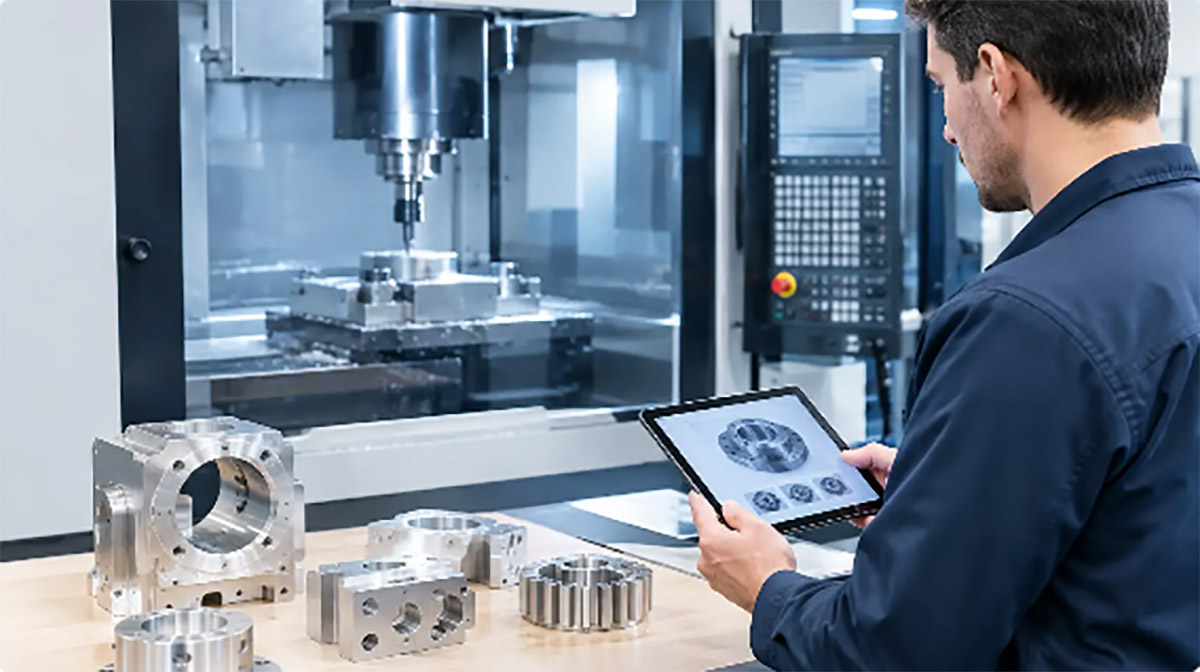
An as-machined finish leaves visible tool paths after
CNC milling or turning. It is often the most economical option because it
avoids secondary finishing operations. It is suitable for internal components,
fixtures, prototypes, and parts where cosmetic appearance is not a primary
requirement.
Surface
quality depends
on cutter geometry, tool condition, machining strategy, spindle speed, feed
rate, and material. Fine machining can reduce tool marks, but it will not
produce the uniform matte appearance of blasting or the reflectivity of
polishing. Specify a surface roughness value, such as Ra, when functional
performance matters. A general statement such as “smooth finish” leaves too
much open to interpretation.
Bead Blasting and Sanding
Bead blasting uses media to create a uniform matte
texture and reduce the visibility of machining marks. It is common on aluminum
housings, stainless steel components, and cosmetic covers. Glass beads
generally produce a smoother satin appearance, while other media can create a
more aggressive texture.
Blasting is usually followed
by anodizing, painting, or another protective treatment when corrosion
resistance is needed. It can also be used as a final cosmetic step on
corrosion-resistant materials such as stainless steel. Because blasting removes
material and rounds sharp edges slightly, masking and controlled process
settings are required around threads, precision bores, sealing surfaces, and
tight-tolerance features.
Hand sanding, brushing, and
polishing can create directional grain or reflective surfaces. These processes
are effective for visible stainless steel, brass, and aluminum components, but
they are labor-intensive. Cosmetic consistency can become more difficult as
part geometry becomes complex or production quantities rise.
Anodizing for Aluminum Parts
Anodizing is one of the most widely specified CNC
finishing options for aluminum. The process converts the outer aluminum surface
into a controlled oxide layer, improving corrosion resistance and wear
performance while allowing clear or colored finishes.
Type II anodizing is commonly
selected for decorative and general protective applications. It can be clear,
black, or dyed in other colors. Type III hard anodizing creates a thicker,
harder layer and is used where abrasion resistance is more important than
cosmetic uniformity. Hard anodized parts often have darker, less predictable
color results, especially across different aluminum grades or mixed material
batches.
Anodizing changes dimensions.
The coating grows partly into the substrate and partly above the original
surface, so close-fit holes, threads, and mating surfaces need attention during
design. Call out areas to be masked when electrical conductivity, bearing fits,
thread engagement, or critical tolerances must be preserved. A supplier should
also confirm the specific aluminum alloy, because 6061, 7075, cast aluminum,
and mixed assemblies can anodize differently.
Plating and Conversion Coatings for
Metals
Plating adds a deposited metal layer to a part. Common
options include zinc, nickel, electroless nickel, chrome, tin, silver, and
gold, depending on the application. These coatings can provide corrosion
protection, solderability, conductivity, wear resistance, or a specific
cosmetic effect.
Zinc plating is frequently
used for steel fasteners, brackets, and hardware. It is cost-effective for
general corrosion protection, particularly when paired with a passivation
treatment. Nickel plating offers a brighter appearance and can improve wear and
corrosion performance. Electroless nickel is valued for relatively even
coverage across complex shapes, including internal features, but it requires
careful control where tight dimensions are involved.
Chemical conversion coatings,
such as chromate conversion for aluminum, improve corrosion resistance and
paint adhesion while retaining electrical conductivity more effectively than
anodizing. They are often used on electronic enclosures, grounding surfaces,
and components that require subsequent coating. Environmental requirements
should be reviewed early because some legacy chromate systems are restricted or
require specific compliance documentation.
Powder Coating and Wet Painting
Powder coating applies a durable polymer layer that is
cured to the part. It is a practical choice for larger metal enclosures, brackets,
frames, and consumer products requiring a colored protective finish. It
provides good coverage and can be specified in many colors, gloss levels, and
textures.
Its limitation is film
thickness. Powder coating can build up on edges, in corners, and around holes,
which makes it less suitable for close-tolerance features. Threads, press-fit
diameters, mating faces, and grounding points commonly need masking. Thin
sheet-metal components may also require evaluation for heat exposure during
curing.
Wet painting can be a better
choice when a thinner coating, specialized color match, soft-touch feel, or a
particular gloss level is required. It is often selected for mixed-material
assemblies because plastic and metal components can be color matched more easily.
Paint systems vary significantly in abrasion resistance, chemical resistance,
UV stability, and adhesion, so finish testing should reflect the product’s
actual use environment.
Laser Marking and Functional
Identification
Laser marking creates permanent
part numbers, logos, serial numbers, QR codes, and regulatory markings without
labels or ink. It is commonly applied after anodizing, painting, or plating.
For traceable production parts, laser-marked serial identification
supports assembly
control,
service records, and quality investigations.
Marking quality depends on the
material and finish. A high-contrast mark on black anodized aluminum may
require laser removal of the dyed layer, while stainless steel can be annealed
or engraved. Position, character height, contrast, and readability should be
defined on the drawing when marks are functional rather than purely cosmetic.
How to Specify CNC Finishing
Options Clearly
Finish specifications work best when they identify the
process, material condition, color, texture, thickness or coating class, and
applicable masked areas. If appearance is critical, include approved visual
standards or physical samples. Terms such as “matte black” can cover many
acceptable and unacceptable variations unless gloss range, texture, and color
expectations are documented.
For precision parts, identify
which dimensions apply before finishing and which apply after finishing. This
distinction matters for anodized bores, plated shafts, coated threads, and
press-fit features. A machining supplier can then build the correct
allowance into
the CNC program rather than trying to correct a fit issue after coating.
Production quantity also
changes the right choice. A hand-polished prototype may be appropriate for a
design review but too variable or expensive for a 10,000-piece release.
Likewise, a high-performance plating process may be unnecessary for an internal
component that never sees moisture, abrasion, or customer handling.
Balance Finish Requirements With
Manufacturing Cost
The lowest-cost finish is not always the most
economical production decision. A better coating may reduce field failures,
simplify cleaning, prevent corrosion during shipping, or eliminate extra
assembly protection. At the same time, adding a cosmetic finish to every hidden
surface can add cost without improving product performance.
The most efficient approach is
to separate functional surfaces from cosmetic surfaces. Define where corrosion
protection is essential, where conductivity must remain available, where users
will touch the product, and where a standard machined appearance is acceptable.
This avoids blanket specifications that make inspection and processing more
complicated than necessary.
Before approving a production
release, review finish samples under normal lighting, test mating components
after coating, and confirm that the process can be repeated across future lots.
Xiamen Creator Technology can coordinate CNC machining, finishing, assembly,
and inspection so these requirements are reviewed as part of the full
production workflow rather than as an afterthought.